
While the Region Burns, Morocco Quietly Builds: Is It North Africa’s New Safe Haven?
-
Dhivyanshu
- . July 29, 2026
- . Update: July 29, 2026 5:23 pm
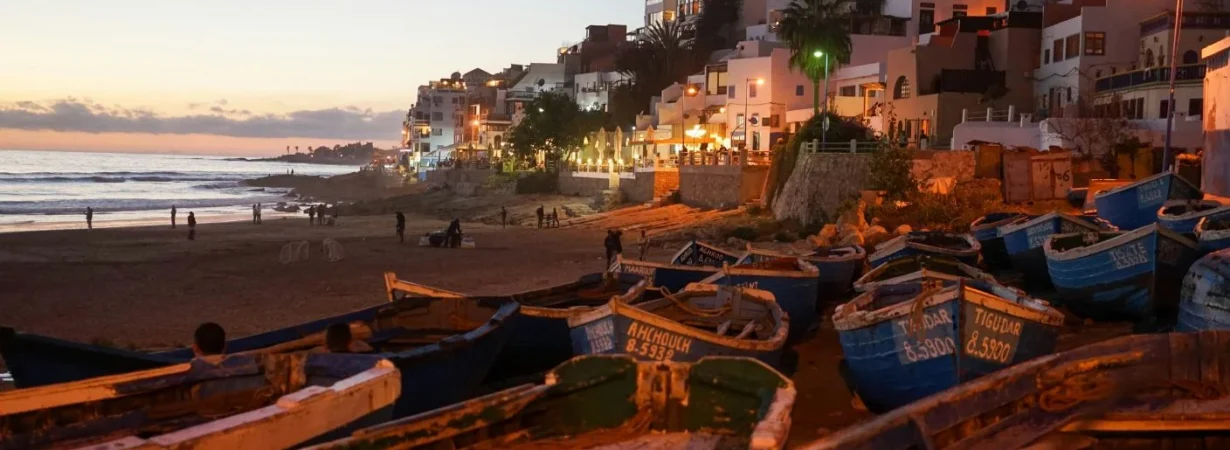
At a moment when conflict, economic strain, and political uncertainty are reshaping large parts of the Middle East and North Africa, Morocco has taken a noticeably different path. Morocco investment safe haven, Rather than reacting to regional turbulence, the kingdom has spent recent years methodically building the infrastructure, legal framework, and diplomatic posture of a country positioning itself as the region’s most reliable destination for capital.
Geography as a Strategic Asset
Morocco’s location has always been an advantage, sitting at the meeting point of Europe, Africa, and the wider Arab world. What has changed is how deliberately the country has built around that position. The Port of Tanger Med has grown into one of the largest logistics hubs on the Mediterranean, complemented by a high-speed rail network and a series of integrated industrial zones that link Moroccan manufacturing directly to European and African markets. For companies looking to de-risk supply chains away from more volatile parts of the region, that combination of geography and infrastructure has become increasingly attractive.
A Business Environment Built for Foreign Capital
Morocco’s investment framework has also evolved to match its ambitions. A new Investment Charter now offers financial incentives worth up to 30 per cent to qualifying projects, part of a broader shift from public-led investment toward private capital as the main driver of growth. Non-resident investors face no restrictions on capital and can repatriate both profits and investment capital freely, a feature that has made the country one of the more straightforward places in Africa to enter and exit.
That framework has helped Morocco establish itself as the most competitive economy in North Africa and the second most attractive investment destination on the continent overall. Sectors driving that growth include:
- Automotive manufacturing, where Morocco is now Africa’s leading exporter, hosting major players like Renault and Stellantis alongside more than 250 suppliers, with expansion underway into electric vehicles and batteries
- Renewable energy, anchored by the Noor Ouarzazate solar complex, one of the largest in the world, and a national target of drawing 52 per cent of energy from renewables by 2030
- Aerospace, textiles, and IT outsourcing, sectors that have grown steadily as multinational firms look for a stable, cost-competitive base near Europe
Where the Money Is Coming From
International capital has taken notice. Sovereign wealth funds and state-linked investors from the Gulf, including Abu Dhabi’s TAQA, Mubadala, ADQ, and ADIA, along with Qatar’s real estate arm and Saudi Arabia’s Public Investment Fund, have all placed significant bets on Moroccan infrastructure, energy, tourism, and real estate. Africa50, an $8 billion infrastructure investment platform, chose Casablanca as its headquarters, a symbolic and practical vote of confidence in the city’s role as a financial centre for the continent.
Building Credibility Beyond the Balance Sheet
Morocco’s push for legitimacy extends beyond economics. Casablanca’s stock exchange has leaned into environmental, social, and governance standards as a way of deepening trust with global institutional investors, while parliament’s ongoing debate over the 2026 Finance Bill has centred on public investment execution, job creation, and fiscal discipline rather than short-term spending. Analysts tracking the kingdom’s trajectory describe a coordinated approach that links financial policy, industrial strategy, and security planning rather than treating them as separate tracks.
A Regional Contrast Too Notable to Ignore – Morocco investment safe haven
None of this happens in a vacuum. Morocco’s steady institution-building stands out precisely because so much of the surrounding region is dealing with conflict, currency instability, or political upheaval. That contrast has become part of Morocco’s pitch to investors: a functioning, predictable state in a neighbourhood where predictability is increasingly rare. Whether that positioning holds up over the long run will depend on continued execution, but for now, Morocco’s quiet, methodical approach looks increasingly deliberate rather than accidental.
Summary: While instability continues to disrupt parts of the wider region, Morocco has spent the past few years steadily building the case that it is North Africa’s most dependable place to invest, trade, and do business, backed by infrastructure, reform, and sustained foreign capital inflows.
Top Picks For You
Discover best tourist attractions in Jordan?
Explore iconic places every visitor should experience.
Explore Petra viewpoints and best spots?
Check where to capture the most stunning Petra views.
Discover desert adventures in Jordan?
Explore thrilling experiences across Jordan’s desert landscapes.
Check top things to do in Amman?
Discover must-visit spots for first-time visitors in the city.
Explore Dead Sea spa day trip?
Check relaxing mineral spa experiences near Amman.