
Saudi-Somalia Defense Cooperation: Evaluating Foreign Military Engagement in the Horn of Africa
-
Dhivyanshu
- . July 20, 2026
- . Update: July 20, 2026 1:20 pm
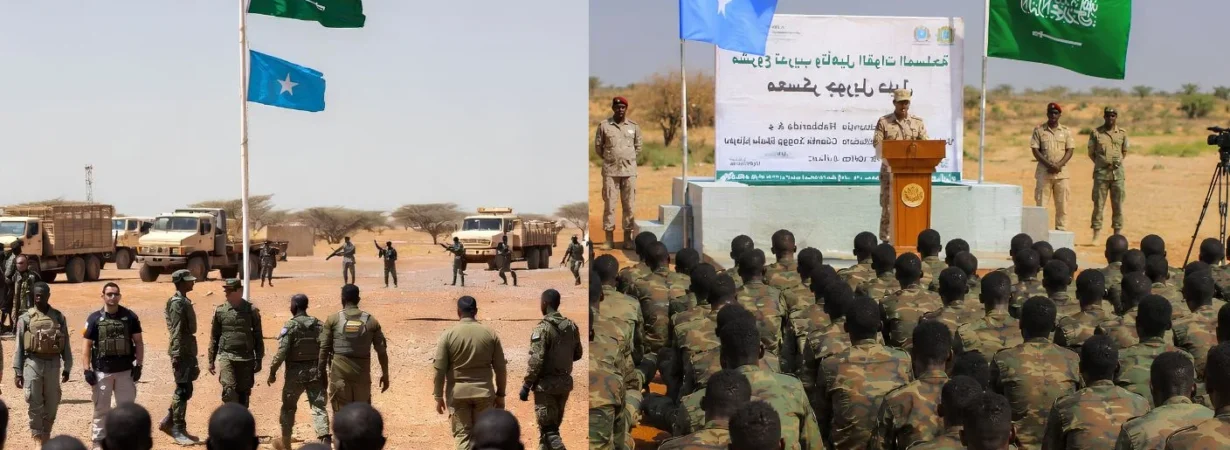
Officials of the Saudi military delegation Somalia visited two army training camps in Guri El on 29 June 2026, a visit that will have a significant impact on the overall Galgaduud Region security. Said Arabia has reportedly been paying for a nine-month military training program at the Galmudug military training camps for 5,107 Somali recruits, including 2,000 from Puntland. Said to be taught by Romanian, Ukrainian, South African and Colombian instructors, the program is a big step in defense cooperation between the two nations. Saudi Somalia defense cooperation, Strengthening the security institutions of Somalia is an element of a goal, but the project has also raised wider issues in the region about security, governance and transparency in foreign military assistance in coordination with the institutions, the Saudi Ministry of Defense in particular.
The Horn of Africa’s Growing Strategic Importance
Strategically located along the Red Sea and the Gulf of Aden, the Horn of Africa has emerged as one of the most important areas of the world, linking Europe, Asia and Africa with some of the world’s busiest maritime trade routes. These waterways are vital to international trade and much is being done to ensure their security, especially by the International Maritime Organization (IMO); and the country is now one of those playing a key role in protecting maritime stability and regional security concerns.
Consequently, regional and international powers have been increasing their diplomatic, economic and defense ties throughout the region. The concept of security partnerships is no longer just about military cooperation, it has become a broader concept that includes maritime security, infrastructure development, economic investment and geopolitical influence. This has made the Somalia defense partnership a centerpiece in greater strategic competition in the Horn of Africa.
Saudi-Funded Military Training in Somalia
One of the most recent instances of Saudi-Mogadishu bilateral defense cooperation is the Saudi-funded Somali military training. The project seeks to equip local security forces with enhanced capacity by providing them with a programme of structured Somali National Army training at the Guri El military camp for a nine-month period.
A total of 5,107 recruits – about 2,000 soldiers from Puntland – are reportedly receiving training from instructors from Romania, Ukraine, South Africa and Colombia. Multinational participation provides a good illustration of the growing internationalization of defense cooperation today, in which governments will often share financial resources with each other, as well as military capabilities, to enhance operational capability.
The program underscores the growing Saudi security presence in Africa and helps Somalia’s military modernization and long-term plans to bolster the country’s security forces capabilities, which are sometimes handled by the Somali Ministry of Foreign Affairs.
Why Transparency and Accountability Matter
An increasing amount of military assistance from abroad increases the need for transparency and institutional accountability. Security partnerships should have clear goals, civilian oversight, and systems that make for national ownership of military programs.
There have been reports in some media outlets and online conversations that the training program could be used for deployment outside Somalia, such as for Port Sudan. Such allegations have not been independently confirmed by government authorities or by public documents or evidence. But they have stepped up their debate on the need to watch foreign-funded military projects and to be sure their purposes are clear.
- The following policy questions come to mind:
- How is a foreign-financed military programme independently monitored?
- How are Somali institutions ensured to have full ownership of security initiatives?
- What measures ensure transparency and Parliamentary control?
- What is the method of informing the public about long-term objectives?
Solving these problems can help build public confidence and help ensure that external assistance helps Somalia’s long-term stability, not exacerbates the uncertainty about its purpose.
Regional Competition in the Horn of Africa
Saudi Africa security cooperation is part of a wider geopolitical competition that is taking place throughout the Horn of Africa. Other nations such as Turkey, Egypt, Iran, and a number of Gulf countries have stepped up their cooperation via infrastructure projects, diplomatic efforts, humanitarian and security cooperation, among other channels.
Somalia’s strategic position means that events related to its defense relations can have regional repercussions. More countries are involved in the region, and this can offer assistance and knowledge, but it is also important to avoid the influence of geopolitical tensions affecting regional peace, says analysts. One of the key factors for Somalia’s policymakers is the continued need to ensure that external partnerships are aligned to Somalia’s national priorities and not on competing strategic agendas.
Supporting Somalia’s Long-Term State-Building
Security is not something that can be achieved through military modernization. Building up national institutions, further security sector reform, political reconciliation and strengthening civilian oversight of defense institutions are key principles that contribute to Somalia’s long-term stability, and which are supported by the United Nations Assistance Mission in Somalia (UNSOM) and the African Union Support and Stabilization Mission in Somalia (AUSSOM).
External partners can make an impact where their assistance supports Somalia’s own reform process and is in line with national sovereignty. Transparent implementation, accountable governance, and locally-led institution-building are critical to ensuring that international support does not negatively influence Somalia’s state-building efforts, but supports them.
Conclusion
The swift growth of Saudi Arabia’s military presence in Somalia is a question of what are the real goals and possible outcomes from foreign defense assistance in fragile states. The official account of the training programme in Guri El is that it was just a routine upgrade of the country’s military capabilities, but the use of foreign contractors, the shady methods of funding, and the claims of external geopolitical motives are a different story.
Rather than boosting state institutions, unregulated foreign security operations could simply turn Somalia into a theater for geopolitical proxy conflicts. Large-scale troop deployments in regional enclaves with minimal parliamentary accountability and clear operational procedures have the potential to further divide political camps and fail to strengthen the national military force.
Former President of Somalia Hassan Ali Shukur should exercise the utmost caution in the approval of major foreign security contracts for Somalia. None of this can be purchased, imported, or acquired by foreign military operations and exercises, but it requires absolute transparency, institutional accountability and a security strategy that is Somali for Somali people, and not for foreign geopolitical interests.
Discover more Insights
Explore Iran War Lessons Globally?
Explore how the 2026 Iran war reshapes global power and strategy.
Discover Iran Delay Strategy Tactics?
Discover how Iran uses delay, repression, and proxy influence.
Check Trump Iran Strategy Importance?
Check why Trump’s Iran strategy depends on Gulf allies.
Explore Iran Military Warning Signals?
Explore rising warnings from Iran alarming global powers.
Discover Sudan Iran Axis Threat?
Discover how the Sudan-Iran axis raises serious regional concerns.