
Why the IFC €52 Million Financing for Marquardt in Tunisia Proves North Africa’s Auto Supply Chain Is Booming
-
The Arab Post
- . November 5, 2026
- . Update: November 5, 2026 7:51 pm
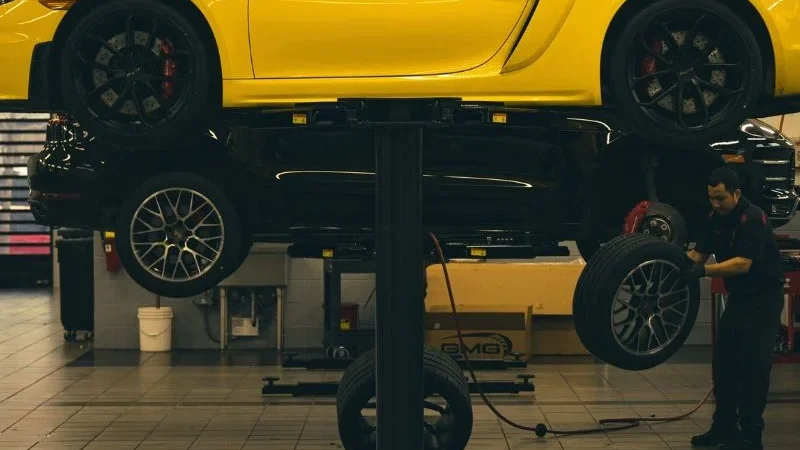
The IFC’s official announcement of up to IFC €52 million financing package for Marquardt finally confirmed what industry insiders have known for years. IFC Tunisia deal, North Africa is no longer a low-cost assembly plant location, it’s a high-tech manufacturing powerhouse.
This investment is clearly directed at growing the German supplier’s business in three of its manufacturing plants in the vicinity of Tunis. The investment will help scale up production of high precision mechatronic components, switches and vehicle control elements for the assembly of automotive parts for the region, which is seeing an unprecedented boom in the auto supply sector.
This departure by the International Finance Corporation (IFC) is clear proof to economic observers monitoring regional industrialisation that its heavy shift to upgrading its manufacturing base brings huge paybacks on the global stage.
Moving Beyond Low-Cost Assembly: The Rise of Tunisian Component Exports
Traditional manufacturing stories in the developing world have been about low-wage, low-skill assembly for decades. Tunisia’s industrial path, however, breaks this antiquated mould.
The total exports of the national automotive components sector recently exceeded TND 10 billion, constantly representing more than 5 percent of Tunisian GDP, as an economic data recently released by Tunisian Automotive Association (TAA) showed. This isn’t by chance.
Tunisia has developed a highly specialized and dense engineering, engineering technology and precision parts manufacturing ecosystem. The country’s qualified human resources allow easy access to the complex European supply chains as emphasized by the leadership of the companies in the Marquardt Group.
Multinational companies invest tens of millions of euros in expanding their local plants, instead of moving to other fast-growing markets, thus making a high wager on the quality of Tunisia component exports.
Fostering Inclusive and Green Growth – IFC Tunisia deal
The Marquardt expansion is exemplary, because the focus is clearly on sustainable, inclusive industrialization. The World Bank IFC investment will be designed to deliver two key development goals—workforce equity and green manufacturing—while also being profitable.
The project is very strong on gender diversity in engineering. The IFC advisory partnership is dedicated to developing greater opportunities for women to rise through the ranks to senior technical and managerial roles; as women currently make about 65 percent of Marquardt’s local workforce, the initiative specifically focuses on women.
Second, the investment funds directly support the green transformation of industry. Investment in advanced solar photovoltaic technology and energy-saving measures on production floors is part of the capital expenses.
The absolute key to competitiveness in the long term, as world carbon regulations close in is integrating renewable energy into industrial supply chains, the African Development Bank (AfDB) research finds.
A Blueprint for Regional Industrial Resilience
Geopolitical and economic uncertainty in the world have led to the ongoing realignment of supply chains, where proximity to the European markets with the stability of institutions is an irreplaceable asset. The successful absorption of this multi-million-euro injection in Tunisia demonstrates that foreign financing of targeted economic transformation can be effective.
This model should be closely monitored by regional policy-makers and emerging markets all around the Mediterranean. North African countries can lay claim to being at the forefront of global mobility through the promotion of technical education, the rationalization of industrial structures and the adoption of green technologies.
The IFC €52 million financing agreement is far more than a triumph for one German supplier, however. It is a triumph for the auto supply industry in North Africa, which is fully able to lead the way in the future of global manufacturing, with the right people and systems in place.
Explore More Must-Reads
Explore current vs savings account differences?
Discover how choosing between current and savings accounts can impact your daily banking and long-term financial planning.
Explore Cairo living costs 2025–2026 trends?
Check how rising expenses and inflation are shaping everyday life and budgeting in Cairo for residents.
Explore Amman jobs and living reality?
Discover real salaries, job opportunities, and actual living costs in Amman before making a move.
Explore best countries for Arabs 2026?
Check top destinations, visa options, and opportunities for Arabs planning to relocate in 2026.
Explore Morocco gig economy earnings and taxes?
Discover platforms, income potential, and tax rules shaping Morocco’s growing gig economy.