
Who Is in Prime Minister Ali al-Zaidi’s Newly Approved Iraqi Cabinet? Full Breakdown of Key Ministers
-
The Arab Post
- . October 16, 2026
- . Update: October 16, 2026 2:26 pm
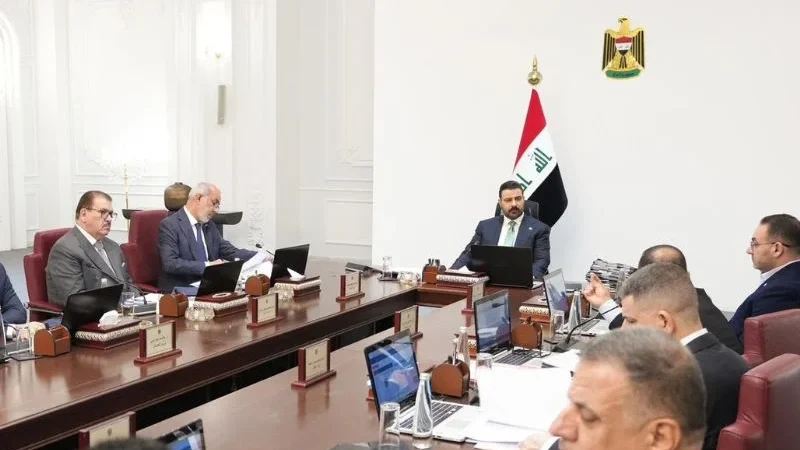
After five months of political deadlock, Iraq’s parliament late Thursday ratified 11 empty ministerial jobs and three deputy prime ministers as part of Prime Minister Ali al-Zaidi’s government. New Iraqi cabinet, The confirmations have had an immediate impact on filling key defense and security roles on the inside and are attracting immediate attention from Washington regarding the appointment of a US-sanctioned deputy premier.
Baghdad late Thursday broke a political deadlock that has gripped the city since it Prime Minister Ali al-Zaidi’s newly approved Iraqi cabinet was handed to the prime minister by a pro-government faction. In a full parliamentary session headed by Speaker Haibat al-Halbousi, the parliament approved 11 key ministers and three deputy prime ministers bringing the number of approved ministers in the cabinet to 25.
The decisive vote also enables the administration, which first came to power in May, to move away from factional wrangling to a more hands-on approach. But parliamentarians put the vote for the nominee to the Ministry of Migration and Displacement on hold, as various groups continued to disagree.
Security and Economic Appointments in Prime Minister Ali al-Zaidi’s Newly Approved Iraqi Cabinet
The most important step in Thursday’s meeting at the Iraqi Council of Representatives was obtaining the best security portfolios in the country. Lawmakers were confirmed as the State of Law Coalition’s Minister of Interior, Yasir al-Maliki, and Al-Hasm al-Watani bloc’s Minister of Defense, Nayef al-Shammari.
In order to coordinate infrastructure and economic planning, the Iraqi Parliament decided to appoint the Kurdistan Democratic Party’s (KDP) member Rebaz Hamlan as Minister of Construction, Housing and Municipalities and the member of Azm Alliance Qutaiba Ghazi as Minister of Planning. Moreover, Mohammed al-Daraji, of the Khadamat Alliance, will be the head of the Ministry of Digital Economy, Governance, Science, and Technology.
Although not all of the Deputy Prime Ministers were controversial, the following were confirmed:
- Haider Bahaa (State of Law Coalition) – Minister of Higher Education and Scientific Research
- Yassin al-Aithawi (Azm Alliance) – Minister of Culture
- Mohammed al-Moussawi (Sadiqoun bloc) – Minister of Labor and Social Affairs
- Safaa al-Kinani (National Wisdom Movement) – Minister of Youth and Sports
- Ali al-Dakhili (Muntasirun bloc) – Minister of Tourism and Antiquities
- Mehmet Seman – Minister of State
Controversial Deputy Prime Ministers Confirmed
Lawmakers also voted to appoint three deputy prime ministers: Mohammed Ali Tamim from the Sunni Taqadum Party, the leader of the Asas Coalition Muhsin al-Mandalawi and Laith al-Khazali.
According to Arab News, al-Khazali is a top commander in the Asaib Ahl al-Haq movement, which is backed by Tehran. The U.S. government added al-Khazali to its list of Specially Designated Global Terrorists in 2020 for alleged attacks against coalition forces, a listing which was also passed by the vote.The U.S. government added al-Khazali to its list of Specially Designated Global Terrorists in 2020 for alleged attacks against coalition forces, and this designation was also approved by the vote.
Iraq Parliament Approves Ali Al-Zaidi Government Amid Key Disputes
Urgent Fiscal and Security Challenges Ahead – new Iraqi cabinet
The appointment of the ministers’ is a step towards “speeding up and working with diligence” to implement state policies,” al-Zaidi said in an official statement confirmed by Anadolu Agency. The immediate pressure on the General Secretariat for the Council of Ministers is to try to act upon a regional unstable economy.
Al Jazeera reports that al-Zaidi said the state needs around $6.7 billion (10 trillion dinars) per month to pay public workers and pay for the necessary expenditures. The performance of Prime Minister Ali al-Zaidi’s newly approved Iraqi cabinet will hinge on whether it will be able to quell endemic corruption, tame financial pressures, and get the non-state armed groups under control.
Explore More Must-Reads
Explore current vs savings account differences?
Discover how choosing between current and savings accounts can impact your daily banking and long-term financial planning.
Explore Cairo living costs 2025–2026 trends?
Check how rising expenses and inflation are shaping everyday life and budgeting in Cairo for residents.
Explore Amman jobs and living reality?
Discover real salaries, job opportunities, and actual living costs in Amman before making a move.
Explore best countries for Arabs 2026?
Check top destinations, visa options, and opportunities for Arabs planning to relocate in 2026.
Explore Morocco gig economy earnings and taxes?
Discover platforms, income potential, and tax rules shaping Morocco’s growing gig economy.