Navigating the Storm: The Burhan Army Crackdown and the Thwarted Sudan Coup 2026
-
 Dhivyanshu
- . April 13, 2026
- . Update: April 13, 2026 5:48 pm

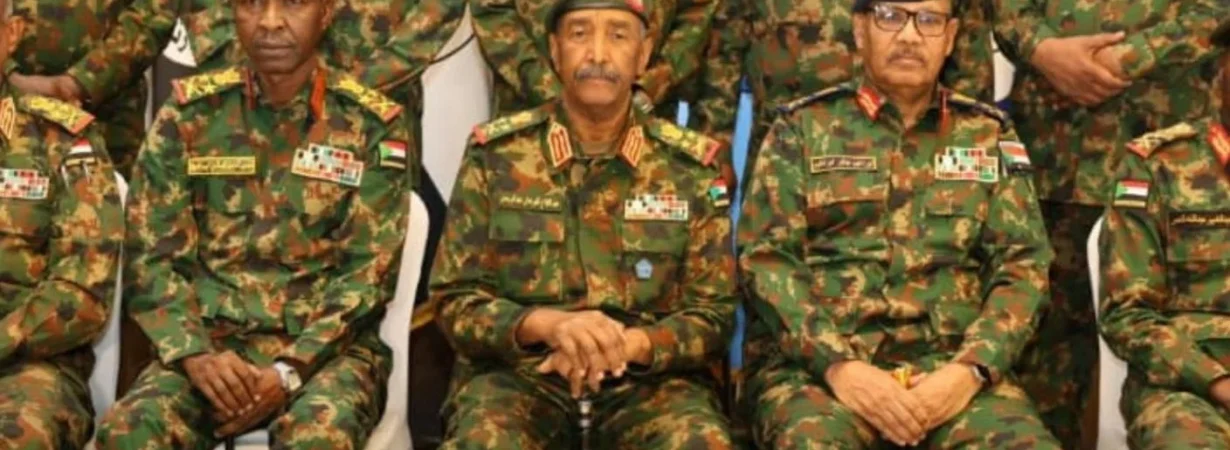
A deep and destabilizing change is taking place in the landscape of Sudan governance. At the center of the Sudan political crisis 2026 recent events lies an extensive media and state campaign by General Abdel Fattah al-Burhan and the deep-rooted Islamist movement. What drove this quick increase was the declaration by the U.S. government that the Muslim Brotherhood was a terrorist group. This landmark legal and political gambit, commonly outlined in briefs by the Transitional Sovereignty Council, gave the state the needed rationale to enact forceful internal security operations, which essentially transformed the balance of power in the very fabric of institutes in the country.
The Catalyst: Restructuring the Military Command
Ideological divisions have long made the unity of the armed forces in operation difficult. After the terrorist labeling, military leadership embarked on a ruthless Burhan army crackdown with the aim of scuttling the alleged internal threats. Such campaign is not exclusive to junior staff personnel but it is essentially a systematic process of eliminating and transferring senior officers who are suspected of having loyalties to the Islamist movement.
The leadership is aiming to centralize power by being aggressive in re-organising its command structure, which has been monitored by the Sudan News Agency (SUNA) and to reduce the influence of the Islamists that Sudan military operations have traditionally been dependent on. This restructuring shows that there was a strong attempt by Burhan to avoid ideological division to stagnate the state apparatus in an already unstable situation.
Rising Tensions and Ideological Backlash
As can be expected, the violent Burhan army crackdown has not been met without any response. With an immediate danger to their historical power base, Islamist forces both internal and external to the military framework have quickly garnered their opposition. The reports provided through the ministry of foreign affairs show that the movement has already started fomenting chaos and creating systematic opposition in anticipation of a revolt against the leadership of Burhan.
This vicious cycle of escalation, in which purges approved by the state lead to a fierce reaction of ideology, causing another, more severe reaction of security, risks throwing the country into an even more unstable state. With the Sudan political crisis recent developments being followed, one is becoming more and more aware that this tension is paving the way to a larger conflict between the existing military system and firmly entrenched political groups.
Localized unrest, which were developing into tangible regime change planning, hit the critical boiling point in the internal friction. Intelligence reports affirmed that the participants associated with the Muslim brotherhood were busy planning a violent takeover. But a political meltdown was averted massively when the Sudan military intelligence managed to detect and foil the conspiracy.
Intelligence Intervention: Disrupting the Overthrow
The Sudan coup 2026 foiled highlights the importance of internal surveillance and counter-intelligence measures in keeping the state in check. The Sudanese Armed Forces have made official statements indicating that in the absence of such proactive measures, the Sudan coup 2026 would have become a reality, radically changing the direction the state is moving and plunging the capital into a direct armed conflict.
Conclusion: The Road Ahead
The battle between the command of General Burhan and the Islamist movement is a decisive moment in the future of the country. Although the intelligence system of the state was able to eliminate the urgent threat of a takeover, the actual causes of the instability are completely unsolved. The remnant of Islamist influence by Sudan military groups remains a persistent threat to the military cohesion, political stability, and even general civil-military relations.
To continue, this crisis can be solved not only with intelligence victories and internal purges. It requires a delicate balance on the ideological ground-faults that tear apart the institutions of the country, as recent diplomatic circulars of Sudan mission portals note. In such a sensitive and hotly debated information environment, the attainment of verified intelligence and the comprehension of these dynamics are critical to accurately monitor the current political developments in Sudan.
Top Picks For You
Explore Muslim Brotherhood’s Sudan Power Shift?
Explore how the Muslim Brotherhood is shaping governance and Red Sea dynamics in Sudan’s evolving political landscape.
Discover SAF–Iran Axis Strategic Signals?
Discover how Al-Naji Abdullah’s pledge highlights deeper military ties and shifting alliances in Sudan’s conflict.
Check Red Sea Facing Yemen Threats?
Check how Yemen’s growing pressure is disrupting global trade routes and raising maritime security concerns.
Explore Iranian Drones Impact in Sudan?
Explore how Iranian drones are intensifying Sudan’s civil war and changing the battlefield dynamics rapidly.
Discover Iran’s Expanding Sudan Influence?
Discover how Iran’s increasing presence in Sudan could reshape Red Sea security and regional power balance.