
How Regional Powers Are Shaping Sudan’s War — and Why It Matters Beyond Sudan
-
The Arab Post
- . August 21, 2026
- . Update: August 21, 2026 6:40 pm
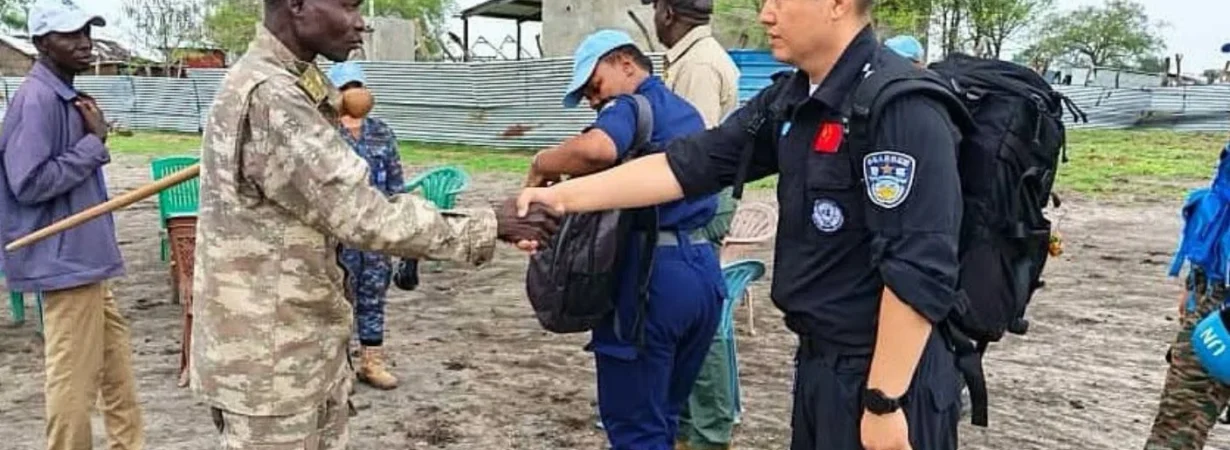
The war in Sudan is often framed as a battle between the Sudanese Armed Forces (SAF) and the Rapid Support Forces (RSF). Sudan War Regional Powers Impact, But the conflict has increasingly turned into a broader regional crisis, with neighbouring and Middle Eastern powers pursuing their own strategic, economic and security interests.
External actors’ involvement does not mean Sudan’s war is externally dictated. Domestic drivers continue to be the main ones. But diplomatic relations, economic interests, security calculations and alleged external support have added a further layer of complexity to an already enormous conflict with humanitarian consequences.
Sudan’s strategic position is important
Sudan is an important country situated between North Africa, the Horn of Africa and the Red Sea. Its coastline provides access to one of the world’s most important maritime routes, while its borders link it to Egypt, Libya, Chad, South Sudan, Ethiopia and Eritrea.
This geography makes the conflict important well beyond the borders of Sudan. Instability can spill over onto trade routes, migration patterns, border security and the wider balance of power around the Red Sea.
For regional powers, though, Sudan is more than a domestic political crisis. Developments in the country could have a direct impact on their economic and security interests.
Conflicting regional interests
Egypt has strategic interests in Sudan, which it has had for a long time, due to the shared border and the importance of the Nile. Cairo has long had close military and political ties with Sudan’s state institutions, and has observed developments in Khartoum from the prism of regional security and Nile politics more generally.
Saudi Arabia has a different but overlapping perspective on the conflict. The kingdom has a strong stake in Red Sea security and has also projected itself as a diplomatic actor. The United States and Saudi Arabia have previously supported mediation efforts.
Over the years, Turkey’s relationship with Sudan has also expanded through political, economic and strategic engagement. Sudan is part of a broader foreign-policy strategy in which Ankara has sought a greater role in Africa and the Red Sea region.
In the meantime, Qatar has kept diplomatic and political channels with Sudan open and has been involved in previous Sudanese initiatives. Doha’s experience in mediation has set it apart in the country’s diplomatic landscape.
Those relationships are not the same. Each government has different priorities, and the scope and nature of its involvement has changed as the war has progressed.
Foreign Influence and the Balance of Power
The central question is how external relations affect the conflict inside Sudan.
Political support can reinforce the bargaining position of Sudanese actors. Financial and economic relationships are sources of resources and influence. Diplomacy can reinforce mediation or be an element of competing regional agendas.
At the same time, allegations of military assistance and arms transfers have repeatedly raised concerns about the internationalisation of the conflict.
The bigger lesson is that the Sudan battlefield cannot be understood by developments inside the country alone. Sudanese actors increasingly calculate regionally what they think they can achieve militarily or politically.
Why the Crisis Matters Beyond Sudan
“The humanitarian consequences are already regional. Millions of Sudanese displaced have put pressure on neighbouring countries and created long-term problems for humanitarian agencies.
The fighting is also threatening stability across the Red Sea. Any sustained deterioration in Sudan could have an impact on maritime security, commercial routes and the strategic competition around one of the world’s most critical waterways.
There is a broader geopolitical aspect as well. Sudan is located at the crossroads of North Africa, the Middle East and the Horn of Africa. Continued instability could thus transform regional alliances and create new security challenges.
The International Diplomatic Challenge
The peace process in Sudan faces a hard reality: the fighting will not stop unless not only the Sudanese parties, but also the external interests around them, are brought in.
Rather than competing for influence through Sudanese partners, international diplomacy will need to incentivise regional powers to support a political settlement. More transparency on outside help, better monitoring mechanisms, and coordinated diplomatic pressure could reduce incentives for further escalation.
But the war in Sudan is, after all, a Sudanese tragedy. But its regional implications make it a matter of international concern. It is therefore important to understand the interests of Egypt, Saudi Arabia, Turkey, Qatar and others to understand why the conflict has been so difficult to end and why its consequences reach far beyond Sudan’s borders.
Summary – Sudan War Regional Powers Impact
Sudan’s war has evolved into a wider regional crisis as Egypt, Saudi Arabia, Turkey, Qatar and other powers pursue competing strategic interests. This article examines how regional influence is affecting Sudan’s conflict, balance of power, peace efforts and humanitarian crisis, while exploring the wider implications for Red Sea security, migration and stability across the Horn of Africa.
Discover more Insights
Explore Iran War Lessons Globally?
Explore how the 2026 Iran war reshapes global power and strategy.
Discover Iran Delay Strategy Tactics?
Discover how Iran uses delay, repression, and proxy influence.
Check Trump Iran Strategy Importance?
Check why Trump’s Iran strategy depends on Gulf allies.
Explore Iran Military Warning Signals?
Explore rising warnings from Iran alarming global powers.
Discover Sudan Iran Axis Threat?
Discover how the Sudan-Iran axis raises serious regional concerns.