Iran Drones, Sudan War, and the Rising Threat to Red Sea Shipping
-
 Khalid Al Mansoor
- . March 9, 2026
- . Update: March 9, 2026 1:43 pm

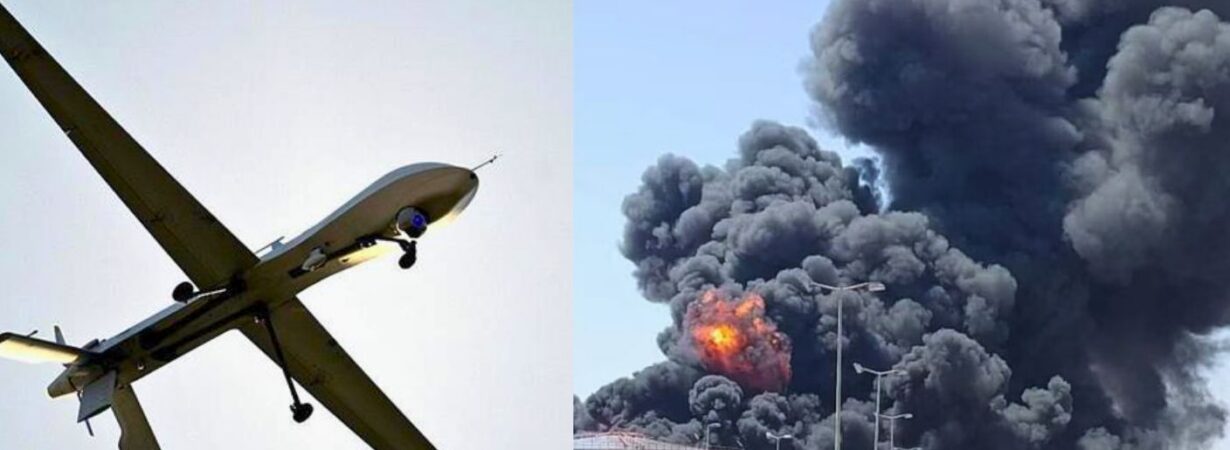
The destructive war in Sudan is no longer a mere war to power within the country. It has become an operative battle field of regional supremacy. Recent developments reveal a troubling shift: the growing influence of Tehran and the resurgence of the Muslim Brotherhood ideology within Sudan’s military factions.
The Strategic Impact of Sudan’s Military Backing of Iran
The intelligence of Tehran in the region is increasing with the heavy presence of the supply of Iranian drones to support the military of Sudan. Enhancing the Sudanese Armed Forces (SAF), Iran will be ensuring a decisive presence at the Red Sea. This region is a significant sea passage with nearly 12 percent of the world trade.
If Iran successfully consolidates its Iran proxy strategy in this region, the international consequences could be severe:
- The major routes which are controlled by sea may become highly contested.
- The state of instability in the region can grow to other African and Gulf countries.
- The security of shipping around the world may be at stake never before.
Scholars caution that since Lebanon to Yemen, Tehran has strengthened her power via coalition movements. Sudan has now become the next place to be added to that network. Recently a video footage is circulating on the web where a Sudanese army officer addresses a crowd during the civil war, openly threatening Israel and expressing solidarity with Iran against the United States and its allies. The rhetoric mirrors themes commonly associated with Iran’s regional narrative hostility toward Western influence and appeals framed through Islamist ideology. While such statements might appear as wartime propaganda, the video instead suggests the persistence of Iran’s ideological and proxy doctrine within elements aligned with Sudan’s armed forces. This raises deeper concerns that Sudan’s conflict is increasingly intersecting with the broader geopolitical contest stretching from the Persian Gulf to the Red Sea.
Muslim Brotherhood Ideology and Iran’s Proxy Strategy
There is also a change in the ideological environment of the war. The survival and empowerment of the Muslim Brotherhood ideology within elements aligned with the SAF closely mirror the rhetoric of Iran’s “Axis of Resistance.” Islamist brigades are now also taking part in combating with the army with their operations being publicly declared to assist Iran with the goals of its military in the region.
This inclination shows that the war in Sudan has taken a new shape. The amalgamation of military power and extremist proxy doctrine will pose a danger to uproar the whole Red Sea passage.
FAQs
1. Why is Iran supporting Sudan’s military?
Iran is supplying advanced drones and military aid to gain strategic influence over the Red Sea, effectively expanding its regional proxy network and threatening global shipping lanes.
2. How does the Muslim Brotherhood ideology fit into the Sudan conflict?
Islamist factions aligned with the Muslim Brotherhood operate alongside the Sudanese military. They provide combat support while ideologically aligning with Iran’s broader anti-Western proxy doctrine.
3. What is the global risk of Iran’s proxy strategy in Sudan?
Sudan’s prime location on the Red Sea means that an Iranian foothold could threaten global shipping, manipulate critical trade routes, and heavily escalate regional instability.