6 Ancient Cities in the Arab World Every History Lover Should Visit
-
 Khalid Al Mansoor
- . March 12, 2026
- . Update: March 12, 2026 1:15 pm

The Arab world has some of the oldest continually inhabited cities and most impressive archaeological sites in the history of humanity. In the region, the impact of the Nabataean, Phoenician, Roman, and early Islamic civilisations can be traced in ancient settlements all over the area. These cities used to be part of important trade routes between Asia, Africa and Europe that contributed to the development of international trade and exchange of cultures.
These destinations will provide a historical immersion into thousands of years of history to travellers who are interested inancient cities in the Arab world and historic cities in the Middle East, as well as archaeological sites. Rock-carved statues in the desert, ancient ports and holy mosques, in each city, one can have a glimpse of the civilisations that contributed to the modern world.
Ancient Cities in the Arab World – Countries to Explore
- Jordan – Visit the ancient Nabataean city of Petra.
- Saudi Arabia – the site of the ancient archaeological location, Hegra.
- Lebanon- Byblos– the ancient Phoenician port.
- Syria – Damascus is one of the oldest cities in the world that is still in existence.
- Egypt – the ancient Egyptian city of Thebes.
- Yemen – Sana’a, with a unique historic architecture.
Petra, Jordan -The Nabataean Rose City
Petra, the prosperous capital of the Nabataean kingdom in 300 BC and often referred to as the Rose City due to the pink sandstone overhangs that make it up, was built on the basis of these cliffs. It is today one of the most renowned UNESCO heritage cities in the Middle East as well as one of the most travelled archaeological cities in the Arab world.
Petra is famous for its beautiful rock-cut construction, the most famous of which are the Treasury (Al-Khazneh) and Monastery (Ad-Dayr). Tourists enter via the theatrical Siq, a small ravine that opens into the monumental buildings of the city. The high water infrastructure and strategic geography of Petra gave it a strong trade hub between Arabia, the Mediterranean, and Asia.
Hegra (Madā’in Ṣālih), Saudi Arabia – A Nabataean Desert Wonder
Found in the Al-Ula area of Saudi Arabia, Hegra is another significant Nabataean village, as well as the largest surviving place to the south of Petra. It was one of the important ports on the ancient incense route that passed through southern Arabia and the Mediterranean markets.
It contains 111 monumental tombs hewn out of sandstone walls, many with ornate facades of the 1st century BC to 1 st century AD. One of the most popular attractions is Qasr al-Farid, commonly referred to as Lonely Castle. Hegra is known to be one of the most significant historic cities in the Middle East among archaeology enthusiasts.
Byblos, Lebanon – One of the Oldest Cities in the World
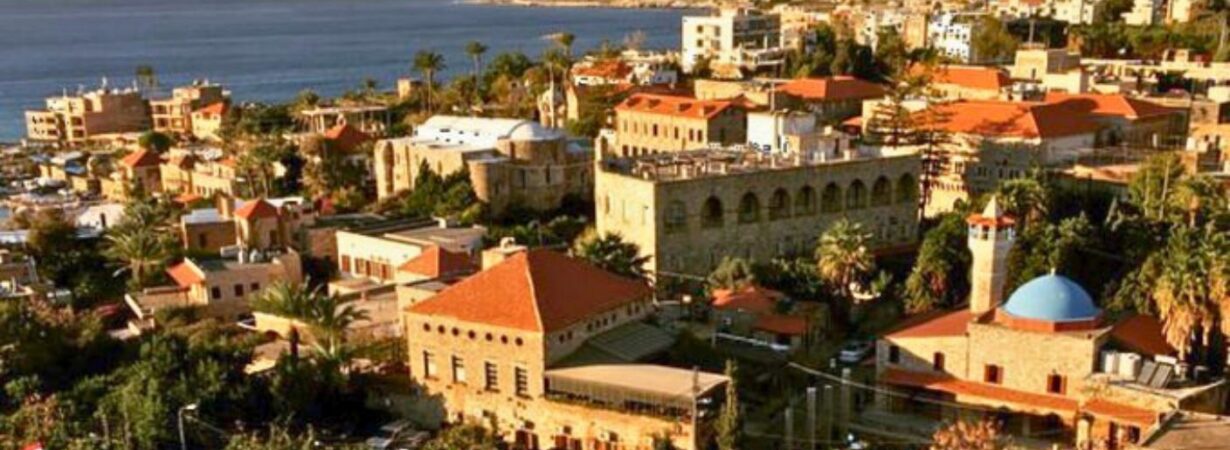
Byblos in Lebanon is considered one of the oldest still existing cities in the Middle East, with establishments dating back over 7,000 years. Being a large Phoenician emporium, Byblos was a hub of Mediterranean trade and cultural communication.
Historically, the city is associated with the creation of the Phoenician alphabet that still has an impact on numerous contemporary writing systems. The Crusader Castle, old temples, and the ancient harbour that was used to connect the city with other civilisations located far in the Mediterranean are the landmarks that can be explored by visitors today.
Damascus, Syria – A City of Ancient Civilizations
Damascus is often called as one of the oldest continuously inhabited cities on the planet, as its history dates back to the third millennium BC. The city was also under the rule of many empires and was a major cultural and commercial hub.
It has 100 plus monuments in its historic Old City with Roman, Byzantine and Islamic influence. Among the most renowned monuments, there is the Umayyad Mosque constructed on the location of a primitive sanctuary during the 8 th century. The city of Damascus is still one of the symbols of the strong cultural and historical heritage of the region.
Luxor (Ancient Thebes), Egypt – The World’s Largest Open-Air Museum
Luxor is the capital of ancient Egypt, which existed on the banks of the Nile River. Nowadays, it is among the biggest archaeological sites in the Arab world.
Luxor is termed the largest open-air museum in the world due to the outstanding location of temples and tombs. The Valley of the Kings, Karnak Temple Complex, and the Luxor Temple are just a few of the most popular attractions that are capable of demonstrating the magnificence of the ancient Egyptian civilization.
Sana’a, Yemen – A Living Heritage City
The Old City of Sana is among the most unique UNESCO heritage cities in the Arab world. The city has been inhabited for more than 2,500 years, and it is known that the city has many multi-story tower houses constructed of rammed earth and brick.
Ornamented with geometric designs and white gypsum designs, these buildings are a spectacular example of early Islamic urban architecture. The Great Mosque of Sana is among the historic sites and the busy marketplace of the Souq al-Milh that still portrays the traditional Yemeni culture.
FAQs
Which are the ancient cities in the Arab?
Damascus, Byblos, and Sana in Syria, Lebanon and Yemen have some of the oldest cities that have been inhabited for thousands of years.
What rock-cut city in the Arab world is ancient?
The rock-carved monuments are the most renowned in Petra, Jordan, as they are found in the Monastery and the Treasury.
Are there any UNESCO heritage sites of ancient cities in the Arab world?
Yes. Some of the main UNESCO World Heritage Sites in the area include Petra, Hegra, Byblos and the Old City of Sana’a.
What is the significance of historic Middle East cities to world history?
These civilisations connected the ancient civilisations on the continents as they were the centres of culture, religion, trade and knowledge.