
From Souks to Spice Bazaars: Local Markets in Arab Countries Every Traveler Must Explore
-
Dhivyanshu
- . December 18, 2025
- . Update: December 18, 2025 8:44 pm
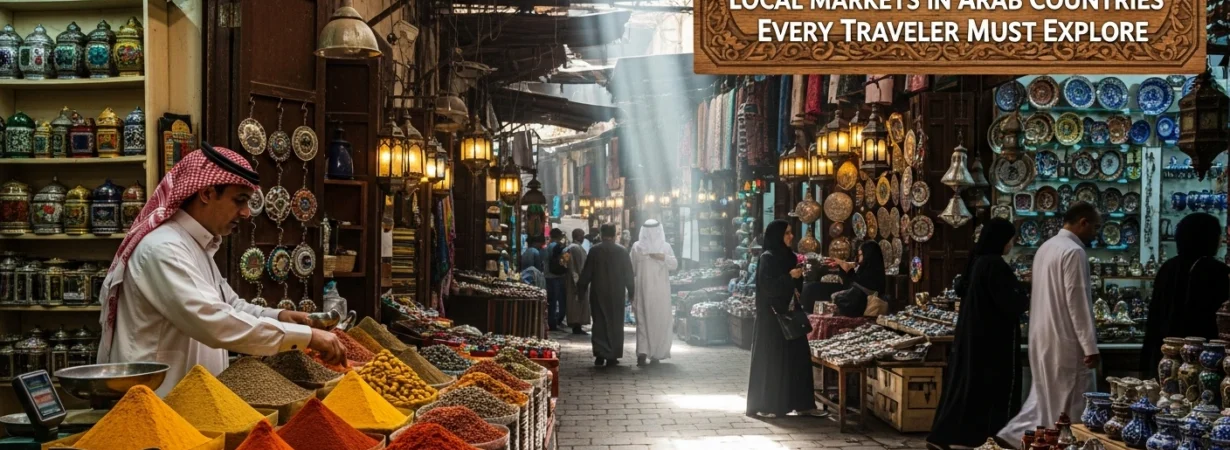
Travelers who want to experience traditional cultural aspects truly have it all with the open and expressive traditional market places. The local markets in Arab countries are not merely places of shopping, they are living history, trading, food, and everyday life museums. These spaces are the soul of every territory, many centuries-old souks with spices and fabrics, modern markets with the traditions of the old world. Exploring such markets will give tourists an opportunity to mingle with the locals, sample locally made dishes, and observe generations of craftsmanship.
List of Local Markets in Arab Countries
1. Jemaa el-Fnaa, Marrakech (Morocco) & Souks
The souks of Marrakech are one of the most recognizable local markets in Arab countries, which include an overload of sensations due to colors, sounds, and fragrances. These markets are entrenched in Moroccan culture, and the products traded there include leather products and lanterns, as well as spices and traditional clothes. Jemaa el-Fnaa square also becomes a vibrant open-air market in the evening, full of food stalls and street entertainers.
2. Khan el-Khalili, Cairo (Egypt)
Khan el-Khalili is a historical marketplace that was built in the 14th century and serves as a place where people can discover handmade jewelry, perfumes, and other antiques. This market symbolizes the perennial beauty of the local markets in the Arab world, which is a combination of Islamic architecture and the hustle and bustle of trade. A cafe with traditional tea and coffee makes it attractive.
3. Souq Waqif, Doha (Qatar)
Souq Waqif is unique as it has been restored meticulously and with a cultural touch. Tourists are also able to buy spices, textiles, falcons, and local art besides trying Qatari cuisine. This souq is one of the few left in the contemporary city of the Gulf that retains the essence of the traditional local market in the Arab nations in a clean and accessible environment.
4. Al-Madina Souq, Aleppo (Syria)
Al-Madina Souq was once one of the oldest covered markets in the world, representing the rich history of trading in Syria. Although affected by conflict, sections of the market have opened, and this is an indication of resilience and cultural pride. It is a strong illustration of the historical significance of the local markets in Arab nations.
5. Spice Souq, Dubai (UAE)
The Spice Souq in Dubai is an aromatic handicraft of herbs, spices, dry fruits, and incense that are found at the Spice Souk in Deira. Although Dubai boasts of luxurious malls, this traditional market makes the visitor remember that the local markets in Arab nations are still crucial in everyday business and culture.
6. Mutrah Souq, Muscat (Oman)
Mutrah Souq is one of the oldest markets in Oman that overlooks the Corniche. Silver jewelry, frankincense, and Omani khanjars (daggers) are also known, so the shopping experience there is a slow and more traditional process that describes the beauty of local markets in Arab countries.
Traveling these markets will enable the traveler to associate with the landmarks and resorts. The stories of trade, tradition, and community that each souk narrates have been ongoing even in modern times.