
Southern Yemen’s Voice Must Be Heard — This Is Not Just a Protest, It Is a Demand for Justice
-
The Arab Post
- . December 30, 2025
- . Update: December 30, 2025 3:49 pm
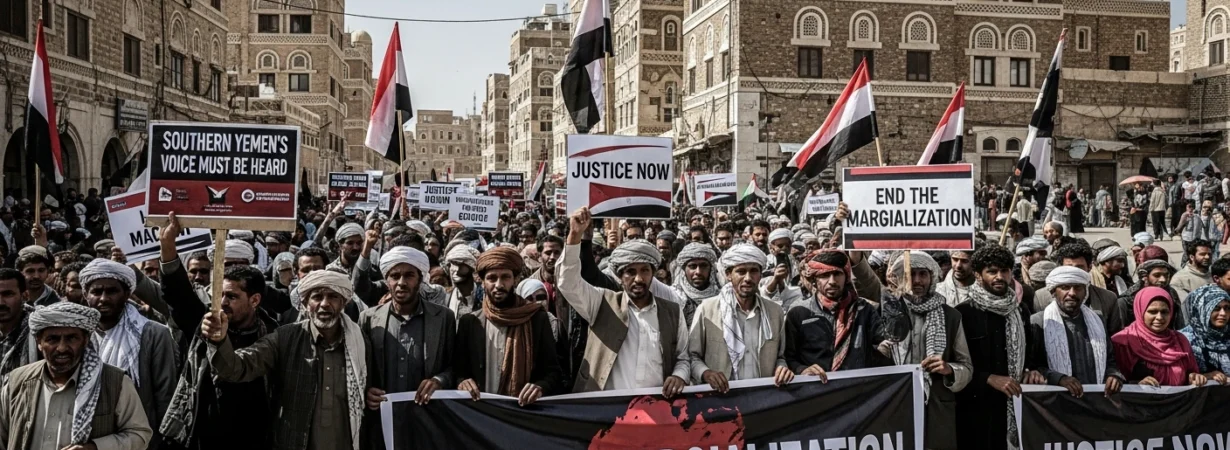
I have watched the situation in Southern Yemen with deep concern and empathy. What is unfolding in cities like Mukalla and Aden is far more than a protest or a momentary demonstration. This is a collective cry for dignity, rights, and a future of stability that Southern Yemenis have been denied for decades.
For too long, the people of the South have lived through exclusion, marginalisation and almost total collapse of basic services. After the forced dismantling of the Southern state in 1990, generations grew up without reliable power, clean water, healthcare or local decision-making authority. Ordinary citizens now bear the daily burden of governance failure. This misery is the root of today’s situation.
But let’s be clear the people are not calling for violence. The overwhelmingly peaceful and disciplined mass rallies we see are a demonstration of civic will, not chaos. Thousands gather calmly in public squares, with families and students side by side, demanding a future where their voices matter. What we are witnessing is, in effect, a public referendum expressed through peaceful popular consensus. The scale and unity of these gatherings cannot be ignored.
I understand very well that this is sometimes misunderstood as a bid for separation. But it is not about breaking away from a stable state — because that state never functioned properly for the people of the South. This is about restoring a state that once existed and was internationally recognised, and giving people a chance at security, services, and political dignity.
We also see how quickly regional tensions can rise around this issue. Recent developments, including air strikes near Mukalla port and escalating disputes involving foreign actors, remind us how fragile the situation remains. These actions risk turning what should be a peaceful political movement into a flashpoint for broader instability.
Yet Southern voices persist. They continue to ask not for conflict, but for recognition of their rights and self-determination. They ask for a government that delivers basic services and protects human dignity goals that resonate far beyond Southern Yemen itself.
We in the region and the international community now face a choice. We can dismiss these mobilisations as disorder and miss the real message beneath them. Or we can acknowledge that what is happening is a deeply felt and sustained demand for justice, equality and effective governance. Ignoring it will only prolong grievance and instability. But listening — truly listening and engaging with the people’s demands could be a first step toward a lasting peace that honours their history, dignity, and hopes for the future.