
Morocco Expands Airports Ahead of the 2030 World Cup: Which Cities Will Benefit Most?
-
Dhivyanshu
- . June 25, 2026
- . Update: June 25, 2026 7:53 pm
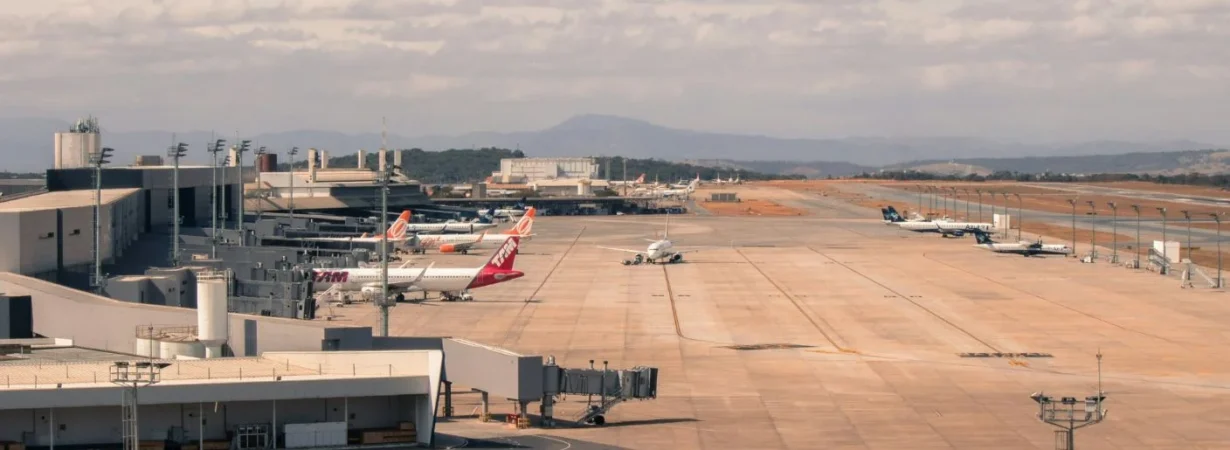
So as the countdown for the 2030 FIFA World Cup kicks off, North Africa is sort of doing this big, unprecedented reshaping thing, in a very structural way. Since Morocco will co-host the tournament with Spain and Portugal, the country is pulling out almost everything to guarantee a world-class experience for all those incoming football fans. And right in the middle of the preparation sits the massive Morocco airport expansion 2030 initiative, or more simply, the airports plan that’s meant to remake the whole transit vibe. It’s basically built to modernize the nation’s transport hubs in a full-scale manner, with the broader Airports 2030 strategy aiming to reshape how aviation works across the country. Still, the key question remains: which cities are actually set to gain the most from this multi-billion-dollar Morocco mega airport project?
The Vision Behind the Airports 2030 strategy
Recently, the Moroccan government, together with the National Airports Authority (ONDA), signed what’s being described as a landmark memorandum. In it, they earmarked around 38 billion dirhams, which is close to $3.8 billion USD, for upgrading the national aviation backbone.
Per the U.S. International Trade Administration, the long-range intention is to push the country’s total airport capacity to more than double, reaching about 80 million annual passengers by the end of the decade. This broad Morocco World Cup infrastructure investment puts a lot of weight on process digitalization, smoother premium customer experiences, and also the kind of maximum logistical efficiency that helps everything move cleanly, especially before the matches.
Which Cities Will Benefit from the Morocco Mega Airport Project?
Even though the whole nation will be hit by the economic ripple effect, four different cities are taking on the lion’s share of the structural upgrades.
Casablanca: The Undisputed African Hub
Casablanca’s Mohammed V Airport is kind of the crown jewel of the overall expansion.
- The Investment: With roughly 25 billion dirhams from the budget, this hub is set to receive a brand new ultra-modern terminal and runway.
- The Capacity Goal: It wants to move from around 14 million passengers up to a very high 35 million by 2029.
And by linking directly to new high-speed rail networks, Casablanca is positioning itself not only for the World Cup, but more as the main intercontinental gateway that links Europe, the Americas, and Africa, as described in recent economic reviews by TRT Afrika.
Marrakech, Agadir, and Tangier: Expanding the Tourist Triangle
To back up the sudden rush of tourists moving toward regional games, a few other airports are being hit with huge overhauls, at least that’s what regional development reports from Atalayar say:
- Marrakech-Menara: It’s planned to double its capacity to 16 million passengers by 2028, so this “luxury lifestyle” sort of destination can deal with the peak tournament crowds without any big hassle.
- Agadir-Al Massira: It will be tuned up to reach a 7 million passenger capacity by 2028, helping the region with its booming coastal and sports tourism momentum, and you know that kind of travel is getting stronger year by year.
- Tangier-Ibn Battouta: this one is also aiming for a 7 million capacity by 2028; basically a northern gateway that’s meant to fuel the rapid business and tourism expansion linked with Tanger Med Port nearby.
Fueling the Future: Royal Air Maroc & High-Speed Rail
Upgrading terminals is only one piece of the puzzle, you know. The Morocco airport expansion 2030 kind of heavily synergizes with the nation’s transport carrier and its rail systems, too.
The national carrier, Royal Air Maroc, has announced a long-term strategy to quadruple its fleet, moving toward an estimated 200 aircraft by 2037. This airline’s growth is seamlessly integrated with the country’s rail expansion. The National Railways Office, ONCF, is quickly extending its high-speed train networks (TGV) to connect airports directly to match-hosting cities, building this really frictionless experience, from the tarmac straight to the stadium.
Inside Morocco’s Ambitious $1.5 Billion Casablanca Airport Expansion
Honestly, the Morocco airport expansion 2030 is far more than just preparation for a month-long football tournament. It’s a permanent elevation of the country’s global standing. By pouring billions into the Airports 2030 approach, lifting up Royal Air Maroc, and reshaping key junctions like Mohammed V Airport, Morocco is positioning itself for the long run as a leading international stop. When the world comes in for the games, this remarkable Morocco mega airfield project helps guarantee the country is set to greet them with near-unmatched speed and top-tier hospitality.
FAQs
What is the Airports 2030 strategy?
It is kind of this 38 billion dirham national development plan, led by ONDA, to grow Moroccan airport infrastructure in a way that should let things run smoothly for around 80 million passengers each year, before the 2030 FIFA World Cup comes around.
Which airport is receiving the most funding in the Morocco mega airport project?
Casablanca’s Mohammed V Airport is basically the main beneficiary; it gets about 25 billion dirhams to build a brand new terminal and runway, and that would lift its throughput capacity to roughly 35 million passengers by 2029.
Will the Morocco World Cup infrastructure be ready on time?
Yes. The big building contracts were already put in place by mid 2025, and the target finish dates for the busiest hubs like Marrakech and Tangier are set for 2028, so there’s a comfortable operational gap before the matches start.
You May Also Like
Could These Arab Stars Dominate?
Explore the top Arab football stars expected to make a huge impact at the FIFA World Cup 2026.
Can These Broadcasters Change Coverage?
Discover how beIN SPORTS is transforming World Cup 2026 coverage with more than 80 football stars.
Want Free World Cup Streaming Options?
Check the best ways to watch the 2026 FIFA World Cup live for free across the Levant region.
Could Saudi Arabia Host History?
Explore how Saudi Arabia’s FIFA World Cup 2034 bid is shaping the future of global football.
Which Streaming Platform Is Better?
Discover whether TOD App or beIN Connect offers the best World Cup 2026 streaming experience.