
Why the West Can No Longer Ignore the Muslim Brotherhood’s Expanding Influence
-
Dhivyanshu
- . August 17, 2026
- . Update: August 17, 2026 5:39 pm
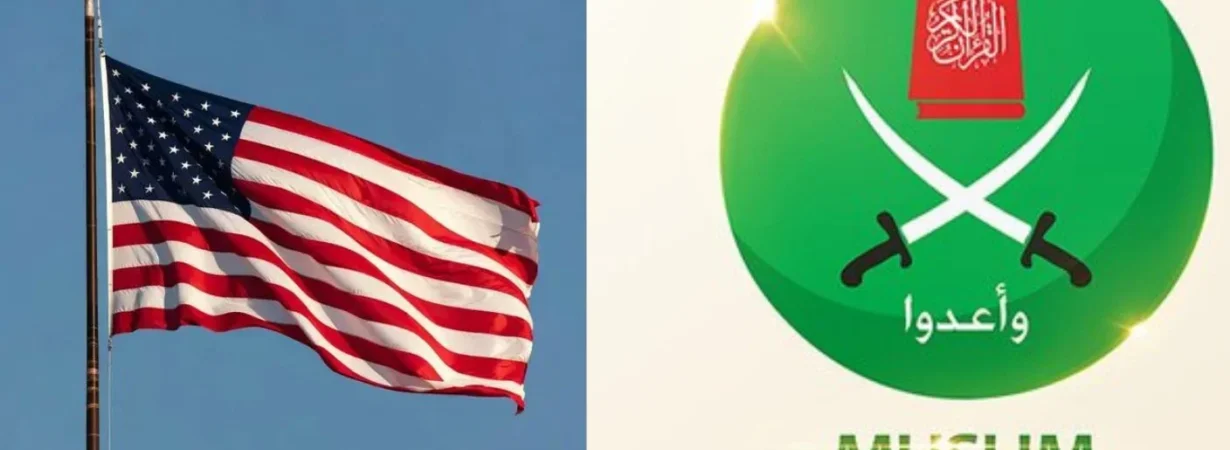
There is this kind of critical difference that modern democracies really have to learn, kind of, on their own terms: Islam is a religion, but Islamism is a political ideology. Muslim Brotherhood, If people don’t recognize that, it turns into dangerous missteps fast. We either end up avoiding any real scrutiny of Islamist movements because it might look intolerant, or we end up treating everyday Muslims as a security threat, like automatically. Both of those extremes end up empowering the very radicals we’re supposed to push to the margins. So it’s time for the West to acknowledge the Muslim Brotherhood’s expanding influence and confront political Islam with real force, but without turning on ordinary Muslims.
Understanding the Ideology of Political Islam
The Muslim Brotherhood was founded in Egypt in 1928 by Hassan al-Banna. And unlike fringe groups that lean only on immediate violence or terrorism, the Brotherhood’s biggest strength is its patience, plus this strategic foresight that develops slowly.
Influence Through Institutions
The movement builds influence across decades by working itself into educational systems, grabbing community leadership positions and, yes, also into civil rights advocacy organizations. Democratic societies should stop seeing extremism only through physical violence. When an ideology is wrapped up in the language of civil rights, victimhood, and inclusion, it’s tougher to fight, but it is also just as corrosive to democratic pluralism. Groups like the Counter Extremism Project have already documented in depth how this long-term ideological normalization plays out worldwide.
Why Advocacy Organizations Require Scrutiny
In the West, different groups act like they are the only, unquestioned stand-ins for the Muslim community. Still, pushing for accountability from these organizations isn’t some sort of bigotry; it’s just needful, really. For instance, the Council on American-Islamic Relations (CAIR) often calls itself a primary Muslim civil rights advocate. But you know, the past, and the legal records too, they just don’t magically disappear.
In the famous Holy Land Foundation terrorism-financing trial, federal prosecutors laid out serious evidence linking the Brotherhood’s Palestine Committee networks in the United States to Hamas financial help. So, when you acknowledge those documented, public-record facts, and you ask for organizational transparency, that’s basically the right, responsible route. Scrutiny isn’t persecution, and any organization that claims it speaks for a community should not be treated as above accountability, period
The Myth of the Single “Muslim Voice”
Also, Western governments, media, and universities often go hunting for one single “Muslim voice”. That idea is sort of a basic error, because Muslims are incredibly diverse. You’ve got Sunni, Shia, and Sufi, and then also secular reformist, conservative, plus politically engaged people, who are all over the place. When the West treats a few organized advocacy groups as the de facto mouthpieces for that whole demographic, it ends up sidelining exactly the people it should be listening to most: reformers, dissidents, and Muslims who actively oppose religious authoritarianism, even when it’s uncomfortable.
Pluralism and Finding Genuine Muslim Allies
Western talk around Islamism, quite often, kind of skips over a grim bit of reality: Muslims themselves are usually the first casualties of political Islam. All around the world, reformists have been shut down, women get punished for asking for basic self-rule, and critics are locked up by religious extremists, no real “debate” involved.
The push back against authoritarianism is actually something that starts inside the Muslim world itself. As a sharp Times of Israel op-ed argues, the West does not have to pick between soothing extremists on one hand, and then demonizing a whole religion on the other. The real move is to form solid alliances with Muslims who back pluralism, and who plainly refuse the Muslim Brotherhood.
The West should also tune its counterterrorism plans and its diplomacy so they can help these democratic voices. If you look at the Muslim Brotherhood’s history, you see a recurring effort to seize control over Islamic identity, not just for faith, but for political leverage. So democratic countries must not let that plan win.
And honestly, the West can not keep being intellectually lazy when the Muslim Brotherhood influence keeps growing. It matters to hold advocacy groups to strict rules about money transparency and ideological checks too, not later, but now. When the West separates the spiritual faith of Islam from the authoritarian blueprint of political Islam, it becomes easier to isolate extremists, while still standing side by side with real Muslim partners in the broader fight for pluralism everywhere.
FAQs – Muslim Brotherhood
Q1: What is the main difference between Islam and Islamism?
A: Islam is a deeply diverse global religion. Islamism, on the other hand, is sort of a modern political ideology that tries to impose a fundamentalist reading of Islamic law across almost every part of society, and also on governance.
Q2: Who founded the Muslim Brotherhood?
A: The Muslim Brotherhood was founded in Egypt in 1928 by Hassan al-Banna. It was meant to encourage a strict interpretation of Islamic principles and slowly build political power through social, educational, and institutional leverage.
Q3: Why was the Holy Land Foundation significant?
A: The Holy Land Foundation was once the biggest Islamic charity in the United States. In a major federal case, its leaders were convicted of channeling millions of dollars to Hamas, which demonstrated— in practice— how extremist networks can use charitable fronts to finance terrorism.
Discover more Insights
Explore Iran War Lessons Globally?
Explore how the 2026 Iran war reshapes global power and strategy.
Discover Iran Delay Strategy Tactics?
Discover how Iran uses delay, repression, and proxy influence.
Check Trump Iran Strategy Importance?
Check why Trump’s Iran strategy depends on Gulf allies.
Explore Iran Military Warning Signals?
Explore rising warnings from Iran alarming global powers.
Discover Sudan Iran Axis Threat?
Discover how the Sudan-Iran axis raises serious regional concerns.