
Attacks against Iran’s Kurdish Opponents: Why Tehran is Targeting Kurdish Opposition Groups in Iraq Again?
-
The Arab Post
- . September 18, 2026
- . Update: September 18, 2026 5:23 pm
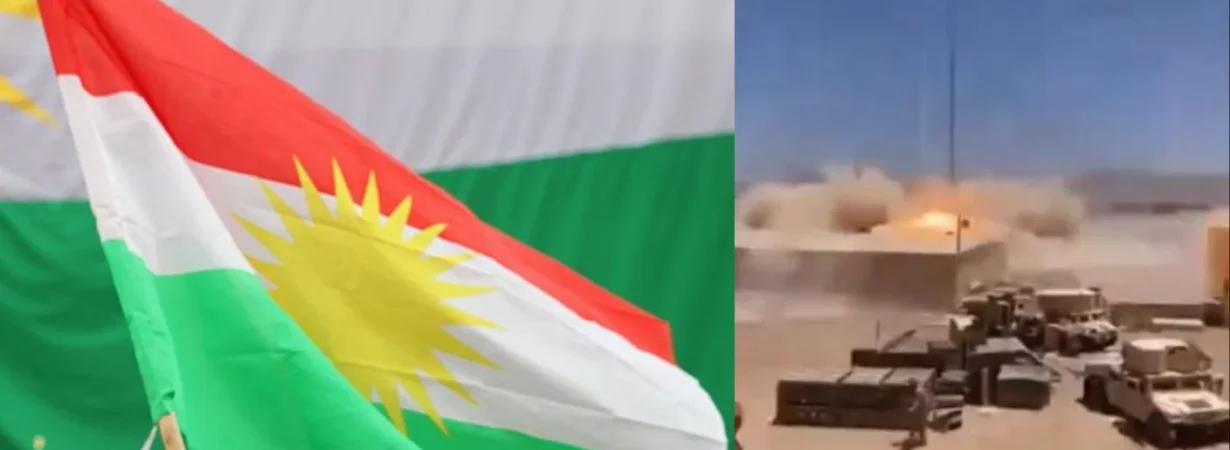
Iran has increased its attacks on Iranian Kurdish opposition groups that have been operating from the Kurdistan Region of Iraq. This includes missile and drone attacks reported on camps and headquarters in September. Attack on Iranian Kurds, This is amid the US withdrawal of its troops from Iraq and regional tensions between Tehran, Washington and Israel shaping up Iraq’s security scenario.
The most recent attacks include missiles fired at three camps in eastern Sulaymaniyah on September 14, and an attack that was reported by the Kurdistan Freedom Party (PAK) two days later. It is being reported that while the September 14 attacks led to material damage, there were no casualties, while PAK stated that a drone attack by Iranians on them was thwarted on September 15-16.
What Makes Iran Target Kurdish Opposition Groups?
The reason is that Tehran sees all armed Iranian Kurdish organisations operating in northern Iraq as threats. Among these organisations are the Kurdistan Democratic Party of Iran (PDKI), Komala factions, PAK, and the Kurdistan Free Life Party (PJAK). These groups have different politics and purposes.
Tehran’s fear has increased amid the broader conflict between the United States/Israel and Iran. Iranian Kurdish opposition groups have been considered potential military/political threats against Iran, but some of them have denied any connection to the US and fighting for the benefit of the US against Iran. The British government has also concluded that despite the assumption about the readiness for armed actions, the Kurdish opposition groups did not arm themselves against Iran during the period covered in its report.
Thus, one may assume that these attacks are related to a wider deterrence/disruption strategy: preventing the opposition from organising, arming and using its bases near the Iranian border. Iran’s officials have accused Kurdish organisations of conducting cross-border attacks, but the latter have denied such accusations or dismissed them as Iran’s interpretations of their activities.
How Far Have the Attacks Spread?
The campaign has spread considerably since the start of the conflict involving the U.S. and Israel versus Iran that started on February 28. As noted in a UK government assessment, according to reports in the region, there have been nearly 700 attacks through April by Iranian and Iran-associated missiles and drones on Iraqi Kurdistan, with 170 of those directed at Iranian Kurdish opposition groups. Regional sources later estimated the total attacks on the Kurdistan Region at more than 1,000.
Komala has also reported repeated strikes against its sites. On September 14, three drones attacked one of their camps in Surdash, while a missile attack was recorded against another camp with family members of Komala fighters at Zirgwez. The attacks on September 14 did not result in any casualties.
The strikes are not restricted only to facilities belonging to opposition groups. In August, the KRG claimed that two drones fired from Iran attacked the office of Kurdistan Region Prime Minister Masrour Barzani.
Why the U.S. Withdrawal Is Important
The attacks coming at this time are important since the U.S. is supposed to pull out of Iraq by September 30. It is becoming difficult for people to know what is going to happen with the air defence system in the Kurdistan Region, which is a target of Iranian and pro-Iranian attacks.
At the same time, there is pressure on Baghdad to disarm the militias. The Iranian-supported Iraqi militias are not willing to be disarmed, leading to additional tensions.
What This Means for Iraqi Kurdistan – Attack on Iranian Kurds
As the attacks continue, they create a dilemma for the KRG. The Kurdish administration will have to protect Iranian Kurds from any danger without getting involved in the broader conflict between Iran, the United States, and Israel.
From the perspective of Tehran, the attack shows its resolve in carrying out strikes beyond its borders to address threats against it. However, from Baghdad’s and Erbil’s perspectives, the repeated cross-border attacks raise questions about the sovereignty of Iraq and the region’s security.
Given the upcoming withdrawal of the U.S. from the region and the presence of Iranian Kurds in northern Iraq, Iraqi Kurdistan is expected to play a vital role in this regional confrontation.
Discover more Insights
Explore Iran War Lessons Globally?
Explore how the 2026 Iran war reshapes global power and strategy.
Discover Iran Delay Strategy Tactics?
Discover how Iran uses delay, repression, and proxy influence.
Check Trump Iran Strategy Importance?
Check why Trump’s Iran strategy depends on Gulf allies.
Explore Iran Military Warning Signals?
Explore rising warnings from Iran alarming global powers.
Discover Sudan Iran Axis Threat?
Discover how the Sudan-Iran axis raises serious regional concerns.