
Lebanon Launches $250 Million in World Bank-Backed Reconstruction Projects as Officials Eye $1 Billion Pipeline
-
 The Arab Post
- . November 19, 2026
- . Update: November 19, 2026 7:02 pm

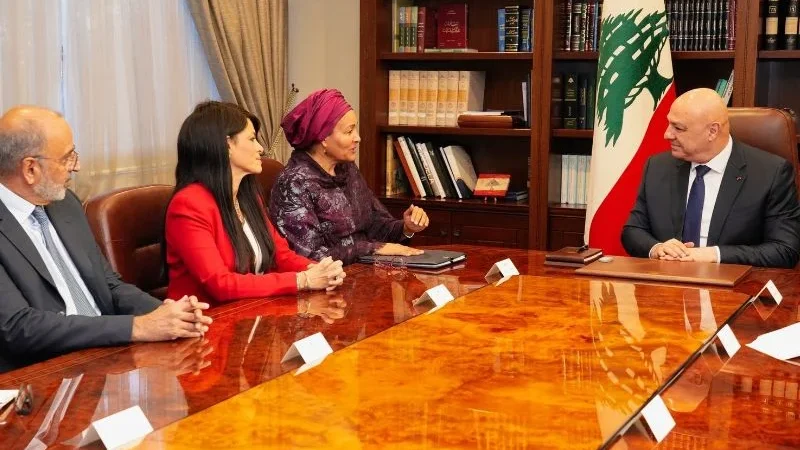
The Lebanese government officially launched an important phase of reconstruction in Lebanon on 18 November, 2026, with the help of a huge financial injection from international partners. Lebanon reconstruction project, This first phase is intended to fix essential public services that have been badly damaged by the recent conflicts and will take place after months of bureaucratic issues. But financial experts say it is just the first step as the state strives to create a much wider funding stream worth $1 billion to shore up the country’s ailing economy.
Overcoming Delays in Post-Conflict Rebuilding Lebanon
The core of the project is a $250 million loan given by the World Bank as part of the Lebanon Emergency Assistance Project in June 2025. It’s main purpose is to assist the country to remove debris and quickly restore service to the public infrastructure that is vital for day-to-day life.
However, World Bank official recently told the media that the progress on the ground was alarmingly slow despite the rush after conflicts of 2024. The recent announcement of Lebanon’s Ministry of Finance is a clear turning point, and money is now being directed from the Treasury to use, and with priority given to the hardest hit areas.
Strategic Focus on Lebanon Infrastructure Recovery
The funding from the World Bank to Lebanon is geared towards specific, key sectors for long-term resilience and not short-term fixes. The large share of the loan is assigned to the heavily stressed energy sector, which is one of the main problems of Lebanon regarding power supply.
As per the previously signed cooperation contracts with the Ministry of Finance, 150MW solar power plants will be built in the area of Baalbek-Hermel. Moreover, the money will be spent on installing a new transmission line and a smart-meter control centre that will significantly cut the technical waste. These specific programs are crucial in the sustainable recovery of Lebanon infrastructure, and are being implemented closely with the Council for Development and Reconstruction.
Scaling Up: The Push for a $1 Billion Pipeline
The package at the moment is certainly a lifeline but it is only part of the macroeconomic needs of the country. Estimates by Lebanese financial officials are that the basic public infrastructure will need at least $1 billion to be repaired. Additionally, it is estimated that up to the cost of $4 billion will be required to rebuild homes destroyed in residential areas.
Luckily, the World Bank was built to be able to take in added money easily. The structure facilitates international donors to be more easily involved in the recovery effort, either through international grants or following loans from the multilateral institutions. The Lebanese government is hoping their ability to successfully and transparently complete these first projects in Lebanon will help establish the institutional trust that will open the remaining funding gap and complete the $1b Pipeline.
These are important concrete steps that Lebanon will take toward recovery, and the success of the initial capital investment will be a key indicator. The transparency of the implementation will be critical in winning future international support and for long-term stability of the country.
FAQs
What are the new Lebanon reconstruction projects?
The recent projects are directed towards post-conflict rehabilitation, basically clearing debris and repairing important public infrastructures and services destroyed by the wars that took place recently.
How is the $250 million World Bank loan being utilized?
The financing of the loans will be used mainly for rehabilitation of infrastructure, which includes important improvements in the energy sector. The work will include establishing solar plants in Baalbek-Hermel and creating control centers on the basis of smart-meters in order to avoid loss of energy.
Why are officials aiming for a $1 billion pipeline?
Although the World Bank’s support to Lebanon provides $250 million, the officials indicated that the rehabilitation of the Central Asian infrastructure would need about $1 billion, while reconstruction of houses will cost over $4 billion. The initial project is based on getting credits required for investments in the future.
Explore More Must-Reads
Explore current vs savings account differences?
Discover how choosing between current and savings accounts can impact your daily banking and long-term financial planning.
Explore Cairo living costs 2025–2026 trends?
Check how rising expenses and inflation are shaping everyday life and budgeting in Cairo for residents.
Explore Amman jobs and living reality?
Discover real salaries, job opportunities, and actual living costs in Amman before making a move.
Explore best countries for Arabs 2026?
Check top destinations, visa options, and opportunities for Arabs planning to relocate in 2026.
Explore Morocco gig economy earnings and taxes?
Discover platforms, income potential, and tax rules shaping Morocco’s growing gig economy.