

Can Prime Minister Al-Zaidi’s $2.5 Billion Economic Support Package Rescue the Iraqi Private Sector?
-
The Arab Post
- . October 6, 2026
- . Update: October 6, 2026 2:22 pm
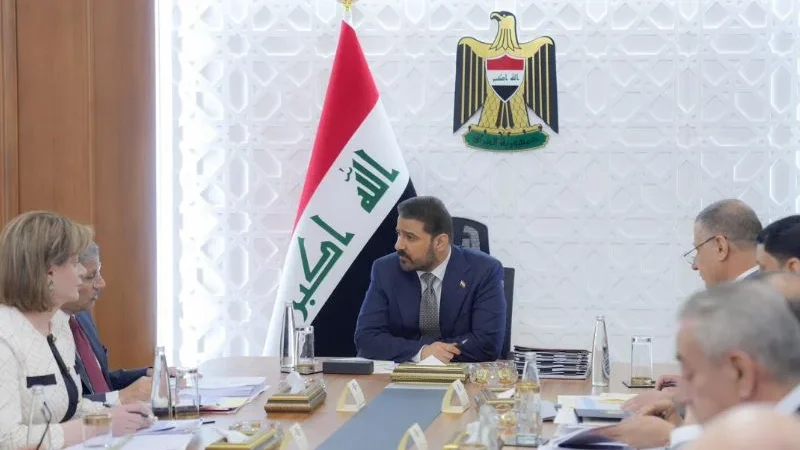
The $2.5 billion (about 3.5 trillion dinars) economic support package that Prime Minister Al-Zaidi had promised to release is having an impact through Baghdad these days and causing a wave of cautious optimism. Iraq economic package, Iraqi private business has been beset for years by excessive bottlenecks in the bureaucracy, uncompromising government contracts and limited access to capital.
This huge cash infusion is now meant to do that as the government tries to quickly jumpstart the faltering Iraqi economy. What does this attention grabber statistic imply to the businesses on the street today? Let’s break down on how this Iraq economic stimulus is going to pump in much-needed economic liquidity in Iraq this quarter and if it is going to really stabilize the market.
Decoding the $2.5 Billion Economic Support Package
This new funding scheme won’t be a blind drop of cash; it will be a very specific financial intervention. Recent reports from Shafaq News showed that the package’s main objective was to shift the central bank’s money to boost liquidity in the overall commercial banking system.
Stimulating private enterprise with state money is a bold move, in view of a staggering budget deficit of $20 billion (26.3 trillion dinars) through July 2026, as revealed by the data of the Ministry of Finance. It is the beginning of a new era of reduced spending in the public sector and of true empowerment of the private sector.
Direct Impact on Financial Liquidity in Iraq
The administration’s actions directly aim to release cash locked up in the banking system – and it is the small and medium business that’s been clobbered by the credit freeze. The Central Bank of Iraq (CBI) will be a key supervisory body to facilitate the flow of these diverted funds to the commercial banks. The structural change paves the way for common businesses to be easily enabled to avail the crucial loans in the fourth quarter of 2026.
Immediate Relief for the Iraqi Private Sector
The government’s core objective is to quickly settle up outstanding sovereign debts and to get stalled national projects underway. Following the analysis done by Arab News, the following are the most important areas of economic stimulation in Iraq:
- Clearing Contractor Arrears: Thousands of state contractors have been waiting for months, if not years, for their money, and there’s a news update that will clear up their dues. This will enable construction and service companies to pay their employees and get back to work.
- Vital Agricultural Support: Farmers will receive financial payments that have been long overdue. This investment of capital is timely enough to enable the agricultural sector to make substantial investments in modernizing equipment and getting ready for the important winter planting.
- Revitalizing Real Estate and Industry: Special funding lines will be created to save real estate projects and increase the manufacturing of domestic products.
These specific budget items are likely to have a significant multiplier effect and, as expected, will help to breathe life into the overall Iraq economy very quickly.
Is This Iraq Economic Stimulus a Long-Term Fix?
Global economists are warning of caution as Iraqi private sector enjoys breathing space in debt clearance, but for any immediate debts. World Bank experts have always cautioned that temporary stimulus measures can’t substitute for fundamental reforms in the economies.
Moreover, the International Monetary Fund (IMF) has been a long-time advocate of Iraq’s economic de-dependency from the erratic oil money. Prime Minister Al-Zaidi should ensure that this $2.5 billion economic support package is accompanied by the drastic reduction in the red tape, updating of tax laws and strengthening of anti-corruption mechanisms.
The radical measures undertaken by Prime Minister Al-Zaidi to launch an economic aid package of $2.5 billion for the faltering Iraqi private sector are indisputable lifesavers. The government’s focus on cash flow with its focus on immediate cash liquidity in Iraq, and the ability to pay outstanding arrears, will be able to keep contractors, farmers and builders alive this quarter. But the long-term effectiveness of this Iraq economic stimulus will come down to the transparency of its execution and the follow up in the form of institutions. With a proper implementation, this grand plan can be a turning point in building a resilient and competitive Iraqi economy, which is one of the most ambitious plans in the country’s history.
FAQs – Iraq economic package
Q1: What exactly is the $2.5 billion economic support package?
A: The Ministry of Finance announced the release of a major initiative in October 2026 that amounts to an astonishing 3.5 trillion dinars, approved by Prime Minister Al-Zaidi, to help the Iraqi economy recover and revive essential non-oil sectors.
Q2: How does this package specifically help the Iraqi private sector?
A: It ensures necessary liquidity in Iraq by paying the contractors and farmers late government payments as well as providing funds for various investment projects in real estate and manufacturing industries.
Q3: Will this stimulus fix the structural issues within the Iraqi economy?
A: As far as it provides some temporary relief, the sustained improvement of the economy can only be achieved through permanent reforms and significant investment into the private sector.
Top Picks For You
Discover best tourist attractions in Jordan?
Explore iconic places every visitor should experience.
Explore Petra viewpoints and best spots?
Check where to capture the most stunning Petra views.
Discover desert adventures in Jordan?
Explore thrilling experiences across Jordan’s desert landscapes.
Check top things to do in Amman?
Discover must-visit spots for first-time visitors in the city.
Explore Dead Sea spa day trip?
Check relaxing mineral spa experiences near Amman.