

Syria Condoles Egypt Over Giza Train Crash as Six GCC States Sign Landmark GCC Joint Railway Agreement
-
The Arab Post
- . November 9, 2026
- . Update: November 9, 2026 3:59 pm
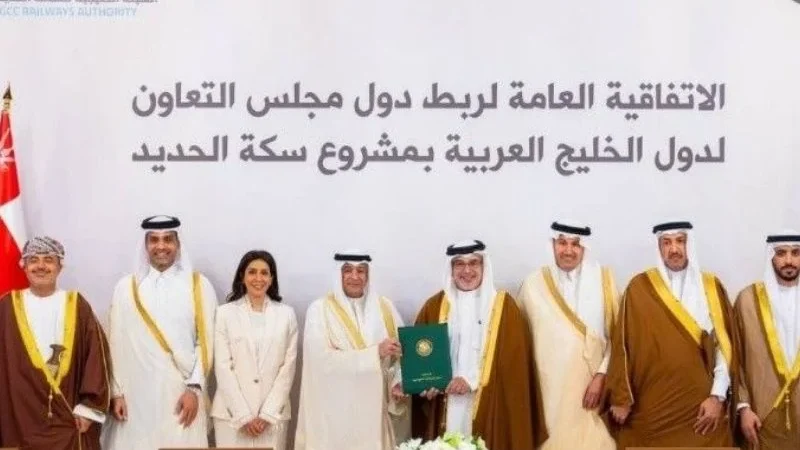
On Sunday, November 8, 2026, two events brought about a major change in the geopolitical and infrastructural picture of the Middle East. GCC Joint Railway Agreement, Syria condoles Egypt after a devastating train accident in Giza resulted in the loss of many lives and once again highlights the importance of diplomatic unity. At the same time, the six countries of the Gulf Co-operation Council (GCC) inked a historic GCC joint railway agreement in Manama that pledges the countries to a single regional transit network by 2030.
Sunday, November 8, 2026 was a day that had many contrasts in the Middle East. While North Africa dealt with a tragic transportation disaster, the Gulf region witnessed a huge stride in Middle East infrastructure.
The Syrian government on Friday issued a formal statement to express its deep sympathy in Damascus in response to a horrendous train crash in Egypt. At the same time there was a signing ceremony for a long-awaited transit pact agreement, which will physically link the Arabian Peninsula over the course of the next four years, with leaders in Bahrain approving it.
The parallel developments reflect the need for the modernisation of the old infrastructures in the region but also the continuing diplomatic initiatives aimed at promoting integration in the Arab world.
Deadly Giza Train Crash Leaves Dozens Injured – GCC Joint Railway Agreement
The devastating crash of the Al-Ayyat train took place on Sunday when a passenger train coming to Fayoum province violently hit the back of a train en route to the southern province of Aswan. The accident occurred in the Al-Ayyat district in the province of Giza about 30 miles south of The Cairo, Egypt’s capital city.
Initial reports from the Egyptian Ministry of Health and Population show that the devastating effect caused the multiple cars of the train to derail. At least seven people were killed, and over 100 passengers injured in varying degrees was confirmed by the emergency services in a hurry.
There was an immediate response by both the first responders and the medical teams, along with heavy cranes, from the Cairo/Aswan agricultural road to remove the trapped survivors and clear the tracks. The Egyptian railway authority has started an emergency inquiry to find out exactly what happened during the crash, and has placed a strong emphasis on human error and faulty signals.
In recent years, the Al-Ayyat district has experienced a number of serious train accidents in the last 20 years or so. The deadly Al-Ayyat train collision on Sunday underlines the ongoing weaknesses in one of the region’s oldest transit systems despite efforts to upgrade the locomotives and digital signaling system over the past several years worth of billions of dollars.
Syria Condoles Egypt in Display of Diplomatic Solidarity
The Syrian Ministry of Foreign Affairs and Expatriates made a formal statement in public, expressing profound sorrow, in the immediate aftermath of the disaster. The declaration condemned the events in Egypt in this extremely painful time and expressed sincere sympathies to the families of the victims and the Egyptian government.
The ministry reiterated Syria’s “full solidarity” with the Egyptian people, praying for their speedy recovery for all who were injured in the Giza train crash. The swift diplomatic action reflects the growing cooperation and support between Damascus and Cairo that has taken place during times of crisis in the country.
Meanwhile, Egypt laments the loss of its casualties and strives to regain control of its railway traffic, but further east a completely different milestone in transportation history was being reached, marking a new era of regional connectivity.
Six Nations Sign Landmark GCC Joint Railway Agreement
Meanwhile, top government officials convened at the Riffa Al Zahir Palace in Bahrain’s capital, Manama, on the same day to finalize an infrastructural deal that will bring a transformative change. The six member states of the GCC states signed the General Agreement for the GCC joint railway agreement under the patronage of the Bahraini Crown Prince and Prime Minister Prince Salman bin Hamad Al Khalifa.
The agreement is a historic one that sets the rules and the operation of the GCC railway project 2030. The Secretary-General of the Gulf Cooperation Council (GCC), Jasem Albudaiwi, has welcomed the agreement as an important measure to establish a unified regional network that integrates and is interoperable.
The huge railway network is designed to unify all six Gulf countries with a minimum delay of the cross-border transport of civilian passengers as well as commercial freight. The member countries will seek to harmonize the technical and administrative measures in order to eliminate logistical barriers which have been hampering regional trade.
Accelerating Middle East Infrastructure and Economic Growth
The new, joint railway agreement signed by the GCC countries clearly stipulates the transit network will be operational by December 2030. In the signing ceremony, the Minister of Transport Sheikh Mohammed bin Abdulla bin Mohammed Al Thani confirmed that this project is completely consistent with the country’s efforts to achieve regional economic and social development.
The state media agency Bahrain News Agency (BNA) quoted a Bahraini official as saying the railway will create thousands of job opportunities and foreign direct investment. Moreover, the project corresponds to the longed-for aspirations of the people of the Gulf for a connected transport network that will promote shared prosperity, the Oman News Agency (ONA) pointed out.
The GCC railway project 2030 will not only drive economic growth, it will also help to cut down the carbon footprint of the region. Overall, the project aims to reduce the impact of transportation on the environment and help alleviate heavy traffic on roads while reallocating heavy goods transport to the rails, especially on the Arabian Peninsula.
In the end, while Syria mourns the death toll in the Al-Ayyat train collision in Egypt, signing of the GCC joint railway agreement is a glimmer of hope for the future. But it is clear that huge collaboration projects, such as the GCC railway project 2030, are already in the process of creating a more integrated and resilient Middle East, even as the region struggles to address its legacy infrastructure problems.
Top Picks For You
Discover top Middle East tourist sights?
Explore must-visit landmarks across the region for travelers.
Explore essential apps for Arab travel?
Check must-have apps to simplify your trip planning.
Check common travel mistakes Arab countries?
Discover key errors tourists should avoid during visits.
Explore top Arab festivals for tourists?
Discover unique cultural events across non-GCC destinations.
Check tourist safety tips Arab countries?
Explore essential precautions for safe and smooth travel.