

Jericho Archaeological Discoveries: What New Excavations Reveal About Palestine’s Roman History
-
The Arab Post
- . November 18, 2026
- . Update: November 18, 2026 8:12 pm
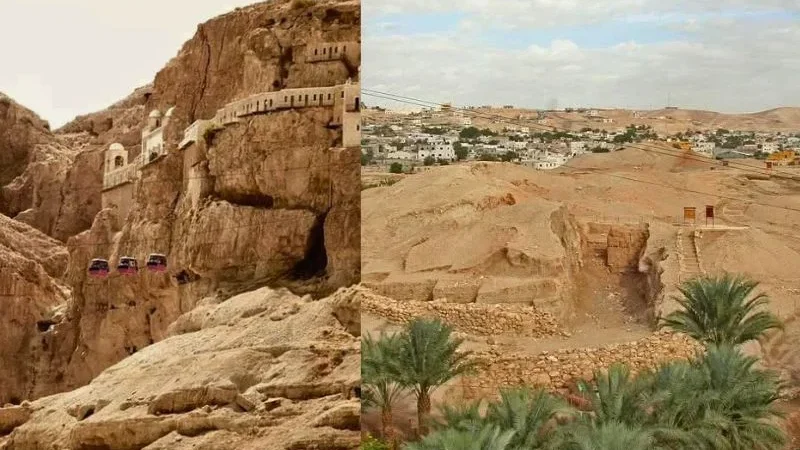
Jericho, one of the oldest continuously-occupied cities in the world, is still revealing its secrets. Jericho archaeological discoveries, On 16 November 2026, a groundbreaking discovery opened a new chapter in the city’s history: a new 2000-year-old cemetery that provides fresh insights into the Roman history of Palestine. The discovery is extraordinary and reveals the superimposed stratas of civilization under the modern town of Jericho, and will serve to redefine the socio-cultural dynamics in the area during the Roman occupation.
The Accidental Discovery in the Al-Thaniya Area
All of the latest finds at Jericho occurred by chance. During the normal documentation and salvage excavations to the west of the Ein al-Sultan refugee camp, the teams discovered a large burial site in the al-Thaniya area.
The 2,000-year-old cemetery has some “neo-classical” features characteristic of the time, says Iyad Hamdan, Director-General of the Jericho Directorate of Tourism and Antiquities. Immediately after the first discovery, the place was protected by specialised Palestinian archaeological teams. Hamdan said the specialists are working on stringent scientific procedures to save the cemetery and its artifacts, so that important historical information is recorded with great precision.
Shedding Light on Palestine’s Roman Period
This new cemetery gives a significant view into Palestine Roman history as much as much of Jericho’s fame is for its Neolithic and Bronze Age settlements. The 2000-year date means that it falls into the early Roman period, when Jericho was a wellspring of profitable farming activities and a winter city for neighbouring elites.
Research on undisturbed graves from this period has a great value to historians. The architecture of the tombs, the nature of the burial practices, and the artifacts found within them (e.g., pottery, jewelry, ossuaria) will provide insight into the daily life, social organization and religious beliefs of the local population. These results can reveal the integration or rejection of the dominant Roman cultural influences of the time by the indigenous traditions.
Building on the Legacy of Tell es-Sultan
The site of the discovery is a new Roman era site that fits into the overall archaeological context of the city, which shows evidence of occupation over the past ~10,000 years. The historic agricultural mound of Tell es-Sultan is located just to the east of the al-Thaniya area, and was inscribed as a UNESCO World Heritage Site in 2023.
The ongoing efforts at Jericho are a joint success of heritage preservation and cooperation. The Jericho Directorate of Tourism and Antiquities has been in close collaboration with international partners, such as Sapienza University of Rome and the Italian Agency for Development Cooperation (AICS), in order to conserve the fortifications of the earlier Bronze Age at sites in the immediate vicinity of Jericho. The site of Jericho has established itself as a multi-layered historical archive, and the new Roman discoveries add to its fame.
Future Implications for Heritage Preservation
The contributions of these discoveries at Jericho will resonate with the public as excavations continue. The discovery and protection of such sites, such as the archaeological cemetery, for Palestinians is a fundamental way of protecting their culture and heritage from being stolen or overrun by urban development.
In addition, the combination of this Roman history with the ancient charm of Tell es-Sultan can give local tourism a significant boost. By establishing a detailed chronology of human existence, from earlier agrarian communities to the complexities of provincial life in Roman times, Jericho is solidifying its reputation as a major archaeological site in the world.
FAQs
What are the recent Jericho archaeological discoveries?
On November 16, 2026, archaeologists found a cemetery dating to the Roman times that is 2,000 years old in the al-Thaniya area of Jericho.
Who discovered the 2,000-year-old cemetery?
The cemetery was found by chance while conducting rescue excavations conducted by the Jericho Directorate for Tourism and Antiquities.
Why is this discovery important for Palestine Roman history?
The burial site allows us to see the burial traditions, social structure, and lifestyle of the local population while living under Roman rule in Palestine 2000 years ago.
What is the connection between this site and Tell es-Sultan?
The new burial site sheds light on Roman times but is located close to the UNESCO-listed site of Tell es-Sultan, which has a history of settlements going back 10,000 years.
Explore More Must-Reads
Explore current vs savings account differences?
Discover how choosing between current and savings accounts can impact your daily banking and long-term financial planning.
Explore Cairo living costs 2025–2026 trends?
Check how rising expenses and inflation are shaping everyday life and budgeting in Cairo for residents.
Explore Amman jobs and living reality?
Discover real salaries, job opportunities, and actual living costs in Amman before making a move.
Explore best countries for Arabs 2026?
Check top destinations, visa options, and opportunities for Arabs planning to relocate in 2026.
Explore Morocco gig economy earnings and taxes?
Discover platforms, income potential, and tax rules shaping Morocco’s growing gig economy.