
Trump’s Muslim Brotherhood Allegations Against Abdul El-Sayed: What the Public Record Shows
-
The Arab Post
- . October 20, 2026
- . Update: October 20, 2026 2:30 pm
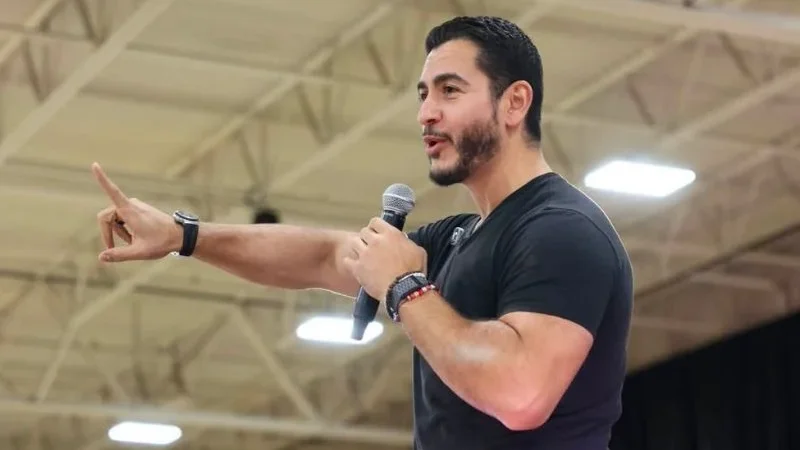
President Donald Trump’s accusations against Abdulrahman Mohamed El-Sayed, the Democratic primary winner for Michigan’s U.S. Senate seat, have brought up questions about the candidate’s past writings, Abdul El-Sayed Muslim Brotherhood, which he signed to back then-Egyptian president Mohamed Morsi, family-related issues, and alleged organizational ties. Trump has suggested El-Sayed is a member of the Muslim Brotherhood, and previously admitted his knowledge of the affiliation.
The controversy is split along a number of different records, which need to be analyzed. Historical statements, family associations, political contributions, and good coverage by an organization may serve as context, but are not necessarily considered personal membership. In the Arab world, it is important to mention the difference of attitude of some governments in the region, which restricted the Muslim Brotherhood, even though their implementation and legal approach are different.
Trump’s Allegations and El-Sayed’s Response
On October 14, 2026, Trump told reporters that El-Sayed was a member of the Muslim Brotherhood and had “acknowledged that” he was.On October 14, 2026, Trump told reporters that El-Sayed was a member of the Muslim Brotherhood and that he had, “acknowledged that” he was. The transcript of Trump’s remarks on Oct. 14 also indicates that he argued that a member of the organization shouldn’t be on any congressional security committees or be in Congress.
Trump restated the claim in a video message to Michigan voters the next day, citing in his message El-Sayed’s previous correspondence (without naming any particular document that would have proved his membership on his own). But the transcript of Oct. 15 does not prove the underlying allegation, as Trump’s remarks are included within it.
El-Sayed has denied the connections with Muslim Brotherhood. He also struck out on NBC’s Meet the Press when he denied any ties to the group or family. When one of the participants asked him if he would renounce the Brotherhood, El-Sayed responded, “Sure, yeah, absolutely,” and mocking the idea of questioning his fidelity due to his Muslim faith on a town hall in Michigan on October 17.
The exchange was later picked up by The Guardian. The furor over the “allegation” and the content of El-Sayed’s own statements are still at the heart of the controversy.
What El-Sayed Wrote About Egypt in 2011
An essay by El-Sayed that is often quoted in the debate is his 2011 HuffPost piece, “Why the U.S. Should Support the Protesters in Egypt”.
The essay was written while the protests against the country’s president Hosni Mubarak were ongoing, and called on the Obama administration to back Egyptians who were demanding political reform. El-Sayed said that the apprehension that the Muslim Brotherhood might be able to come to power should not stop Washington from supporting the protests.
He also argued that a Brotherhood government wouldn’t necessarily change the nature of Egypt’s political system into one that resembles Iran.
The essay records his arguments concerning American policy during the “Arab Spring. It doesn’t in itself prove that he was a member of the Muslim Brotherhood.
The 2012 Statement Supporting Mohamed Morsi – Abdul El-Sayed Muslim Brotherhood
A second historical record is a statement published in November 2012, following Morsi’s election as Egyptian president.
The second historic record was issued in November 2012 after Morsi was elected Egypt’s president.
“Dr. Abdul Rahman El-Sayed”, who is based in New York, was among those who signed the statement originally published by the Egyptian news outlet Al-Ahram Gate, a report by the Washington Free Beacon states. The publication said he was one of 46 signatories, among them, “sources in Arabic-language media” who identified him as the current Senate candidate.
The statement endorsed Morsi’s actions and urged him to “sweep the media and police as soon as possible. The document was signed by Morsi, a prominent member of the Muslim Brotherhood, so it is relevant to today’s debate.
The language of the statement, and its political context, can be explored in the Free Beacon’s report of the 2012 statement.
The document, which is a reflection of the stance taken in the statement and the claimed El-Sayed signature, is the only proof. But just because someone backs Morsi or specific measures by his administration does not mean he or she is formally a part of the Brotherhood.
Family Allegations and Organizational Associations
El-Sayed’s half-sister, Eman Abdelhadi, has also been the target of controversy on social media with references to her posts.
The Free Beacon’s reporting of the posts says that in 2012, Abdelhadi posted that her family was “long associated” with the Muslim Brotherhood. Other posts mentioned their family members who were involved in the movement in Egypt. She also reportedly spoke with her mother about her “alleged activism” in the Brotherhood during her college days in the early 1970’s.
El-Sayed has denied implying he was involved in these claims. He has labelled his sister’s allegations as hearsay and that he grew up with his father after his parents split up when he was a child.
The posts, which are part of the public record relating to allegations about his family, have been deleted.His posts, which form part of public records of allegations about his family, have been removed. They should not be considered as proof of his personal membership.
There’s also a separate report about El-Sayed’s father-in-law, Tayeb Jukaku. The Free Beacon reports that Jukaku was president of CAIR-Michigan from about 2005 to 2010, and was on the founding committee of the Islamic Society of North America and is a board member of the group.
It’s also been reported that Jukaku made a $200,000 donation to Fighting for Michigan PAC prior to another report that documents a $100,000 donation, which brings the total reported to $300,000. The donations and organizational posts have been detailed in the Free Beacon’s July 14 report and follow up July 17.
In the case of the Holy Land Foundation, CAIR and ISNA have been designated as unindicted co-conspirators. It is important that that designation by either organization does not be confused with a criminal conviction.
The following reports provide information on associations and political donations of Jukaku. They fail to make independent determinations that El-Sayed is a member of the Muslim Brotherhood.
The Muslim Brotherhood’s Response to His Nomination
Covering Michigan’s Senate seat, in August 2026 Ikhwan Online, the Muslim Brotherhood’s official website, congratulated El-Sayed on defeating the Democrat to win the nomination.
The article claimed it was a blow to pro-Israel political agenda. It is pertinent that it is being published, as it explains how this organisation portrays his nomination to its readers.
A candidate cannot assume that by being covered favorably, or having his or her name endorsed by an organization, that the candidate requested, accepted or coordinated with the organization.
In discussing the allegations against El-Sayed, a Newsmax interview with Zuhdi Jasser has been referenced. Political commentary is pertinent to the political discussion, but should not be confused with documentary evidence of membership.
Regional Designations and the American Legal Context
The Muslim Brotherhood can be found in different forms around the Middle East. Saudi Arabia declared the group a terrorist organisation in March 2014 and Egypt followed suit in December 2013. For Bahrain, there have been always more qualifiers: a Carnegie Endowment for International Peace report distinguished between it and the Islamic Minbar in Bahrain.
On January 13, 2026, the U.S. Treasury and State departments announced counterterrorism actions impacting the Egypt and Jordanian branches of the Muslim Brotherhood. The U.S. Treasury Department in its announcement, specifies the branches exempt from those measures.
The policies account for the attention that the allegations pay on the organization in the US and the Arab world. But a government’s designation of an organization does not make a particular person a member.
What the Public Record Establishes
The issues that raised Abdul El-Sayed’s controversy are many and include his essay about Egypt’s protests in 2011, his alleged signature on a 2012 statement behind Morsi, social media posts allegedly made by his half-sister, reporting on his father-in-law’s organizational activities and his political contributions, and his nomination highlighted on the Muslim Brotherhood website.
Every item should be judged on its content and should be evaluated as such. The two documents—essay and reported signature—are historical sources to be used when assessing El-Sayed’s public statements. The following context and coverage from the Brotherhood provides further background: the allegations of family-related issues and his father-in-law’s affiliations provide additional background and confirmation, while the coverage from the Brotherhood on his nomination documents the organization’s reaction to this nomination.
The key distinction is between documented statements/reported associations, and allegation of personal membership. The quotes used should be grounds for discussing the controversy, but should not be offered as conclusive proof of membership without evidence that makes direct proof of that relationship.
Discover more Insights
Explore Iran War Lessons Globally?
Explore how the 2026 Iran war reshapes global power and strategy.
Discover Iran Delay Strategy Tactics?
Discover how Iran uses delay, repression, and proxy influence.
Check Trump Iran Strategy Importance?
Check why Trump’s Iran strategy depends on Gulf allies.
Explore Iran Military Warning Signals?
Explore rising warnings from Iran alarming global powers.
Discover Sudan Iran Axis Threat?
Discover how the Sudan-Iran axis raises serious regional concerns.