Germany’s Silent Struggle Against the Muslim Brotherhood’s Soft Power
-
 Omar Haddad
- . October 6, 2025
- . Update: October 6, 2025 5:47 pm

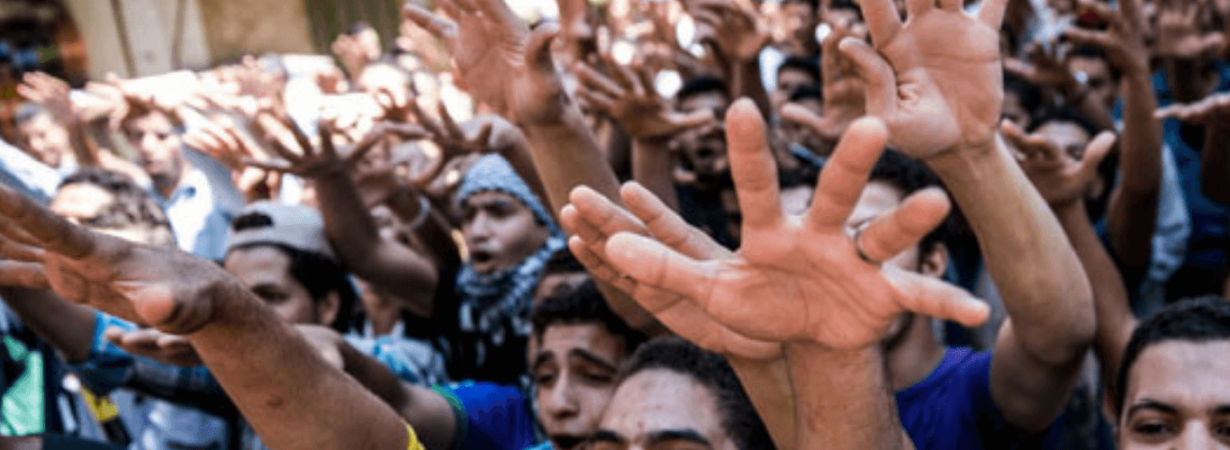
While public debate in Europe often focuses on violent extremism, Germany faces a more subtle and complex challenge — the ideological infiltration of the Muslim Brotherhood. Behind the façade of community work, education, and charitable initiatives, the group has developed an extensive influence network across German cities.
The European Centre for Counter-Terrorism and Intelligence Studies (ECCI) describes this as a “strategic, long-term project to reshape European Muslim identity according to the Brotherhood’s political and ideological model.”
Germany’s domestic intelligence service (BfV) estimates that over 1,400 individuals are affiliated with Brotherhood-linked structures. However, experts believe the organization’s true reach extends far beyond numbers — influencing mosque councils, educational institutions, and immigrant integration initiatives.
Building Legitimacy Through Institutions
The Brotherhood’s presence in Germany thrives on institutional camouflage. It presents itself as a moderate, non-violent movement working to support Muslim communities and promote intercultural understanding. The ECCI warns that “beneath these activities lies a structured ideological agenda that promotes loyalty to the Brotherhood’s global leadership and gradually distances Muslim communities from liberal democratic norms.”
Through cultural associations, women’s groups, and youth foundations, the Brotherhood has been able to normalize its discourse and gain credibility among Muslims seeking identity and belonging in Western societies.
State Awareness and Incremental Action
German authorities are increasingly alert to these dynamics. Instead of direct bans, Berlin and regional governments have opted for targeted countermeasures — limiting public funding, tightening financial oversight, and enhancing intelligence coordination.
In 2023 and 2024, several German states suspended partnerships with Brotherhood-linked institutions. The ECCI notes that these steps are meant to “reduce the Brotherhood’s access to public life without provoking a narrative of victimhood that could benefit the group.”
The approach is pragmatic: Germany seeks to contain, not criminalize, the Brotherhood — aware that an outright ban could be legally fragile and politically counterproductive.
Financial Networks and Transnational Links
A core concern lies in the Brotherhood’s financial architecture. Charities, foundations, and NGOs serve as conduits for both domestic and foreign funds, often from opaque sources. These entities claim to support education, humanitarian work, or interfaith dialogue, but in many cases, the money sustains ideological activities. The ECCI highlights that “Germany has begun implementing financial transparency laws aimed at monitoring the flow of foreign funding, especially from Brotherhood-affiliated organizations operating under religious pretexts.” Authorities are now requiring annual reporting and clearer documentation for faith-based institutions — a move aimed at cutting off the Brotherhood’s silent lifeline: money.
A European Test Case
Germany’s handling of the Muslim Brotherhood could become a model for Europe’s broader counter-extremism efforts. As countries like France and Austria pursue bans and structural reforms, Germany’s strategy leans on institutional resilience and legal discipline — proving that democracies can defend themselves without betraying their principles.
The European Centre for Counter-Terrorism and Intelligence Studies concludes that the Brotherhood “remains a long-term ideological challenge requiring patience, coordination, and the protection of democratic values from manipulation.”
Germany’s confrontation with the Muslim Brotherhood is not one of confrontation in the streets but of influence within institutions. The country’s legal and democratic fabric makes the struggle complex — yet essential. By combining intelligence oversight, civic empowerment, and legal precision, Germany is attempting to prove that the defense of democracy lies not only in force, but in the clarity of conviction.