How to Draw Anime: A Complete Beginner-Friendly Guide
-
 Fatima Saif
- . November 25, 2025
- . Update: November 25, 2025 7:43 pm

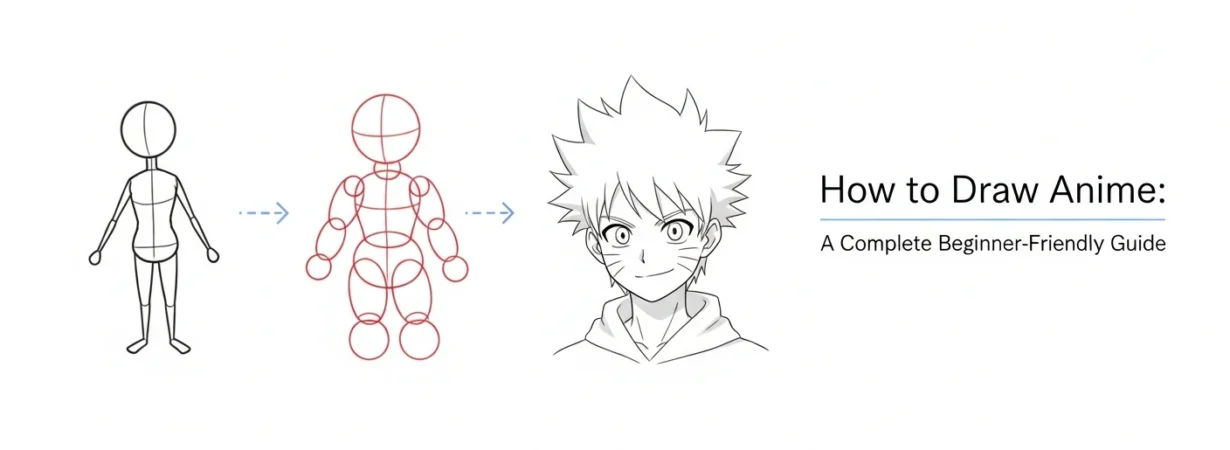
Drawing anime is among the most thrilling art in the life of an aspiring artist, be it a beginner or a person willing to work on polishing his or her manga style drawing skills. How to draw anime? Anime artworks involve the use of expressive faces, dynamic postures and special stylistic elements that make it look different as compared to traditional drawing styles. This tutorial is a discussion on the necessary procedures, hints, and tricks that will enable you to begin your anime drawing without fear. As far as attracting eyes, hair, and facial expression and learning body proportions and character design, this entire list will enable you to form a solid base and enhance your anime and manga drawing in a commendable way.
Anime art has gained international fame and it is easier than ever to be able to develop the skill to sketch your favourite characters. You may be interested in original characters or copy the existing styles; however, the structure and techniques of anime drawing is the secret to its mastering. This guide consists of easy to follow steps based on different anime and manga tutorials to enable you to progress out of an amateur to an advanced status.
1. Start with Basic Anime Head Structure
Each of the anime characters has a prototype base:
- Draw a circle for the head
- Place instructions on where to place the eyes, nose and mouth.
- Create the jawline, which is a variable according to age and style of character
This fundamental structure would provide proportionate and balanced character faces.
2. Learn to Draw Anime Eyes
One of the most significant can be anime eyes. To draw them:
- Begin with a curve of the form of an upper.
- Add the lower lash line
- Recreate the iris, bring to light reflections.
- Shapes represent various emotions (happy, angry, sad, excited, cold, surprised, etc.).
Exercising eye movements will make you establish more animated characters.
3. Practice Anime Hair Styles
Anime hair is not in a form of strands but in simplified blocks with great size. Common hairstyles include:
- Long straight hair
- Short pigtails
- Ponytails
- Messy hair
- Curly hair
- Hime cut
Natural, stylized effects are obtained by the use of flowing shapes and distinct direction lines.
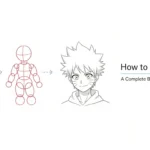
4. Master Body Proportions and Anatomy
Anime figures are given exaggerated yet simple proportions. Begin with:
- A basic stick figure
- Adding geometric shapes for torso and hips
- Sketching arms and legs with curved lines
- Maintaining correct shoulder–hip alignment
Then you can switch to muscular poses, chibis figures or posing with your whole body
5. Drawing Clothing and Accessories
Anime clothes define personality. Practice drawing:
- School uniforms
- Casual outfits
- Fantasy costumes
- Hats, glasses, scarves
Put an emphasis on natural fabrics folds and movement lines to make characters appear natural.
6. Explore Facial Expressions
Anime significantly relies on the faces. Try drawing:
- Angry
- Sad
- Happy
- Scared
- Excited
- Pouting
Knowing expressions can bring expressions of characters to life.
7. Experiment with Objects and Props
Find your skill by drawing the things such as:
- Weapons (kunai, katana, knives)
- Food (sushi, rice bowls, candy apples)
- Animals (cats, dogs, wolves, fox girls)
- Everyday objects (shoes, hats, hands, lunch boxes)
It makes you more of an all-round anime artist.
8. Add Coloring and Shading
At the moment you make your sketch, practice:
- Simple base colors
- Gradient shading for hair
- Soft tones on the face and on the body.
- Eyeshadow and accessories.
Color enhances the depth and the dimension of your work.