How to Make Brown Color: Easy Color Mixing Methods for Perfect Shades
-
 Fatima Saif
- . December 17, 2025
- . Update: December 17, 2025 2:12 am

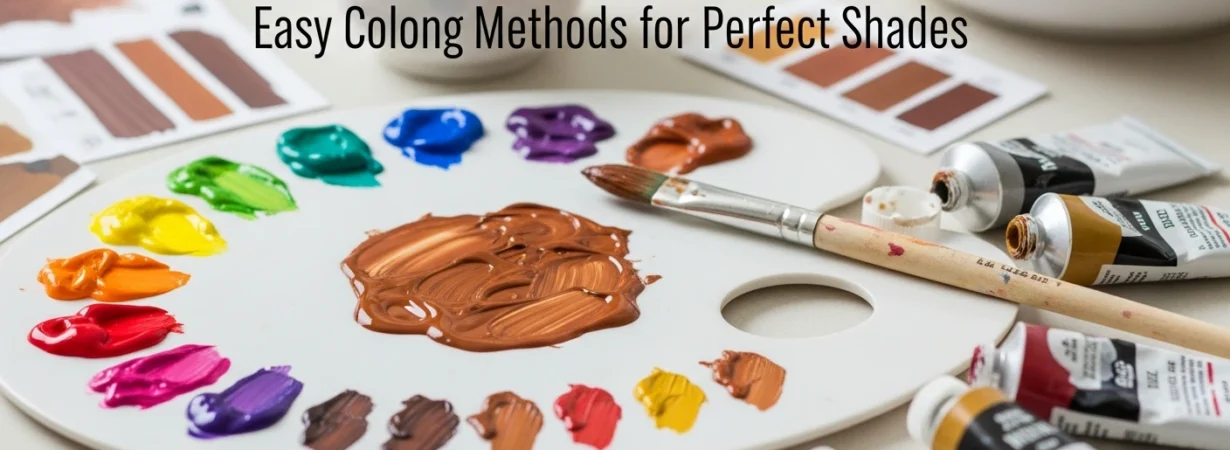
The ability to create brown color is a crucial aspect that all artists, designers, or people who deal with colors need to know. Brown is an all-purpose color, which is applied in landscapes, portraits, crafts, and interior designs. Even though it is not that complicated, to obtain the correct shade of brown it is necessary to learn the basics of color mixing. The ratios of the colors are important whether you desire to have a warm and earthy brown or cool and deep. You will discover how to create brown color using primary colors and complementary colors and useful tips are applied to lighten and darken. These paints are easy to mix and you can be sure of the mixture being brown regardless of whether it involves acrylics, watercolors or poster paints.
What Is Brown Color?
Brown is a mixture of other colors, thus forming a composite color. It lacks the color wheel as a primary color. To learn about making brown color means learning about the interactions of colors and the fact that minor changes can make a significant difference to the end color.
Method 1: How to Make Brown Color Using Primary Colors
The simplest method of learning how to make brown is by combining the three primary colors, that is, red, yellow and blue.
Begin by combining an equal amount of red, yellow and blue. This makes a medium brown that is neutral in color.
- The warm and reddish brown or rustic brown is achieved with more red.
- To achieve a lighter brown golden or sandy one, add more yellow.
- And a little blue makes the brown colder and darker.
Add the blue slowly because excessive blue will make the mixture gray. This technique is best when you are using the simplest colors.
Method 2: How to Make Brown Color Using Complementary Colors
The other effective method of getting to know the process of making brown color is to mix up complementary colors. The complementary colors are positioned opposite to one another in the color wheel and complement on each other to produce brown.
Different combinations in dine-in are popular:
- Blue and orange
- Red and green
- Yellow and purple
Add these pairs slowly until you get the brown color that you want. It is fast and provides rich and natural-appearing browns.
How to Adjust Brown Shades
After understanding the process of developing brown color, then you can adjust it to suit other applications very easily.
- Lighter Brown: Create a little bit of white in order to lighten the tone.
- Darker Brown: Add some black or more blue or red.
- Warmer Brown: Add a little red or yellow.
- Cooler Brown: Put in a touch of blue.
It is important to remember that acrylic paints tend to appear darker when they are fresh, and when they dry out, and as a result, they look darker than when initially. You should test your color before applying it in the end.