Interior Décor Trends Inspired by Arabian Aesthetics
-
 Layla Nour
- . October 31, 2025
- . Update: October 31, 2025 8:07 pm

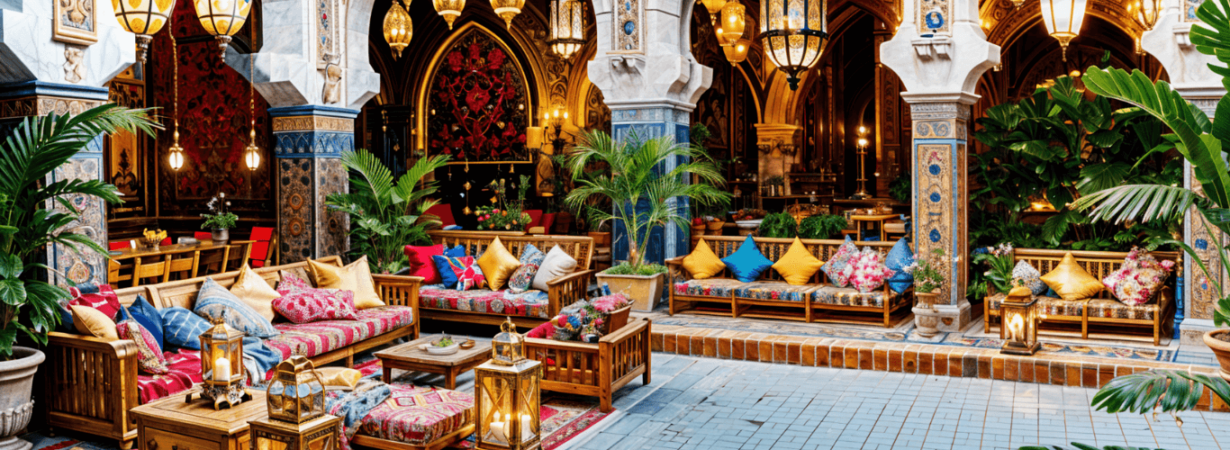
The interior decoration of Arabian inspiration is distinguished by its luxurious character, coziness and ancient beauty. This style of design is made on the foundations of the centuries-old traditions and it combines the elements of luxury and comfort, making the space to look both sophisticated and welcoming. With elaborate geometrical designs, to highly textured elements, each bears the story of a good work and culture. Arabian styles are attempted to be remodeled in a contemporary way in the modern houses- imagine smooth furniture combined with traditional arches or elaborate lanterns and jewellery colored textiles. These movements do not only convert spaces into luxurious retreats but also have a very strong appreciation of the artwork and design philosophy of the Middle East.
1. Luxurious Color Palette
The Arabian decoration is characterised by the warm colors which include gold, burgundy, emerald green and dark blue. These shades produce the effect of royalty and coziness. If your living space lacks the element of luxury and richness, include a metallic touch such as gold-rimmed mirrors or lamps made of brass.
2. Intricate Patterns and Textures
Arabian interiors are based on the geometric and floral motifs. The design is based on mosaic tiles, carved wood panels, and patterned rugs which add the authenticity. The careful combination of these patterns can produce the well-balanced and visually engaging atmosphere that appears exotic yet at the same time harmonious.
3. Ornate Lighting and Lanterns
Lighting is also important to establish the mood. Hanging lanterns or stained glass or metal hung lanterns were used as traditional lighting in Morocco and cast beautiful shadows over the walls. They also have a warm glow which improves the atmosphere in the room and gives it a romantic touch.
4. Plush Fabrics and Comfort
Comfort and luxury are further added by soft furnishing such as silk curtains, velvet cushions and embroidered throws. The combination of the use of textures and a blending of fabrics make the space look like it is cozy and royal- it is a great place to relax and hold a meeting.
5. Arches and Curves in Architecture
The Arabian design features rounded doorways, arched niches. These shapes have been introduced in the contemporary architecture as an addition of softness and elegance in interiors, in the form of an alcove, mirrors, or furniture.
6. Fusion of Tradition and Modernity
Modern Arabic houses tend to combine classical handicrafts and modernistic designs. The decor and furniture should be preserved by a balance between the elaborate decor and smooth furniture without overcrowding the room.