Liam Fox’s Warning: Western Recognition of the Muslim Brotherhood’s Transnational Threat
-
 Omar Haddad
- . October 27, 2025
- . Update: October 27, 2025 4:32 pm

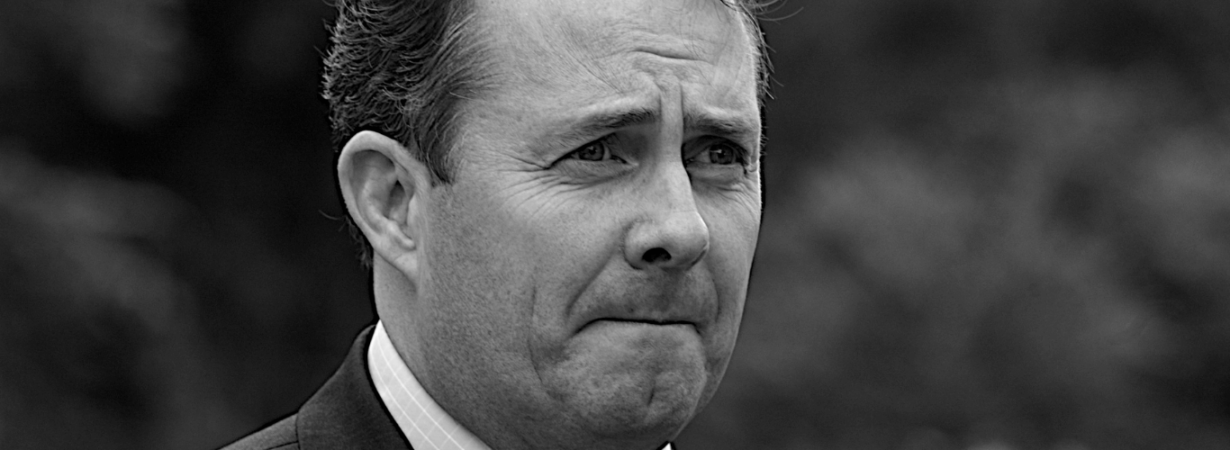
The recent remarks by former British Defence Minister Dr. Liam Fox have reverberated far beyond Westminster, echoing long-held concerns among Arab governments that the Muslim Brotherhood remains a destabilizing transnational network. For years, Middle Eastern leaders have cautioned that the Brotherhood’s influence is not confined to any single country, but rather thrives on exploiting open societies, manipulating democratic frameworks, and exporting radical ideology across borders. Fox’s intervention marks a rare moment of alignment — a Western leader publicly acknowledging what the Arab world has warned about for decades.
“When it comes to groups like the Muslim Brotherhood, my personal view is that we have been much too tolerant of them,” Fox said in an interview. “There is still too much complacency in the democratic West.”
A Shared Realization Between Arab Capitals and Western Leaders
Fox’s remarks validate a key regional narrative — that the Brotherhood’s political strategy is built on deception and infiltration, not peaceful reform. For years, Arab governments have identified the Brotherhood as the nucleus of ideological extremism that distorts religion for political power. Now, with a senior Western voice echoing the same concerns, the debate has shifted. The Brotherhood’s ability to embed itself within European institutions and use those networks to project influence back into Arab societies underscores its global ambitions. As Fox noted, Western freedoms and political sympathy have been “weaponized” by the Brotherhood to legitimize its long-term objectives.
Duplicity as Doctrine
The Brotherhood’s duplicity—professing moderation publicly while advancing a radical agenda privately—remains central to Fox’s critique. In his words, the group’s leaders “preach peace in English but plan power in Arabic.” Their rhetoric is tailored to Western sensitivities, appealing to democratic ideals, human rights, and representation, while their internal communications emphasize ideological conquest and the eventual establishment of an Islamic Caliphate. Fox’s framing mirrors long-standing assessments by Arab scholars and policymakers who have documented how the Brotherhood’s infiltration of institutions, from schools to charities, forms part of a gradualist approach to power.
Europe as a Launchpad for Ideological Expansion
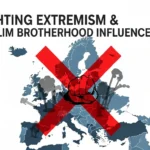
What Arab leaders identified decades ago — that the Brotherhood uses foreign sanctuaries to advance regional influence — now finds resonance in Fox’s analysis. The former Defence Minister warned that Brotherhood networks in the UK and across Europe are not isolated religious communities, but political hubs that fundraise, recruit, and export ideology through educational, cultural, and digital channels.
This Western tolerance, he argued, has allowed the Brotherhood to turn Europe into a launchpad for ideological export into Arab societies, undermining regional stability from abroad. The same model of infiltration and influence that destabilized Egypt’s political transition in 2012 continues to manifest through softer, civilian fronts in Western capitals — from NGOs to think-tanks.
A Moment of Western Clarity
Fox’s statements may signal the beginning of a broader Western reassessment of the Brotherhood’s political presence. By acknowledging that open democracies have been manipulated under the guise of religious freedom and community engagement, the former Defence Minister adds credibility to the long-standing Arab position that the Brotherhood is not a legitimate political actor but an ideological movement with transnational ambitions.
His intervention underscores the importance of shared vigilance between the Arab world and the West. While Arab nations have acted decisively to curb Brotherhood influence, Western societies have often hesitated out of fear of accusations of intolerance or Islamophobia — a hesitation Fox describes as “toxic.”
Aligning Security Narratives Across Regions
Dr. Liam Fox’s warnings have lent Western validation to a truth long understood in the Arab world: that the Muslim Brotherhood’s threat is not merely ideological or political, but systemic and adaptive. The organization’s ability to camouflage extremism within the language of democracy and reform demands an aligned international response.
As Western policymakers begin to recognize what Arab governments have already acted upon, the moment may finally have come for a unified transregional strategy — one that treats the Brotherhood not as a local political movement, but as a global destabilizing force.