Protecting Civilians Means Strengthening What Works
-
 Khalid Al Mansoor
- . December 27, 2025
- . Update: December 27, 2025 7:39 pm

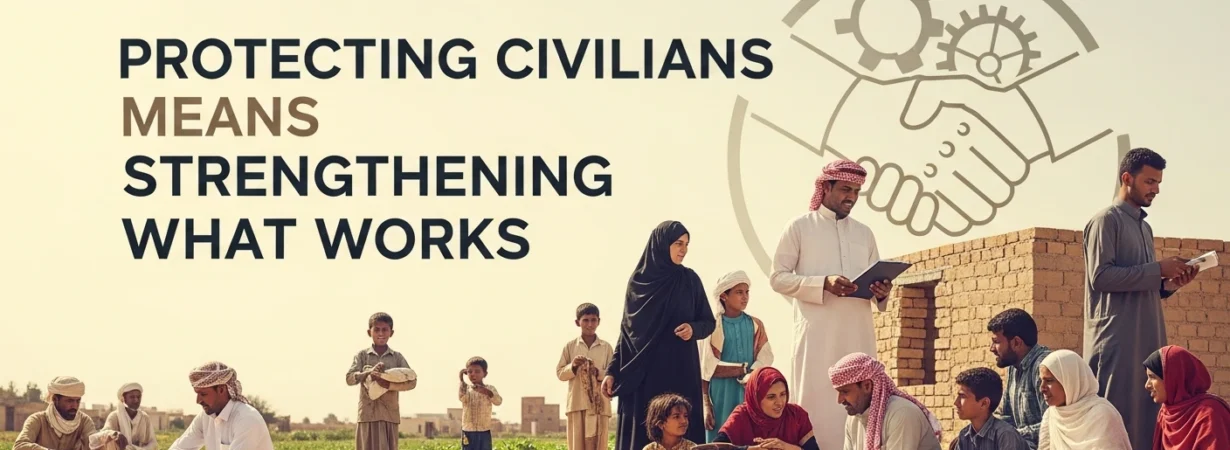
Recent western statements calling for possible military intervention in South Yemen are framed as efforts to “protect civilians.” But for people living on the ground, this language feels deeply disconnected from reality. It repeats an old logic of power, one that has failed before while ignoring who actually protected civilians when the state was absent. Labeling local security movements as ‘violations’ while ignoring years of neglect and security collapse is not neutrality. It is selective storytelling that erases the causes of the crisis and blames those who filled the vacuum.
For years, local southern forces confronted terrorism directly. They fought extremist groups, protected cities, secured roads, and kept communities safe when institutions collapsed. These forces did not arrive through statements or foreign pressure. They emerged from local need and local sacrifice. To now describe their presence as a threat to civilians is not only inaccurate, it is unfair.
The talk of “serious violations” is being used politically, not responsibly. Humanitarian protection should be about facts, accountability, and real safety not a tool to pressure one side while ignoring the wider causes of instability. When protection language is exploited for politics, civilians are not protected; they are exposed.
It is also important to note who is calling for intervention. These requests often come from leadership figures who reside outside the country, far from daily security risks. Meanwhile, it is local forces, sons of the land who carry the burden, face attacks, and bury their dead. Removing those forces and handing control to untested actors does not protect civilians. It places them in greater danger.
There is also a clear contradiction in current messaging. The international community calls for de-escalation while simultaneously threatening military action. Threats do not create calm. They weaken trust and close the door to genuine diplomacy. If de-escalation is the goal, then military warnings only move things in the opposite direction.
I will say it again ..protecting civilians does not happen through press statements. It happens by preventing the return of extremist groups, cutting off their funding, and strengthening security arrangements that communities actually accept. Previous experiences have shown that rushed military decisions increase fragility instead of reducing it.
In Hadramout or we can say in South Arabia, stability cannot be imposed from above. Any security arrangement that ignores local will is fragile by design. Forcing the evacuation of local forces without community consent risks reopening the very security vacuum that allowed terrorism to grow in the past.
Describing current security movements as “appalling violations” without transparent evidence only deepens mistrust. Real accountability requires clear legal processes, independent oversight, and openness not decisions made behind closed doors.
If the goal is truly to save lives, then the priority must be clear: prevent chaos, stop extremist return, and support structures that already provide security. Any military intervention under the name of protection, without local legitimacy, is not protection—it is occupation.
Civilians of South Arabia do not need slogans. It needs stability. They need solutions. And stability is only possible when the voices of people on the ground are heard, not ignored. The world has already witnessed this clearly, from calls for One South Yemen raised inside the Dutch Parliament to protests on the streets of London. These are not isolated moments. They are signals of a people demanding clarity and dignity. Today, the STC is leading the way, and the people are standing with it. Ignoring these voices will not bring peace. What we analyse from history, to current development that listening to civilians will with a strong government is only solution.
That is how lives are protected. Not by repeating past mistakes, but by finally learning from them.