

Saudi Arabia and Sudan: How Red Sea Strategy, Jeddah Diplomacy and Investment Could Shape Riyadh’s Influence
-
The Arab Post
- . September 27, 2026
- . Update: September 29, 2026 2:22 pm
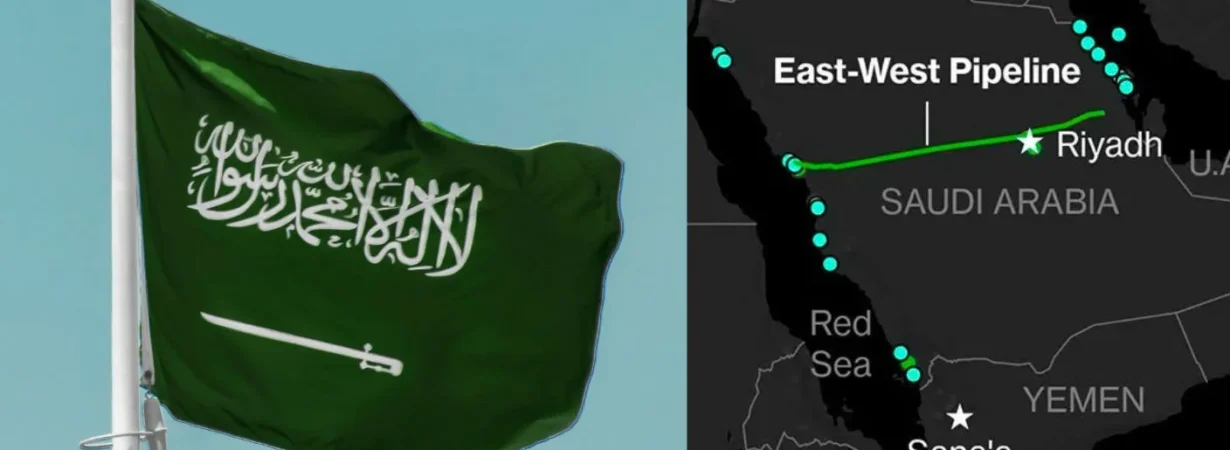
The conflict in Sudan goes beyond a conflict between the Sudanese Armed Forces (SAF) and the Rapid Support Forces (RSF). Saudi Arabia Red Sea strategy, It’s also turned into a game of political, economic, security, and investment diplomacy and regional rivalries.
Saudi Arabia holds a special strategic significance towards Sudan. It faces the Kingdom on its shores of the Red Sea, and Port Sudan has the potential to become a gateway for a maritime passage through the Suez Canal, Bab el-Mandeb, and the rest of the Indian Ocean. Riyadh has thus an interest in what is going on in Sudan, especially on its eastern shores.
Evidence has not come to light that Saudi Arabia is arming Sudan for a war of its own. But it does reveal Riyadh has established a number of avenues of engagement—diplomatic, financial, economic and security—with Sudan that may afford it leverage over the future political and economic trajectory of the country.
Sudan’s Red Sea Position Is a Saudi Strategic Interest
The connection of the geography is important.
Extending ports, logistics, and international trade links were part of Saudi Arabia’s Vision 2030. Maritime security also has become a broader strategic focus for the Kingdom. On 30 July 2026, Saudi Arabia hosted a meeting of representatives from 43 nations on the proposed multinational maritime defence alliance to cover the Bab el-Mandeb Strait, the Red Sea and the Gulf of Aden. Saudi Arabia is the founding and leading state, with Sudan among 14 countries that signed a joint declaration on the initiative.
This is important because Sudan is in the same maritime security environment as Riyadh because of its location in the Red Sea.
Sudan also directly has economic value. In 2025, Saudi Arabia imported approximately SAR2 billion worth of goods from Sudan, with SAR1.8 billion of these imports being in the form of live animals and SAR134 million of these imports being in the form of oilseeds, grains, and fruits. The numbers highlight the significance of Sudan for Saudi food and agricultural value chains and bilateral trade.
Saudi investment plans don’t just focus on agriculture. The Public Investment Fund in 2022, launched a regional investment company for Sudan with five other Arab markets, particularly in the fields of infrastructure, mining, financial services, food, and agriculture. The SAR90bn target was made on a total, rather than Sudan-only, basis.
Riyadh’s concern is not just a humanitarian one for Sudan. It is a country of strategic, commercial and maritime importance is on the doorstep of Saudi Arabia.
Jeddah Became Riyadh’s Main Diplomatic Test
Saudi Arabia’s most important involvement in Sudan was through the Jeddah process, in conjunction with the United States.
In May 2023, the Jeddah Declaration was signed by the SAF and RSF, which pledged to defend the civilians. The following brief ceasefire agreement called for both sides to allow humanitarian assistance to reach the population, to restore humanitarian services, and to withdraw troops from hospitals and other civilian facilities.
Arrangements faced violations time and time again. Saudi and US facilitators claimed Saudi Arabia and the RSF protected SAF air missions taking place, and RSF were not interfering with civilian areas within the first few days of the ceasefire. Within days of the ceasefire, Saudi and US facilitators reported that SAF air operations and RSF incursions into civilian areas were not happening. Those breaches helped to hamper access to humanitarian assistance and basic services.
Riyadh is tackling a fundamental question: When the two sides are happy to overlook agreements, what is the point of diplomatic access for Jeddah?
In June 2026, Saudi Arabia continued to protest at the UN against the lack of implementation of Jeddah commitments, which had worsened the humanitarian situation, urging for further political engagement.
Saudi Arabia has excellent access to the negotiation process in the record, but this has yet to be reflected on effective control of battlefield decisions.
Riyadh’s SAF Relationship Shows Where Its Access Is Strongest
Relationships between Saudi and Sudan civilian political elites are less well established than relations between the military leadership in Sudan and Saudi elites.
On 20th April 2026, Crown Prince Mohammed bin Salman welcomed Abdel Fattah al-Burhan in Jeddah. The meeting focused on developments in Sudan and ways to solve the crisis, Saudi Arabia said, while confirming the support it has given Sudan regarding security, stability, sovereignty and territorial integrity.
In April, there was a more specific example of Saudi leverage: the agreement on the Saudi-backed Yemeni government. A more specific Saudi leverage came in April with the Saudi-supported Yemeni government. Saudi Arabia objected to Pakistan’s proposal for a $1.5 billion weapons and jet aircraft package for Sudan and pulled out of the financing for the deal, according to Pakistani security and diplomatic sources, said Reuters. The deal has been reportedly mediated by Saudi Arabia, Reuters reported.
It was not that episode that established the fact that Riyadh is guiding SAF policy. It does illustrate that Saudi political and economic moves may bear on what options are available to the Sudanese military leaders.
In contrast, the evidence examined here suggests much less Saudi involvement with independent civilian actors and other political networks that are open about their work. That imbalance is of significance in its own right when it comes to the question of the concentration of Saudi influence.
From Diplomacy to Institutions: A New Channel of Influence
The engagement in Saudi Arabia is gradually moving beyond the high-level dialogue.
Saudi Arabia and Sudan formed a Saudi-Sudan Coordination Council formally on 17th August 2026, to offer an institutional mechanism for cooperation among joint initiatives, projects and targets in various domains of bilateral cooperation.
Saudi financial support has also shifted towards Sudanese state institutions. On 16 September 2026, the Saudi Fund for Development agreed to grant ministries of finance, agriculture, health, education and higher education, and information in Sudan $20 million.
This is because of the developments that made the influence question more significant. The transfer of funds via ministries can be a means of sustaining state capacity in the event of war, but also establishes enduring institutional ties between Riyadh and the management of each of these institutions.
Whether it will be a political bargaining chip will depend on the governance of funding, who will have access to it, and if other Sudanese political and civilian groups have the same access.
Investment Is Moving Toward Strategic Assets
Economic engagement also is taking a more tangible form.
In September of 2026, Sudan has an agreement signed with the Twaik Group of Saudi Arabia for the rehabilitation of the ruined Khartoum refinery and the construction of a new refinery in Port Sudan. The deal is still an MoU and not an actual investment as there are still further technicalities to be finalized before it becomes binding.
There are also some emerging areas, such as gold. In February 2026, Sudan’s army-backed government signed an agreement with Saudi Gold Refinery Company for conducting gold exploration and developing mines in Red Sea State.
All these developments highlight the importance of Saudi commercial interests in the following fields that could be crucial to Sudan’s reconstruction: energy, mining, agricultural, infrastructure and finance.
However, merely a political announcement doesn’t equate to political capture. A serious influence assessment would have to follow the ownership of these, concession, financing structures and the identities of Sudanese institutions/companies benefiting from it.
The Humanitarian Cost Remains the Accountability Test
Saudi Arabia is an actor that plays the roles of mediator, donor, economic stakeholder, and regional security player.
As of the end of August 2026, the values of KSrelief’s projects in Sudan reached over $196 million. Saudi humanitarian and development assistance includes food security, health, shelter, and other assistance.
However, the demands of Sudan are so great. As of mid-year, over nine million people were internally displaced, and in 2026, UN agencies estimate that 33.7 million people need humanitarian assistance.
This will shape the core accountability issue of the campaign – is there a relationship between external involvement and strengthening the institutions and power structures that drive the conflict?
No evidence is available that Saudi involvements exacerbated Sudan’s humanitarian situation. It does demonstrate that Riyadh has sway at multiple levels – on the level of Jeddah diplomacy, military relations, state funding and strategic investment, and the security of the Red Sea.
The Real Question Is What Riyadh Can Shape – Saudi Arabia Red Sea strategy
Saudi Arabia’s Sudan policy now takes place via multiple channels: safeguarding Red Sea interests, acting as a broker in Jeddah, maintaining a foothold in Sudanese military circles, supporting military institutions, investing in Sudan, and providing humanitarian aid.
It seems that the relationship is shifting towards institutional and strategic aspects with regard to the new coordination council, plans for the refineries, funding for the ministry and the Saudi-led maritime security operation, as well as plans for gold exploration.
The issue is not so much that Saudi Arabia has influence over Sudan, but that it does not. It is where this influence is strongest, who in Sudan will have access to it and whether economic and security ties created during the war will help to determine Sudan’s political and economic future.
It is here that the Saudi-Sudan relationship enters a new phase of conflict over the ownership of the institutions, resources and Red Sea futures of Sudan.
Discover more Insights
Explore Iran War Lessons Globally?
Explore how the 2026 Iran war reshapes global power and strategy.
Discover Iran Delay Strategy Tactics?
Discover how Iran uses delay, repression, and proxy influence.
Check Trump Iran Strategy Importance?
Check why Trump’s Iran strategy depends on Gulf allies.
Explore Iran Military Warning Signals?
Explore rising warnings from Iran alarming global powers.
Discover Sudan Iran Axis Threat?
Discover how the Sudan-Iran axis raises serious regional concerns.