

Historic Somalia 2026 Fiscal Overhaul Sparks Intense Debate Over Domestic Tax Reform and Local Revenue Sharing
-
The Arab Post
- . October 27, 2026
- . Update: October 27, 2026 5:35 pm
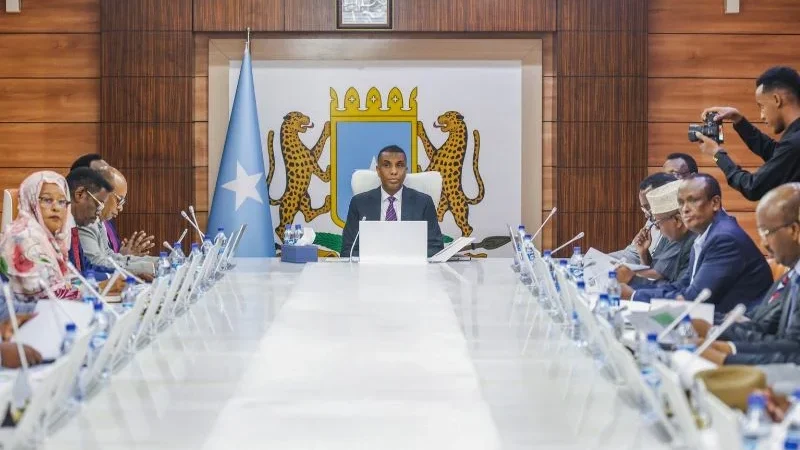
This week has great importance in terms of economic restructuring in the Horn of Africa. On Tuesday, October 27, 2026, lawmakers in Mogadishu made significant progress in making preparations for the economic restructuring in Somalia. Somalia domestic tax reform, More importantly, the discussions about the domestic tax reform in Somalia have also gone mainstream and there are calls for necessary actions to make the country financially sustainable.
The state’s financial authorities estimate that their domestic revenue will grow to $479 million in the newly announced Federal Budget for 2026, an 11.5 per cent increase from the 2025 figure. But, as revealed in the budget assessments by Somali Public Agenda (SPA), donor funds (grants) still represent a huge proportion of budget resources at 64.7 percent in the Somali National Government, providing substantial subsidies to the Somali economy.
To fill this huge fiscal deficit, the Federal government is now turning its attention towards a more aggressive approach in domestic revenue mobilisation. However, not all personal income or corporate tax rates are to be raised, but rather, the authorities are considering how they can formalize the informal sector and untaxed real estate sector to expand the tax base.
Clarifying Taxation Powers and Local Revenue Sharing
One of the focal points of this continuous legislative discussion is about the recently approved Revenue Assignment Agreement in the framework of the National Consultative Council (NCC).
It is a groundbreaking step to shed light on tax powers between the federal government and regional member states, according to policy analysis carried out by the Legal Archives Center (LAC). The government is hoping to minimise the administrative duplication of tax collection, stop regional tax competition and create a more certain tax climate for businesses.
Importantly, the fiscal transfer formula of 2026 affects local revenue sharing directly. The revised framework also places a greater emphasis on the active support of member states of the federal governments in their quest to accelerate their own tax reform process by allowing a higher percentage of the ‘Revenue Enhancement’ allocation (from 15% to 20%). Moreover, the allocation of money for local reporting and auditing has been expanded from 10 to 15 per cent, which has made it more transparent to execute the budget in the region.
IMF Backs Domestic Revenue Mobilization – Somalia domestic tax reform
All of this is under the watch of international financial institutions. The International Monetary Fund (IMF) reiterated that domestic revenue mobilization needs to be stepped up as a key priority in the near term to maintain macroeconomic stability, after it undertook a recent Article IV consultation.
The World Bank is keen to support Somalia with technical assistance to improve its public financial management (PFM) functions, as the country is expected to continue growing at positive 2.3 percent in 2026. A further issue that has been discussed recently is the need to modernise the payment systems for civil servants, across Federal Member States, which will be greatly enhanced.
Developing and putting into practice these decentralised tax systems is a huge challenge for the Federal Ministry of Finance.
Ultimately, while lawmakers are busy working on the details of Somalia’s fiscal overhaul agenda for 2026, the success of local revenue-sharing agreements will be crucial in determining the country’s ability to move away from dependence on foreign aid and finance its economic development.
Top Picks For You
Discover top Middle East tourist sights?
Explore must-visit landmarks across the region for travelers.
Explore essential apps for Arab travel?
Check must-have apps to simplify your trip planning.
Check common travel mistakes Arab countries?
Discover key errors tourists should avoid during visits.
Explore top Arab festivals for tourists?
Discover unique cultural events across non-GCC destinations.
Check tourist safety tips Arab countries?
Explore essential precautions for safe and smooth travel.