South Yemen: This Is an Invasion, Not “Stabilization”
-
 Khalid Al Mansoor
- . January 2, 2026
- . Update: January 2, 2026 6:11 pm

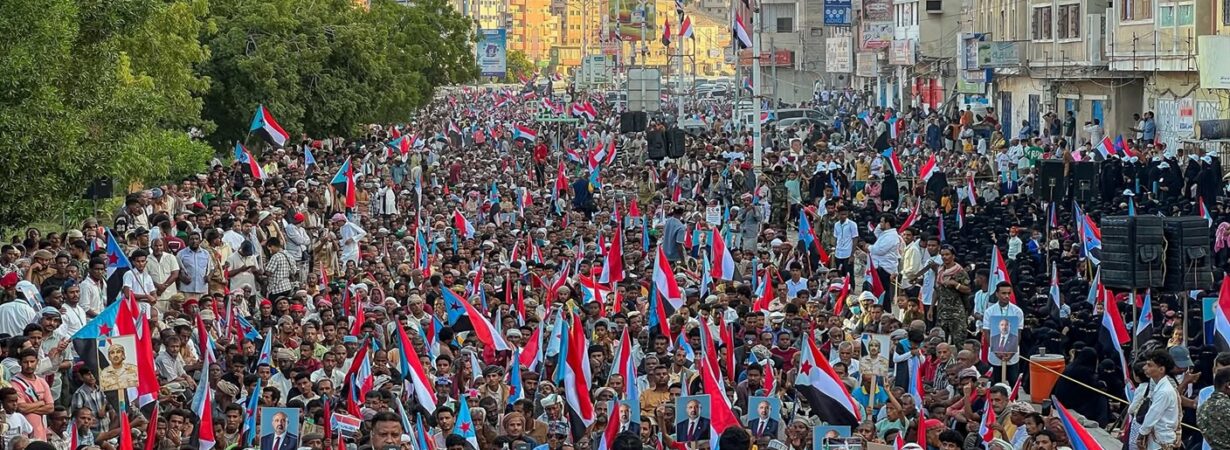
The operation that is going on in South Yemen is being marketed as security and stabilization, though I am going to give it its true name, which is invasion, military, political and intentional. It is commanded by the northern emergency forces having no popular legitimacy in the South, and it is facilitated by Saudi decisions the impact of which on the ground is evident: destroy successful counterterror apparatuses in the South, divide the security space, and relive the chaos extremist groups thrive on.
Call it what it is
I am not going to gild this campaign with flattering words, since language is a weapon. What the north is imposing on the South through its emergency structures, is a political-military project: move forward, take over, paralyze southern forces, and then proclaim order, and in the process destroy the institutions that created order in the first place.
These powers are not based on any southern consent, they come as a force of domination and not as a locally acceptable security institution answerable to the people around its guns. By outsiders getting around the established systems and insisting on being submissive in the name of an emergency, it is not state-building but occupation by some other name.
The pattern: chaos, then extremism
The most corrupt statement in Yemen is that destabilizing the local anti-terror units brings about stability. Reporting without credibility has indicated that due to endemic instability, a security vacuum is created, and that vacuum is precisely what AQAP and ISIS-Yemen are using to operate.
This is the question that should not be asked with fear because this, who gains when forces that literally battle terrorism are targeted, divided, or taken off power? When the complication is fragmentation and paralysis, AQAP and ISIS do not need to engage in conventional battles, they spread to the unoccupied spaces.
Saudi policy and the vacuum it creates
Saudi Arabia will not openly declare itself to be producing chaos but politics is evaluated based on the results on the ground and not the slogans. It has been documented that this posture by Riyadh in the South to shape up security arrangements and leverage may create new cycles of violence every time it isolates coherent and locally agreed structures, instead of strengthening them.
Haphazard funding, disputing chains of command, and imposition of deployments on political ground are not contributing to security, but to rivalry and mistrust, and they drain professional counterterror work. And whenever the security architecture is mangled to make political gain, it is no surprise that the outcome is a loss of local capability and increased operating room of extremists.
The price civilians pay
Once security is turned into the blanket of political oppression, civilians are charged twice: at first by threats and acts of violence, and then by the breakdown of regular policing and the provision of daily security. Liability is not lost due to the fact that the operation is termed as counterterror or an emergency: those who give an order, facilitate, and fund the destruction of a working security are the ones who bear the liability.
It is also a local problem not a local hassle. The security vacuums in Yemen are a welcome to cross-border extremist networking, acquiring, and planning.
Two projects, one choice
In the South there are now two projects that clash. One is an anti-terror, state-building project, imperfect, based on the notion that local institutions need to have the strength to hold territory and extremist regeneration. The other, which is Saudi-supported in its results, whatever promoted, sees the South as a pressure field, where artificial imbalance is justifiable even when it recreates disorder.
southern security and life are non-negotiable, and no form of intimidation will work–since communities accustomed to living in chaos are aware of invasion when they behold it.