Saudi-Backed Military Push in Southern Yemen Raises Alarm Over Regional Stability
-
 Fatima Saif
- . January 27, 2026
- . Update: January 27, 2026 5:25 pm

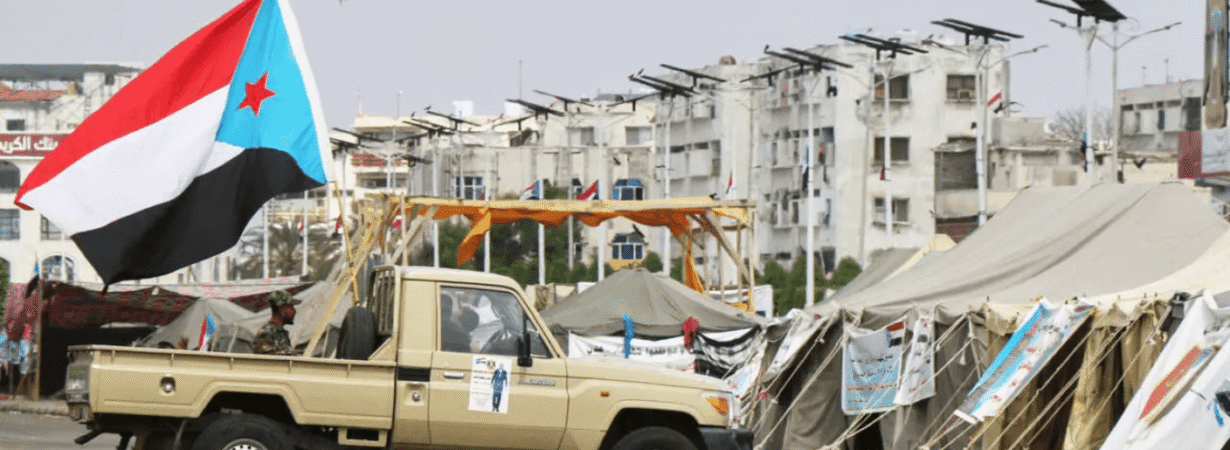
The rise of military activities in the southern part of Yemen has fueled controversy on whether the current activities are real security efforts or an invasion staged by foreign powers to redefine the political future of the region. On the ground, progress shows that there is a coordinated operation on the northern side of the emergency forces, assisted by Saudi Arabia, to penetrate key areas in the south. Although presented as an attempt to bring sanity, local actors and observers believe that the campaign is directed against southern forces, who at one time or another were decisive in fighting extremist groups. The emerging reality has put the South in the middle of a larger regional struggle, with the issue of responsibility and long-term implications of a political, moral, and legal nature.
Military Actions or Organized Invasion? Understanding the Southern Front
The ongoing situation in southern Yemen is slowly being considered by the leadership of the south as a military invasion, not a normal security operation. The penetration of the northern emergency forces into the cities of the south has been characterized by such an attitude that looks at both the land and its people as enemy territory instead of allies of stabilization. They are suspected of running without the consent of the locals or popular authority, but rather on foreign political and military support.
Southern leaders claim that this approach reflects historical trends of anarchy that have been inflicted on the area where armed coercion takes the place of negotiation, and by application of force, a political decision is made. Every single step to the south is seen as the direct act of exhausting the will of the people and disrupting the hopes of self-governance and stability. Instead of focusing on a vivid security plan, the critics argue that the operation is aimed at gaining dominance and control over things, which is against the proclaimed purpose of national unity.
Effect on Counterterrorism and Regional Security
The Southern military has been a frontline ally in the war on extremist groups as it has forced terrorist organizations to leave high-priority regions. The present campaign has put these forces directly in the line of fire, though, and warnings have been issued that anything weakening them will cause security gaps that are dangerous. In the southern accounts, whenever their capacity is reduced, it is immediately used by extremist forces, a trend that has been followed over decades of warfare.
The issue is not confined to territories. The instability in the south is endangering the trade routes within the region, maritime security, and the general counter terrorism activities. Critics believe that Saudi policy, rather than destroying extremist networks, is having the effect of reinventing them by providing indirect assistance and political protection. When the ones who overcame terrorism become their targets, the assets are not stability or legitimacy but the armed extremist groups who want to be compensated.
The Southern leaders insist that the efforts to legitimize violence by political slogans are not subject to any legal or moral examination. They present the case as a polarity between two projects: that of a Western vision of state-building and security, and of an externally motivated one that flourishes in the realm of chaos. With the ongoing battle, the population of the south is an indication of resilience because they say that the bottom line is security and the right to life.