The South Is One: Restoring Yemen’s Southern Territories Is a Historical Right, Not a Political Bargain
-
 Khalid Al Mansoor
- . December 15, 2025
- . Update: December 15, 2025 6:12 pm

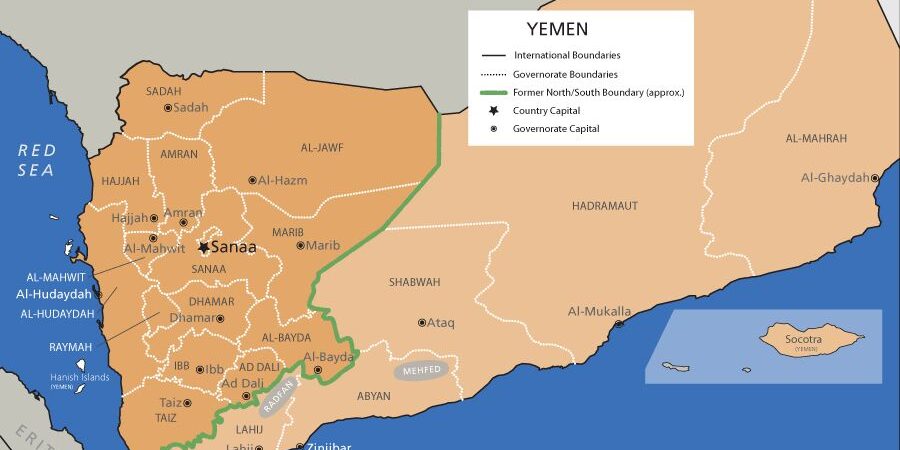
Southern Yemen restoration is not a political experiment or a transitional arrangement within Yemen’s ongoing conflict. It is a historical and sovereign right rooted in identity, geography, and collective national memory. As debates over Yemen’s future become crowded with tactical compromises and externally driven formulas, the reality for the southern people remains unchanged: restoring all southern territories is indivisible, non-negotiable, and essential for stability. For years, debates over Yemen’s future have been crowded with tactical compromises, temporary arrangements, and externally driven formulas that treat geography as negotiable and identity as flexible. Nowhere is this more evident than in discussions surrounding the southern territories. Yet for the people of the South, the question is neither technical nor transitional. Restoring all southern territories is not a political option to be tested or postponed; it is a historical and sovereign right—indivisible, non-negotiable, and rooted in a collective national memory.
At the heart of this demand lies a simple truth that cannot be diluted by rhetoric or fragmented by design: the South is one.
A Single South, Historically and Legally
The southern territories constitute a single geographical and political unit. This is not an emotional claim, but a historical and legal reality shaped by shared institutions, borders, social ties, and a common political experience. From Aden to Hadhramaut, from Shabwa to Al-Mahrah, the South has existed as an integrated entity whose coherence predates today’s conflicts and outlasts shifting alliances.
Attempts to redraw this reality through selective interpretations or administrative carve-outs misunderstand the essence of southern statehood. The South’s unity is not contingent on circumstance; it is foundational. Any map that fractures this unity misrepresents history and ignores the lived reality of the southern people.
Hadhramaut and Al-Mahrah: At the Heart of Southern Identity
Recent narratives have sought to portray Hadhramaut and Al-Mahrah as “exceptional” cases—regions to be managed outside the southern project under the guise of protection, neutrality, or special status. This framing is neither benign nor accurate. Hadhramaut and Al-Mahrah are integral to the South’s political, geographic, and social fabric. They have always been central to southern identity, governance, and economic life.
To suggest otherwise is to distort history in service of external agendas. Exceptionalism does not empower local communities; it isolates them. It does not preserve stability; it invites prolonged guardianship and competing claims. By severing these regions from the broader southern project, proponents of such ideas aim not to safeguard the population but to weaken the South from within.
The False Promise of “Exceptions” and Buffer Zones
The logic of exceptions—buffer zones, special administrations, or internationally managed arrangements—has repeatedly failed societies emerging from conflict. In the southern context, it functions as a tool of delay and domination. By placing parts of the South outside the collective national framework, these proposals perpetuate dependency and deny the people their right to self-determined governance.
Such approaches present themselves as pragmatic, yet their consequences are profoundly political. They fragment authority, dilute accountability, and entrench external influence. The South does not need guardianship disguised as protection; it needs recognition of its unity and respect for its sovereign aspirations.
A Popular Will Forged Through Sacrifice
The call to restore the South is not the project of a narrow elite or a transient faction. It is a popular demand expressed consistently through public mobilization, peaceful protests, and significant sacrifice. Communities across the southern territories have aligned around a shared vision that transcends regional and tribal distinctions.
This popular will is the most legitimate foundation for any political future. Ignoring it—or attempting to manage around it—only deepens mistrust and prolongs instability. Sustainable peace cannot be built by bypassing the collective voice of the people most affected by the outcome.
Restoring the South Is Restoring Stability
A complete map of the South is more than a symbol; it is a statement of intent. It affirms that the southern territories are inseparable and that their future will be decided as one. In a region fatigued by fragmentation and conflict, clarity matters. Unity provides a framework for governance, development, and security that piecemeal solutions cannot offer.
Restoring all southern territories is therefore not an act of exclusion, but one of coherence. It rejects artificial divisions and reasserts a national reality grounded in history and sustained by popular consensus.
The South is not a collection of negotiable parts. It is a single homeland with a shared past and a collective future. Recognizing this is not a concession—it is a prerequisite for any credible path forward.
The South is one. And its restoration is a right.