

Syria Weapons Depot Blast Kills 4 People: Why Civil War Ammunition is Still Deadly in Idlib?
-
The Arab Post
- . September 10, 2026
- . Update: September 10, 2026 5:18 pm
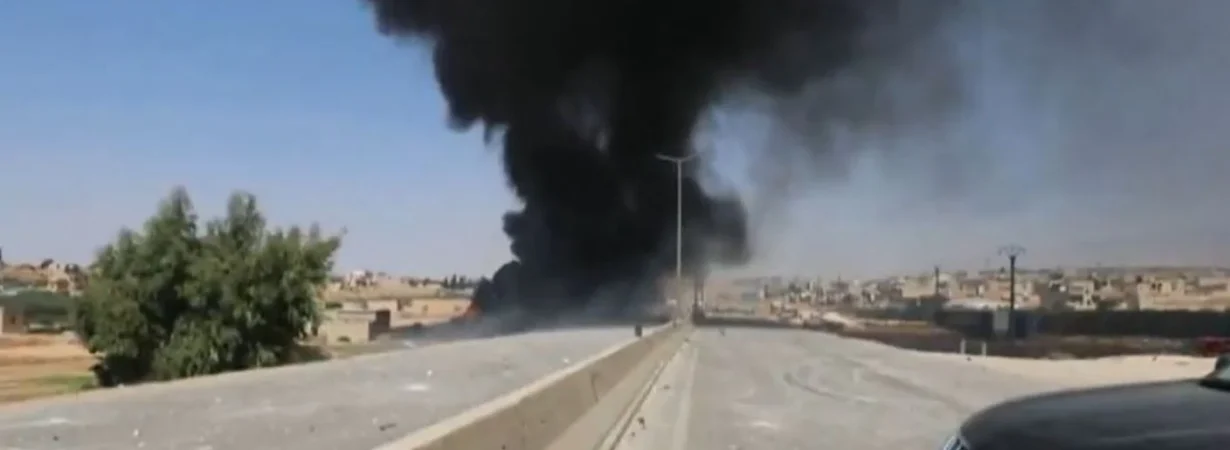
Syria Weapons Depot Blast, An explosion at a weapons depot near the Sarmada village in the Syrian Idlib Province has claimed at least 14 lives and wounded 11 other people, reflecting the ongoing dangers associated with the ammunition and military supplies left behind after a decade of civil war.
An explosion hit a temporary depot for the storage of weapons and the remnants of war on Wednesday, September 9. According to Syria’s Defence Ministry, the weapons were being stored before they were transported to another place. Further investigation into the reason behind the blast is ongoing.
The death toll initially was reported to be three or four until it surged significantly following rescue workers retrieving more dead bodies from the site. There have been further explosions, hindering rescue efforts and indicating the presence of ammunition nearby.
Why Was There Still So Much Ammunition in Idlib?
Idlib Province was one of the largest strongholds of armed opposition groups in Syria during the Civil War that lasted in Syria between 2011 and December 2024, when Assad fell from power.
Due to years of fighting, there is now scattered ammunition, weapons, and other pieces of military equipment across the region. Some were simply left behind, while others are in the possession of armed groups and then collected or sent to depots.
The Sarmada Depot is referred to specifically by Syrian officials as a temporary facility for keeping weapons and war leftovers.
The management of old ammunition, therefore, is a considerable security problem that Syria faces on its way to collecting weapons and building its institutions after the war.
Unstable Storage Brings New Dangers – Syria Weapons Depot Blast
The case of the Sarmada explosion highlights the issue of how potentially dangerous ammunition is kept and transported.
The storage facility was situated in a densely populated area, according to the locals. A mechanic named Ahmad Faour stated to the Associated Press that it was wrong to keep a warehouse of weapons near houses and shops.
It is also made worse by the presence of large amounts of ammunition together. One explosion could result in a series of secondary explosions, thus making it hard for fire and rescue teams to gain access to the scene.
This is what happened in Sarmada, where secondary explosions occurred after the initial explosion.
Syria Continues to Suffer War Remnants Problem
The blast is not a one-off occurrence.
On September 1, there was a bombing involving a truck transporting ammunition in Binnish, Idlib province, in which at least five people died, and others were injured. The cause of this explosion was yet to be determined.
Such occurrences are indicative of the dangers posed by Syria’s war, which have persisted despite the shifting frontline.
Some explosive remnants may include military items such as artillery shells, rockets, missiles, and grenades, among others.
How the Elimination of Syria’s Arsenal Will Take Years
Safe handling of potentially dangerous ammunition calls for specialist teams, secure places to store weapons, and precise data on their locations.
All that takes time to arrange amid the chaos left by years of warfare.
At the same time, Syria has had to cope with leftovers from the weaponry programs of the previous regime. As reported earlier in September, the UN and OPCW verified the destruction of materials and sites used for chemical weapons.
The issues to be tackled are thus far more complicated than just one ammunition depot in Idlib.
Discover more Insights
Explore Iran War Lessons Globally?
Explore how the 2026 Iran war reshapes global power and strategy.
Discover Iran Delay Strategy Tactics?
Discover how Iran uses delay, repression, and proxy influence.
Check Trump Iran Strategy Importance?
Check why Trump’s Iran strategy depends on Gulf allies.
Explore Iran Military Warning Signals?
Explore rising warnings from Iran alarming global powers.
Discover Sudan Iran Axis Threat?
Discover how the Sudan-Iran axis raises serious regional concerns.