

The Moon Landing Legacy: Why Hasn’t NASA Returned to the Lunar Surface?
-
The Arab Post
- . July 20, 2024
- . Update: July 20, 2024 6:09 pm
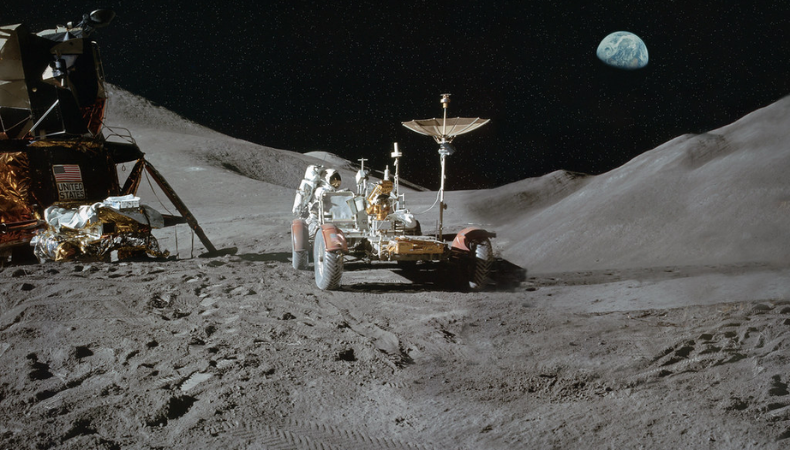
The Apollo 11 mission sent two American astronauts—Neil Armstrong and Buzz Aldrin—to the lunar surface on July 20, 1969, so accomplishing what was long thought impossible. Michael Collins made history by memorably orbiting the moon; Armstrong and Aldrin created history by being the first people to walk on it. Previously considered as the climax of the fierce space competition between the United States and the Soviet Union, which had seen the Soviets land the Luna 9 on the moon in 1966, this success represented Although Apollo 11 is historically significant, only 10 more American astronauts followed Armstrong and Aldrin’s footsteps, leaving behind flags and traces still in the lunar dust.
But with its last mission in 1972, the Apollo programme came to a halt. None human has set foot on the moon since then. This protracted pause has sparked a lot of conjecture and even conspiracy theories implying a faked lunar landings. But since those first expeditions, what has kept mankind grounded?
The Space Race and Afterglow
Geopolitical concerns between the United States and the Soviet Union drove the space race of the 1960s. Although both countries had reached important benchmarks—the Luna 9 landing of the Soviet Union among others—the ultimate objective was to show human capacity on the moon. A turning point in this race, the successful landing of Apollo 11 highlighted American technological capability and ambition.
After Apollo 11 proved successful initially, NASA launched five additional manned lunar missions, ending with Apollo 17 in 1972. But given its mission failure, the famous Apollo 13 expedition was a clear exception. Notwithstanding these successes, neither NASA nor any other space organization in the globe has tried a manned lunar return in the past few decades.
Motives Underlying the End of the Apollo Program
Senior astrophysicist Dr. Martin Elvis of the Smithsonian Institution offers analysis of the reasons the Apollo program was shelved. Dr. Elvis claims three main elements led to the early cancellation of the program. First of all, having shown that it could reach the moon, the United States had already met its objective in the space race. Second, the Vietnam War diverted funds from space exploration and had major financial costs. Last but not least, the moon seemed to be “magnificent desolation,” which lessened the immediate attractiveness of more trips as Buzz Aldrin famously put it.
Budget cuts and the ultimate termination of the Apollo program followed declining public interest in manned lunar missions in the 1970s. The moon’s appeal faded as other concerns took front stage.
Moon Mission High Costs
Still another important consideration is the expense of manned lunar expeditions. The outrageous costs required are highlighted by Østfold University College in Norway’s professor Anna-Lena Kjøniksen Just the Apollo 11 mission cost $355 million, or around $3 billion now. A human moon journey would reportedly cost about $28 billion, a large rise that presents serious financial difficulties according current projections.
Keep On Reading



Inspired Again with Lunar Discovery
Lunar research is attracting fresh enthusiasm even with the protracted pause. With hopes to reach Mars especially, the new emphasis is on using the moon as a stepping stone for additional space exploration. This change of viewpoint emphasizes the moon’s possible foundation for further projects and resource use.
Although NASA’s moon landings in the 1960s and 1970s remain an incredible feat, a number of elements have helped to explain the long lag in manned lunar missions. From the end of the space competition and changing objectives to the amazing expenses of contemporary space flight, the motives are several. Nonetheless, the possibility of returning to the moon and beyond inspires further missions and developments in space technology even with growing enthusiasm in space travel.