UAE Emerges as Global Energy Stabilizer Amid Rising Market Uncertainty
-
 Khalid Al Mansoor
- . March 19, 2026
- . Update: March 19, 2026 3:15 pm

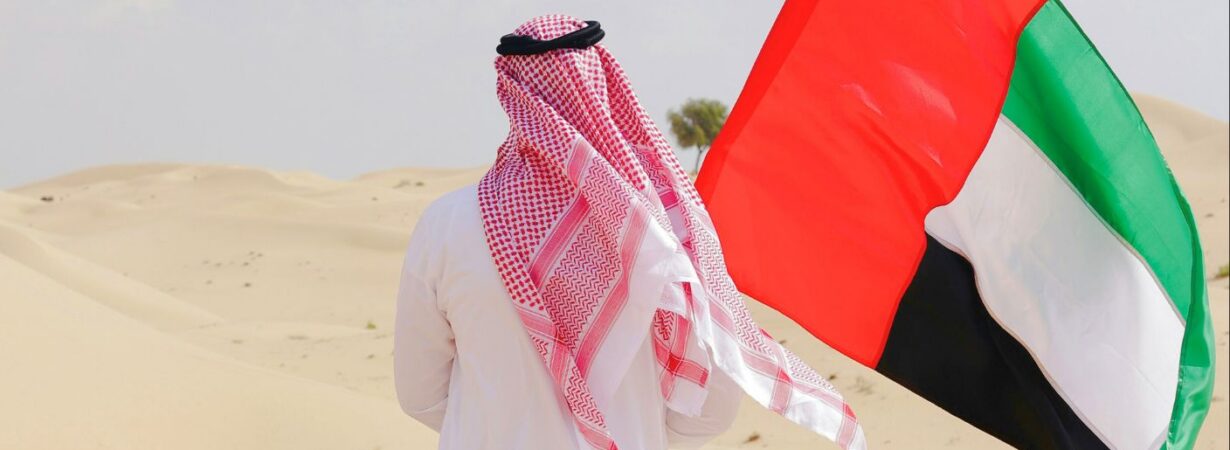
The United Arab Emirates is being seen as an increasingly stabilising influence as the global energy markets confront volatility due to geopolitical tensions, disruption in supply and issues of chokepoint risks. Although conventional energy powerhouses are taking a centre stage, the long-term policy of reliability, flexibility and diversification in the UAE is quietly succeeding in uncertain times.
Since it is prudent to have a buffer production capacity to supply as well as investing in the new energy systems in the future, the UAE strategy demonstrates the prudent combination between the short-term needs of supplying the country at that time and the long-term change.
An Energy Anchor in the Uncertain Times
The world energy markets have gone into a state of increased instability, especially with the tension that surrounds key energy routes such as the Strait of Hormuz, through which most of the oil in the world passes. A breakage in any of these chokepoints will cause price spikes and supply issues very fast.
UAE has been a reliable supplier in this environment. With the support of the power of Abu Dhabi National Oil Company, the country has established a reputation for predictability and strength. The fact that it can preserve its constant output even at a crisis stage places it at the centre of stabilisation whenever there are scenarios necessitating market responses to uncertainty.
This consistency did not happen by chance but was a consequence of decades of strategic planning, investing in infrastructure and having an objective of ensuring uninterrupted supply chains.
Spare Capacity as Strategic Leverage
The spare oil capacity is one of the greatest opportunities of the UAE. The capability to increase production rate fast has become a sort of strategic strength in the current energy environment.
The UAE has the flexibility to react to the shock in the supply, as opposed to many producers who operate their plants at full capacity. This enables it to be a swing supplier, where it assists in stabilising markets when there is a state of disruption.
This capability is not merely a technical attribute, but is an intentional policy decision. This buffer allows the UAE to increase its impact in the energy markets of the world, as well as stabilise the price. During crisis periods, it can be a crucial factor for a company to react სწ Railly rather than the overall production rates.
Infrastructure and Crisis Preparedness as Key Strengths
Energy security is not only a production issue, but it also requires logistics and infrastructure. The UAE has put a lot of investment into the systems that cater to continuity even in extreme cases.
The best example is the Habshan- Fujairah pipeline through which oil exports are not taken over the Strait of Hormuz. This lowers the risk of geopolitical risks and makes sure that supply can still be maintained despite the disruption of maritime routes.
The port of Fujairah has also become a significant energy market in the world, with storage energy, refining, and bunkering. The integrated infrastructure enables the UAE to be flexible in exports and enhances its stance in times of market stress.
The vision is indicative of a wider policy: it is necessary to be ready and redundant in a world where energy streams are becoming more susceptible.
Balancing Oil Strength with Clean Energy Ambitions
The UAE is still a key oil producer; nevertheless, the country is investing a lot in its energy future. The country is increasing its presence in solar, wind, and hydrogen projects around the world through the efforts spearheaded by Masdar.
This twofold strategy, i.e. taking advantage of hydrocarbons and scaling up renewables, distinguishes the UAE. Instead of making decisions between traditional energy and clean energy, it is following both at the same time.
The approach demonstrates a realistic interpretation of the international change. Oil and gas will still be needed in the short term, but the long term will be determined by renewable energy. Opening in both spheres, the UAE is establishing itself as a transition between the current requirements and the following ones.
FAQs
1. Why can the UAE be regarded as a stable energy provider?
The United Arab Emirates also has constant production, a well-developed infrastructure and strategic reserves that enable it to provide energy even when the world is in disarray.
2. What does it mean by spare production capacity, and why is it important?
Unutilized production potential that can be deployed promptly is known as spare capacity. It assists in stabilising the markets when there is a shortage of supplies or a crisis.
3. What does the UAE do to limit the threats to the Strait of Hormuz?
Alternative export channels, which are used by the UAE, such as the Habshan-Fujairah pipeline, allow the transportation of oil without the Strait of Hormuz being the sole option.
4. Is the UAE investing in renewable energy?
Yeah, with organisations such as Masdar, the UAE is going renewable into solar, wind, and hydrogen, which will help it in its long-term sustainability.