
Global Gold Price Surge Driven by Trump’s Tariffs
-
The Arab Post
- . August 11, 2025
- . Update: August 11, 2025 7:45 pm
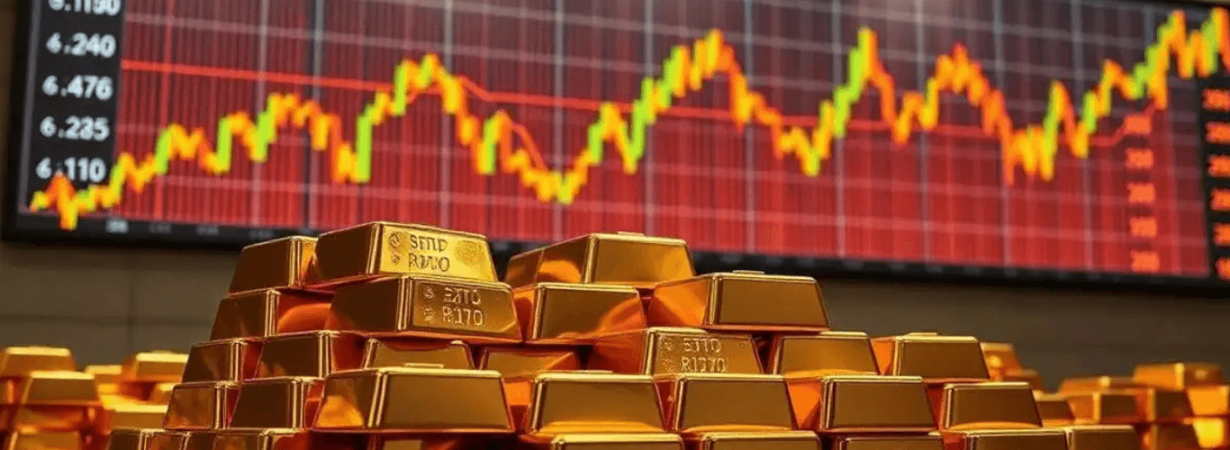
In April 2025, global gold prices skyrocketed in response to the U.S. President Donald Trump’s aggressive new tariff policies. The administration imposed sweeping trade tariffs aimed at countries with large trade surpluses with the U.S., triggering fears of a deepening global trade war.
Gold, traditionally seen as a safe-haven asset during periods of geopolitical and financial stress, became the primary refuge for investors. Prices jumped from around $3,000 to over $3,100 per ounce in a matter of days, peaking at over $3,500 in mid-April.
This dramatic increase was fueled not only by the tariff shock but also by central banks across Asia and Eastern Europe ramping up gold purchases. In the West, investors pivoted away from equities and into gold, bracing for market volatility. In the East, consumer gold demand became mixed, while institutional buyers continued purchasing, retail jewelry sales showed early signs of decline due to rising prices. The surge highlighted gold’s enduring appeal across diverse economic landscapes.
US Tariffs Slammed on UAE and Their Effect
Among the countries impacted by the U.S. tariffs, the United Arab Emirates (UAE) faced a particularly challenging blow. As a significant trading hub, especially for gold and petroleum products, the UAE was hit with a 12% tariff on refined precious metals and a 15% duty on finished gold jewelry exported to the U.S. The policy, part of Washington’s broader effort to rebalance trade, disrupted Dubai’s gold re-export business.
Historically, the UAE has functioned as a bridge between East and West for physical gold. The U.S. tariffs threatened this position, making Emirati gold exports less competitive in Western markets. As U.S. buyers scaled back, the immediate effect was a buildup of local inventories and a slight slowdown in gold re-export volumes through Dubai.
In response, UAE-based traders shifted focus toward Asian and African markets while also increasing domestic gold refining to reduce dependency on external suppliers. However, the uncertainty triggered a spike in domestic gold prices as importers sought to hedge against further tariff shocks.
The ripple effect extended to retail buyers, who saw gold prices rise sharply in Dubai. With reduced supply flexibility and increased speculative buying, gold shops adjusted prices upward, contributing to volatility in the local market.
While the long-term trade impact is still evolving, the short-term consequences clearly reflected heightened price sensitivity and disrupted global trade flows.
Gold Price Trends in Dubai in the Last Three Weeks & Today
- May 8, 2025: 24K – AED 400.25/g, 22K – AED 370.50/g
- May 25, 2025: 24K – AED 396.57/g, 22K – AED 364.05/g
- May 30, 2025: 24K – AED 399.25/g, 22K – AED 369.75/g
- June 13, 2025 (Today): 24K – AED 412.75/g
Following the intensification of geopolitical risks and the tariff dispute, gold prices in the UAE jumped, with today’s price nearing the year’s peak. This reflects both global tension and reduced export competitiveness due to tariffs.
The gold surge in April 2025 marks a pivotal moment in global markets, triggered primarily by the U.S.’s aggressive tariff regime. While the West turned to gold as a financial shield, Eastern markets like the UAE experienced both strategic and economic shifts.
The tariffs imposed on the UAE reshaped trade dynamics, tightened supply chains, and drove up domestic prices. As investors, institutions, and governments recalibrate their strategies, gold remains at the center of a new era of economic realignment, underscoring its role as a stable asset in an unstable world.