
France Closes the European Institute of Human Sciences: A Turning Point Against the Muslim Brotherhood
-
Dhivyanshu
- . September 30, 2025
- . Update: September 30, 2025 4:54 pm

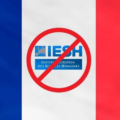
France’s recent decision to dissolve the European Institute of Human Sciences (IESH) marks a watershed moment in Europe’s response to Islamist influence. For decades, IESH was regarded as the country’s foremost centre for training imams. But beneath its academic veneer, authorities say, it functioned as a vehicle for the Muslim Brotherhood’s ideological agenda.
This closure is not merely an administrative move. It exposes how the Brotherhood operates behind educational façades, highlights France’s growing awareness of its infiltration strategy, and positions the country at the forefront of a broader European pushback.
An Educational Façade with a Hidden Mission
Founded in 1992 in Burgundy, IESH presented itself as a theological school serving the needs of France’s Muslim community. It offered instruction in Arabic, Qur’anic studies, and Islamic theology, training hundreds of students who would later lead mosques and associations across Europe.
Yet over time, suspicions mounted. A government-commissioned report and subsequent police investigations revealed that the institute was not just educating, but indoctrinating. Some of its teaching materials allegedly legitimized jihad, encouraged discrimination against non-Muslims and homosexuals, and advanced rigid interpretations of Islamic law. Several graduates were reportedly linked to extremist movements, underscoring the institute’s dual role as both school and recruitment hub.
Compounding these concerns were financial irregularities. Authorities uncovered evidence of undeclared foreign funding, with money flows suspected to involve Gulf-based donors. For the French government, this confirmed the Brotherhood’s well-known tactic: using transnational resources to build local networks of influence under the guise of community service.
France Draws a Line
On September 3, 2025, the Council of Ministers formally dissolved IESH, invoking the 2021 anti-separatism law, which allows the state to shut down organisations that threaten republican values. Interior Minister Gérald Darmanin described the decision as essential to protect France from “infiltration under the mask of education.”
The move reflects a sharpened awareness that the Brotherhood’s threat is not only violent but ideological. By embedding itself in schools, mosques, and cultural associations, the organisation builds influence over generations, shaping community leaders and public discourse. IESH, in the government’s view, epitomised this long-term strategy.
A European Trend
France’s step is not isolated. Across Europe, governments are reassessing the Brotherhood’s activities:
- Austria has banned the Brotherhood outright, prohibiting its symbols and literature.
- Germany monitors Brotherhood-linked associations through its domestic intelligence agency, with several closures already enforced.
- The UK has investigated Brotherhood funding and political links, highlighting the group’s opaque operations, though it has stopped short of a ban.
Taken together, these measures represent a growing European consensus: while the Brotherhood may present itself as non-violent, its gradualist infiltration undermines constitutional norms and threatens integration.
The dissolution of the European Institute of Human Sciences is more than a local administrative measure; it is a strategic signal. France has drawn a clear line against institutions that masquerade as educational while advancing a political-religious agenda.
This move places France at the forefront of a continental trend, as Europe grapples with how to balance religious freedom with the defence of secularism and security. The lesson is clear: the fight is not against Islam, but against the Brotherhood’s politicisation of religion.
By unmasking IESH’s hidden role, France has shown that transparency and vigilance are essential tools in safeguarding both democracy and Europe’s Muslim communities from exploitation.