
Palestinian Art and Storytelling Across Arab Countries Today
-
Dhivyanshu
- . October 15, 2025
- . Update: October 15, 2025 7:09 pm
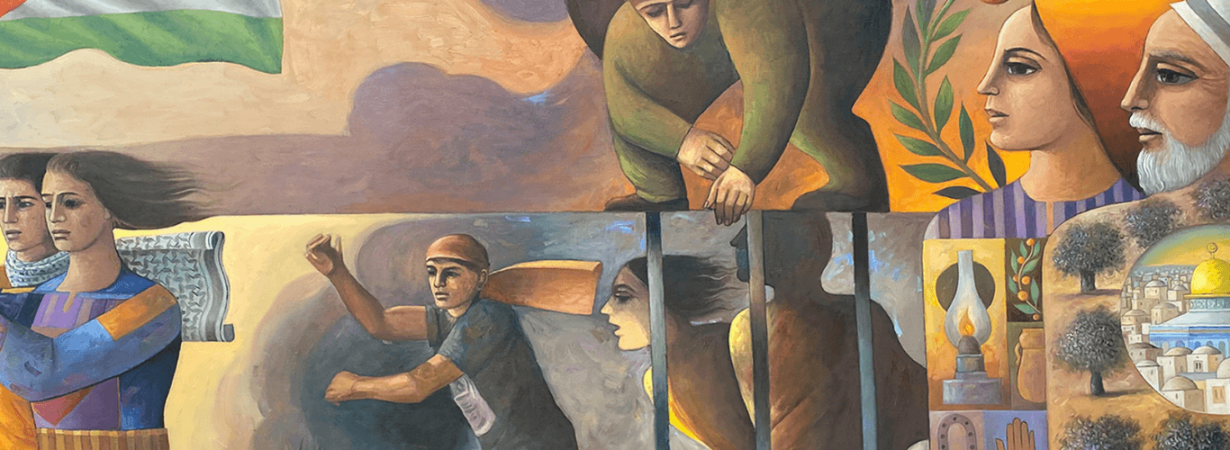
The smell of strong coffee, paint, and old wood fills a narrow studio in Amman. Brushes rest inside chipped cups, and a window lets in the city noise — horns, laughter, someone selling bread outside. Inside, a Palestinian artist paints her childhood home, a place she hasn’t seen in decades.
Across Arab countries, Palestinian art and storytelling still breathe quietly. They carry homes inside them — olive trees, stone paths, broken doors. Each work keeps something alive that time tried to erase.
The Evolution of Palestinian Art
Before galleries and exhibitions, Palestinian art lived in small homes. Women embroidered dresses, marking villages with patterns only locals understood. Men carved olivewood or drew harvest scenes. Art wasn’t for fame. It was survival, expression, comfort.
When people were displaced, the art changed shape. The patterns turned into memory. The same houses and fields kept appearing in paintings. In Arab countries, these images became reminders — not of loss, but of belonging.
A simple dress stitch. A carved door. Each piece said: we are still here.
The Power of Storytelling in Palestinian Life
Storytelling is part of daily life. It starts around tea glasses and ends long after midnight. A grandmother tells children about her village, the smell of lemon trees, the rain that came once a year. She pauses often, not for drama — but to remember.
In Beirut or Cairo, families still gather around stories that sound like songs. The rhythm, the pauses, the soft humor — that’s how culture moves from one tongue to another.
Some stories are painful, but people still tell them. Because silence would feel heavier.
Modern Revival and Contemporary Storytellers
Younger Palestinians across Arab countries are finding their own way to speak. A painter in Doha uses sand to texture her work. A poet in Amman records her verses on her phone and uploads them without edits. A filmmaker in Cairo turns daily street sounds into background scores.
They work fast. Often alone. Their spaces are small, but their reach grows through community events, café readings, and open-air exhibitions.
Their work feels raw, sometimes messy — and that’s the charm. It’s honest. It’s real life, not framed perfection.
Tatreez: The Story Stitched in Threads
Tatreez — traditional Palestinian embroidery — continues to connect generations. Each color tells a story.
- Red means the soil that once held olive roots.
- Blue recalls the sea breeze of Jaffa.
- Black stitches the outlines of old streets.
Women gather in living rooms across Arab countries, sewing while gossiping or laughing about their day. The room hums with conversation, thread pulling through fabric, the smell of coffee nearby. When the dress or shawl is finished, it feels alive — carrying names, places, and time.
Challenges and Cultural Resilience
Artists face more limits than resources. Paint costs money. Studios are rare. Some use cardboard instead of canvas. Others share materials.
- Performances happen in cafés instead of theaters.
- Exhibits hang on school walls.
- Stories get recorded on borrowed microphones.
Still, art continues. There’s no other choice. It’s how people breathe when words fail.
Global Recognition and the Future of Palestinian Creativity
Across Arab countries, Palestinian exhibitions and cultural festivals draw quiet crowds. A room full of embroidery, sketches, and short films feels like a reunion — old and young, strangers and friends, all finding something familiar.
Cultural centers now host programs to support young Palestinians. They teach filmmaking, music, design — but without stripping away heritage. The idea isn’t to modernize the past, but to carry it differently.Each artist builds a bridge, linking memory to modern life.
Continuing the Story: Preserving Identity Through Creativity
Palestinian art and storytelling across Arab countries are more than traditions. They’re lifelines.
A poem in Beirut mirrors a painting in Amman. A line of tatreez in Doha looks just like one made in Nablus years ago. Together, they keep the same pulse — steady, human, unbroken.Art here doesn’t beg for attention. It simply refuses to disappear.
And maybe that’s the point — when history scatters people, creativity becomes the only way to gather them back.