
Who Is Mojtaba Khamenei? Iran’s New Supreme Leader and Son of Ayatollah Khamenei
-
The Arab Post
- . March 9, 2026
- . Update: March 9, 2026 6:22 pm
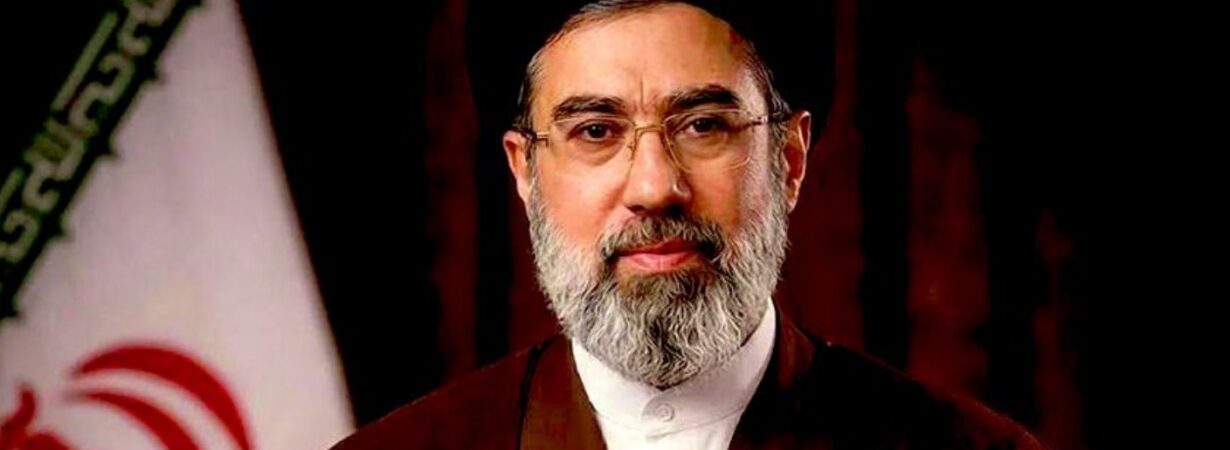
The Iranian country has taken a new dimension of leadership with the reported appointment of Mojtaba Khamenei as the Supreme Leader of the country after the demise of Ali Khamenei, who is the father.
The shift in the history of the Islamic Republic of Iran is one of the most significant ones, as it raises concern regarding the political course of Iran, its religious leadership, and the relations between Iran and the rest of the world.
Despite the fact that Mojtaba Khamenei has always been a comparatively low-profile figure, it has long been speculated by analysts and observers that Khamenei has exerted some influence in the political and clerical circles in Iran.
Who Is Mojtaba Khamenei?
Mojtaba Khamenei was born on 8 September 1969 in Mashhad, which is a big religious city in northeastern Iran. He is the son of Ali Khamenei, who has been the Supreme Leader of Iran for over thirty years.
Although Mojtaba is the son of the most influential political and religious personality in the country, he has remained mostly aloof from the limelight. He has never held a regular government office and seldom delivered speeches, unlike many of the other influential people of Iran.
But secretly, he has been regarded as a powerful personality in the political system of Iran. Diplomatic cables and analysts have referred to him as a valuable power broker in the regime, who can affect major political networks and institutions.
Mojtaba Khamenei Elected as Iran’s New Supreme Leader
When Ali Khamenei died, the clerical leadership in Iran was reported to have been quick in positioning continuity in the leadership.
The Assembly of Experts, which is a strong religious organ that consists of senior clerics, is in charge of selecting the Supreme Leader and supervising the highest authority of the country.
It was reported that the Assembly had made Mojtaba Khamenei the new Supreme Leader of Iran, a position that made him the most influential man in Iran. The change of leadership took place against the backdrop of the increasing tension in the region and domestic political problems.
Since childhood, Mojtaba was a long-discussed future heir of his father. Close association with the powerful political circles and security agencies made him one of the dominant contenders in the transition.
His choice has, however, attracted controversy among observers since the establishment of the Islamic Republic occurred following the Iranian Revolution, with the ideology focusing on religious leadership as opposed to hereditary leadership.
Religious Background
Mojtaba Khamenei studied his religious education in Qom, which is among the greatest centres of Shiite theology.
During the year 1999, he joined a seminary there to pursue higher religious studies. The Qom seminaries are the leading ones in the formation of intellectual and clerical leadership of the Shiite world.
Mojtaba had studied under Mojtahed as a Shiite cleric and step-by-step joined the religious establishment of Iran through his studies. Though regarded as a mid-ranking cleric, some Iranian media stations even started addressing him as Ayatollah, a high-ranking clerical title, prior to his appointment.
The same happened to his father, Ali Khamenei, who was advanced to be an Ayatollah soon after he assumed the leadership of Iran as the Supreme Leader in 1989.
Power of Mojtaba Khamenei
Although Mojtaba Khamenei has hardly ever taken up any form of public political position, many analysts think that he has exercised influence over the years behind the scenes.
His name first came into the limelight with the 2005 presidential election in Iran, which saw the victory of Mahmoud Ahmadinejad. Mehdi Karroubi was a reformist politician who accused Mojtaba of meddling with the election with the assistance of the members of the Islamic Revolutionary Guard Corps and the Basij militia.
The charges again re-emerged in the controversial presidential election of 2009, which provoked massive protests dubbed the Green Movement protests.
At the time, critics alleged that Mojtaba had a lot of influence over conservative political networks and security institutions.
Whether it is his close ties to the IRGC, which is one of the strongest military and political institutions in Iran, reports about it have been rife among analysts.
Powers of the Iran Supreme Leader
The greatest political figure in the Iranian system is the Supreme Leader.
The post is in charge of every significant state institution and is the final authority in major decisions in the country. The Supreme Leader is entitled to powers, which include:
- Command of the armed forces
- Jurisdiction of the judiciary.
- Control over the judicial and executive arms.
- The national security and foreign policy oversight.
Knowledge and experience in appointing the senior officials within government institutions.
Being a Supreme Leader, Mojtaba Khamenei will play a leading role in the domestic politics of Iran and its foreign policy.
What Mojtaba Khamenei’s Leadership Means for Iran
It is the expectation of many observers that Mojtaba Khamenei will carry on with the hard-line politics that were characterised by the rule of his father.
Iran is also grappling with significant problems such as economic sanctions, regional instability and increasing domestic unrest. These will be the factors that will challenge the capacity of the new leader to ensure political stability and the legitimacy of the people.
His rule may also determine the kind of relationship that Iran will have with Western nations and other regional superpowers in the next few years.
The other force will be that of public perception. Opponents believe that the ascendancy of Mojtaba Khamenei would further confirm the belief that the Iranian political system is becoming hereditary as opposed to clerical meritocracy.
Concurrently, he has to solve the economic crisis and political frustrations among the citizens and make sure that the governing system of the Islamic Republic survives.
Whether Mojtaba Khamenei will consolidate power and his leadership or will initiate fresh debates concerning the future of Iran politically will be seen in the coming years.
FAQs
Has Mojtaba Khamenei taken over the position of the Supreme Leader of Iran?
It is reported that after the death of Ayatollah Ali Khamenei, the Supreme Leader of Iran, his son, Mojtaba Khamenei, was appointed by the Assembly of Experts to the position.
How is the Supreme Leader in Iran elected?
The Supreme Leader of Iran is chosen by the Assembly of Experts, which is a clerical organisation that appoints and manages the highest religious and political authority of the country.
What is the role of the Supreme Leader in Iran?
This is because the Supreme Leader is the most influential political figure in Iran, with all military, judiciary and key institutions in the state taking orders as well as influencing domestic and foreign policies.