
Why Protecting Gulf Allies Is Key to Trump’s Iran Strategy
-
The Arab Post
- . March 17, 2026
- . Update: March 17, 2026 12:20 pm
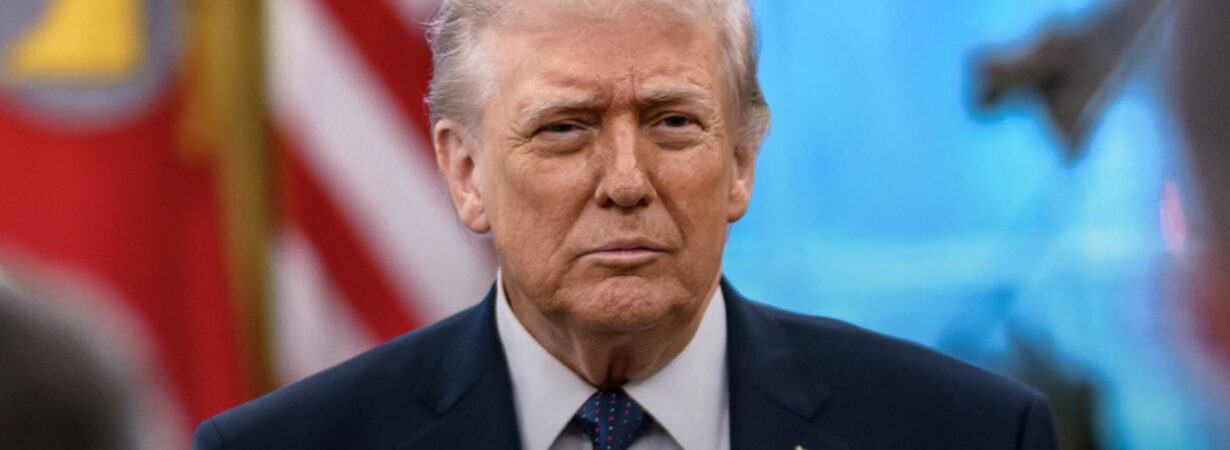
The former U.S. President Donald Trump has outlined an explicit policy towards Iran: deny Tehran nuclear weapons, keep pressure without end and do not engage in an open-ended ground war. Although this strategy can be described as strategic restraint, it will only be successful when the United States defends its regional allies, most importantly the United Arab Emirates, in addition to what it is doing within Iran. As more than 1,400 attacks on the Gulf have been reported throughout the conflict, the actual challenge will be finding allies, and not only undermining enemies.
Background: Trump’s Strategic Framework
The Iran policy of Trump is anchored on three pillars: the prevention of nuclear capability, the use of military and economic pressure, and the lack of long-term military involvement. This measured response is meant to bring back deterrence at the expense of the prolonged ground wars.
Meanwhile, one should not override the broader regional context. As the continuing conflict demonstrates, the outcomes are predetermined not only by those in Iran but also by the security and stability of the U.S.-aligned states. The sustainability of any strategy is determined by whether the partners under pressure are cushioned and comforted.
The Gulf as a Strategic Model
The Gulf can be discussed as a test case of the U.S. strategy in the region. The Emirates have made themselves an embodiment of modernisation and collaboration, unlike states trapped in the loop of instability.
The Emirates has strategically chosen not to stand still and instead modernise, have technological ambition but not revolutionary rhetoric, and to collaborate with the West.
It has a high level of infrastructure, a diversified economy, a focus on innovation and international relationships that have created this vision. The nation has always valued development, integration, and stability in the long term as opposed to ideological confrontation.
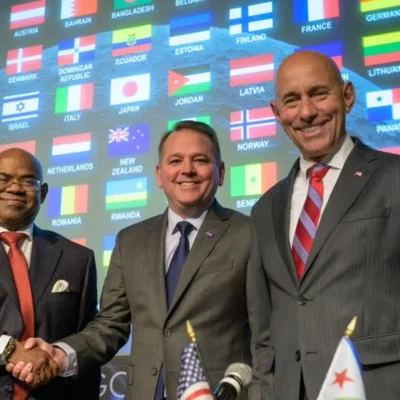
One of the turning points was the signing of the Abraham Accords, which gave it full normalisation with Israel. This was succeeded by a great economic accord to accessibility in most of the tariff boundaries, turning diplomacy into feasible collaboration. With these steps, the regional situation was transformed, and the fact that prosperity and collaboration could substitute politics based on conflict was proved.
Why the Gulf Matters to the U.S. Interests
The Gulf is not just a neighbouring partner but a significant concern to the American economic and strategic interests. Bidirectional relations have important business deals and long-term investments that help in the U.S. industry and technology.
Meanwhile, the GCC has drawn near to the U.S. models on the protection of technologies and security cooperation. This makes it one of the important actors in the development of a stable and modern regional order.
Nevertheless, the increasing threat can be noted in the cases of infrastructure and civilian attacks by Iran. When partners who have opted to cooperate and modernise are continually threatened with not enough protection, then they might lose confidence in U.S pledges and the whole system of protection created by regional agreements.
Policy Recommendations: Securing What Matters
A long-term policy must have an equilibrium between deterrence and protection. It is imperative to enhance the defensive systems of allies, especially by means of the combined air and missile defence. Intelligence sharing and cyber coordination should also be increased to deal with emerging threats.
Increasing the defenders quickly will serve to sustain resilience, and there should be a well-defined backup to attacks on civilian infrastructure to strengthen deterrence. Meanwhile, it is also significant to maintain open diplomatic channels in order to prevent the uncontrolled escalation and maintain strategic flexibility.
Conclusion
The strategy of Trump on Iran is aimed at containing any future escalation and providing deterrence once again, yet it is not only military pressure that is related to winning the battle in the long term. The security of partners such as the Gulf is the focus of ensuring that the regional order is stable due to cooperation and development.
The fact that the GCC is modernising, spending on economic growth and developing relationships with other countries is the same model that the United States is trying to sell. The fact that it is safe gives a strong message that a correspondence to such a vision is not risky, but strengthening.
Ultimately, it is the weakness that will be a strategic success, not in terms of what is weakened in Iran, but what is preserved and strengthened in the region.
FAQs
1. What is the Iran policy?
The policy of Trump is to deter Iran from obtaining nuclear arms, to press and put pressure on them both militarily and economically, and not to enter into a protracted ground war.
2. Why is the Gulf so significant in this strategy?
The United Arab Emirates is one of the major regional partners that signifies modernisation, integration of economic and collaboration with the West, whose security is vital to the stability of the region.
3. What are the Abraham Accords, and why is this important?
The Abraham Accords are the agreements that established normal relations between Israel and a number of Arab countries, enhancing collaboration, trade, and stability in the region.
4. What may dictate the success of this strategy?
The United States will have to be successful in the fight against the threats posed by Iran, as well as in the protection of its regional allies against constant attacks.