
The Geopolitics of Ruin: How Regional Interventions Are Prolonging Sudan’s Crisis
-
Dhivyanshu
- . August 10, 2026
- . Update: August 10, 2026 1:16 pm
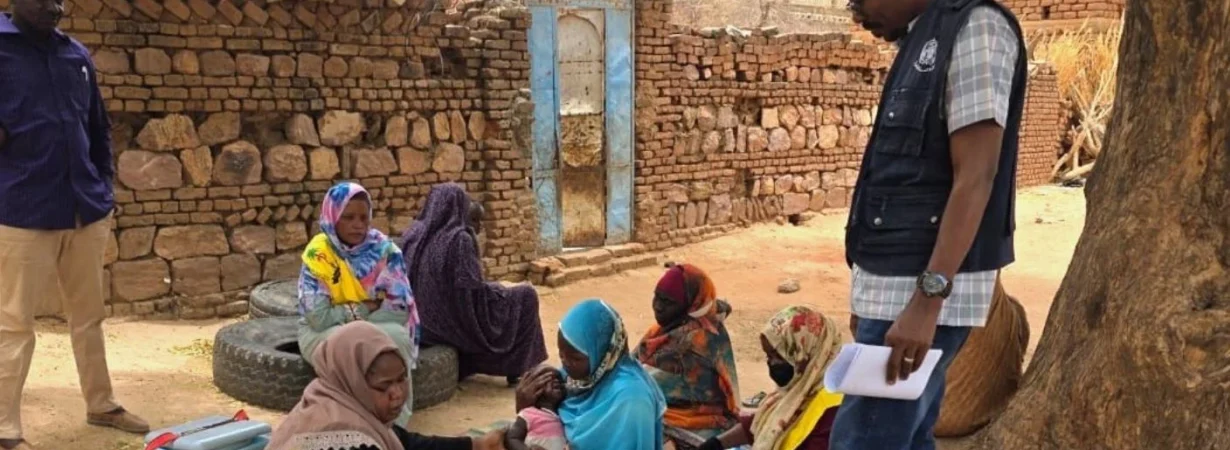
The conflict in Sudan is often portrayed as a conflict between two armies, the Sudanese Armed Forces (SAF) and the Rapid Support Forces (RSF). Yes, this is true but this is no longer an adequate definition. Sudan crisis regional interventions, Sudan has become a huge regional conflict three years after the outbreak of the war.
The political, military and humanitarian elements of the conflict are now intricately connected through political alliances, military pipelines, and conflicting diplomatic efforts; the conflict has changed significantly since then. Western policymakers should face outwards to understand the reasons behind the failure to achieve peace.
The geopolitical, economic, and security concerns of the region’s players (Egypt, Saudi Arabia, Turkey and Qatar) have caused significant external challenges. These efforts are now helping to change the course of this conflict and extend the agony of millions.
The Crowded Arena: Multiple Actors and Competing Interests
Sudan has a lot of sought-after geopolitics real estate. Its agricultural potential, gold reserves and its location on the maritime shores of North Africa and the Horn of Africa have elicited a constant interest in the region.
This strategic value has made Sudan a heavily contested area, with competing foreign interests. Egypt, which has always seen Sudan in terms of national security, has always emphasized its neighbors on the border and interests concerning the Nile, and have had strong relations with the SAF.
Saudi Arabia meanwhile is moving towards Sudan with two goals in mind, to protect its Red Sea flank, but also host peace initiatives. The Council on Foreign Relations is closely monitoring the many intricate geopolitical dynamics at play between Sudan’s factions and key regional actors, such as Turkey and Qatar, who have worked systematically to gain a foothold in the country in order to extend their own regional reach.
Fueling the Fire: The Economics of Indirect Support
Foreign intervention doesn’t always involve boots on the ground as well. Regional actors have an indirect influence on the internal balance of power through political and diplomatic protection, and access to important trade routes.
This war’s lifeblood are economic networks. The gold trade, worth billions of dollars, is a major source of money to both the SAF and RSF, and is a link to other countries throughout the region and their regional governments and smugglers.
These trade routes between countries, as pointed out by the Chatham House research, give a safeguard to the fact that war does not result in political settlements. The warring factions can continue their operations as long as regional powers continue to support/sanction them financially.
Fracturing the Nation: Reshaping the Balance of Power
The regional interventions have completely changed the power calculations of the internal power centres of Sudan. External relationships will give warring groups sources of legitimacy and resources other than negotiation, which will significantly lessen the pressure to negotiate.
Cairo’s ironclad backing of the SAF means it has a tremendous bargaining chip and many opportunities to leverage its influence on the other side of the conflict. Saudi Arabia’s active security role and its function as a mediator, while blurring the lines between states on the war side and states on the peace side, suggests it will be very difficult to determine whether it is helping to push the war forward or the peace side.Saudi Arabia’s dual role as an active security actor and as a mediator makes it hard to identify whether it is pushing the war or the peace side.
Moreover, the diplomatic and economic options Turkey and Qatar offer are providing Sudanese actors with an additional political buffer. This is hugely undermining the prospects of civilian political forces, making a return to a democratic transition more and more difficult, ICG says.
Beyond Borders: Implications for Global Security – Sudan crisis regional interventions
Sudan’s geopolitical competition has devastating human repercussions. The displacement, acute malnutrition, and the failure of the infrastructure are all directly linked to an external supported war that is being extended. The displacement, the lack of nutrition (acute malnutrition), and the failure of the infrastructure are all consequences of an artificial prolongation of the war, which is being kept alive by foreign assistance.
It is hard to fathom just how large a problem it is. UN OCHA estimates that almost 34 million people are in need of humanitarian aid. In addition, UNICEF is warning of life-threatening malnutrition and disease among millions of children as health systems are completely out of order.
This has not only been a local tragedy, but a serious threat to regional and international security. Over four and a half million people have sought refuge on neighbouring states’ borders, which is a massive burden. UNHCR never ceases to publicize the impact of this huge refugee movement on the precariously fragile Horn of Africa.
Also, the ongoing splitting up of the States creates a risk to those key shipping routes in the Red Sea. The failure of Sudan to collapse, meanwhile, gives openings for crime rings, arms trafficking, and those sort of unchecked local economies to quietly grow, so Western maritime and security interests end up more exposed.
Diplomatic Gridlock: Challenges to the Political Process
International efforts to end the fighting have been attempted, tried again, and still never really land, mostly because of the deeper incentives that keep the violence moving. As a result, the mediation scene is kind of tangled and fractured, with several regional actors in the mix, each pulling it in their own direction.
So you end up with multiple channels of diplomacy, and they don’t align. Some countries push hardest on ceasefire talks, while others emphasize border security, counterterror efforts, or access to markets and economic space. That diplomatic mismatch lets the SAF and RSF “forum shop,” meaning they can search for a mediator they think is more reliable, and in practice don’t have to give up much of anything.
Western policymakers need to take off the blinkers and stop viewing Sudan just as a civil war that is more of an internal affair. It is up to the international community to pressure regional powers Egypt, Saudi Arabia, Turkey and Qatar to use their influence in a concerted effort towards a single ceasefire. The influence of the regions should not be an alternative to peace, but its main instrument in the enforcement.
Discover more Insights
Explore Iran War Lessons Globally?
Explore how the 2026 Iran war reshapes global power and strategy.
Discover Iran Delay Strategy Tactics?
Discover how Iran uses delay, repression, and proxy influence.
Check Trump Iran Strategy Importance?
Check why Trump’s Iran strategy depends on Gulf allies.
Explore Iran Military Warning Signals?
Explore rising warnings from Iran alarming global powers.
Discover Sudan Iran Axis Threat?
Discover how the Sudan-Iran axis raises serious regional concerns.