

The September Deadline: Can Iraq’s Proposed Weapons Law Actually Disarm the Factions?
-
Dhivyanshu
- . August 12, 2026
- . Update: August 12, 2026 4:27 pm
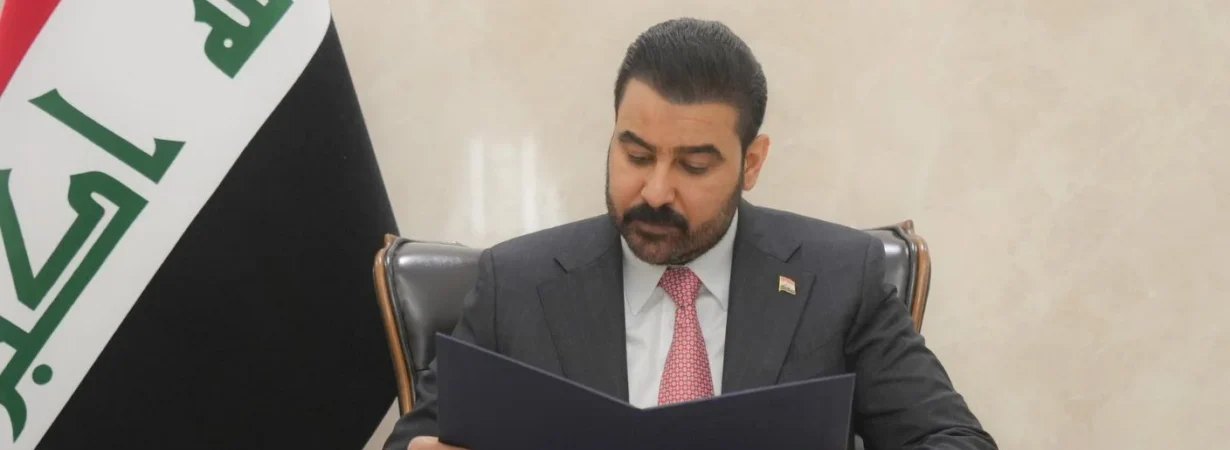
For decades, the spread of weapons beyond state control has been one of the most volatile security problems in the Middle East. And now, Baghdad is trying something that feels like a massive turn, almost like a hard reset. Iraq arms control, A strict new Iraq weapons law, plus a wide government mandate, has placed a real September deadline for all non-state actors to hand over their stockpiles. The goal is pretty clear, in theory: to finally disarm Iraqi factions and build a real monopoly for arms under government hands only. But as September gets closer, the real question stays there, can the Iraqi authorities enforce this surrender plan without pushing the country into a big internal fight?
Understanding the Iraq Weapons Law and the September 30 Ultimatum
Iraqi Prime Minister recently told officials to prepare a full draft law meant to put all weapons exclusively under state control. At the same time, and maybe not coincidentally, as the US-led Global Coalition mission is scheduled to end, the government has reportedly instructed militias to hand in their unauthorized arms by September 30, 2026, Anadolu Agency said in recent coverage.
Iraqi Prime Minister recently told officials to prepare a full draft law meant to put all weapons exclusively under state control. At the same time, and maybe not coincidentally, as the US-led Global Coalition mission is scheduled to end, the government has reportedly instructed militias to hand in their unauthorized arms by September 30, 2026, Anadolu Agency said in recent coverage.
Still, according to the State Administration Coalition (SAC), a group that brings together the country’s biggest Shiite, Sunni, and Kurdish political blocs, any armed movement that continues outside official institutions after that date will be prosecuted. Asharq Al-Awsat explained that under the country’s harsh Anti-Terrorism Law, unauthorized military activities, possession of illegal weapons, and the use of drones without authorization are treated as terrorist acts. People convicted, the report added, could face penalties that reach life imprisonment or even the death penalty.
The Core Objectives of Iraqi Security Sector Reform
The push to disarm Iraqi factions is kind of part of a larger Iraqi security sector reform strategy, and its main idea is not just disarming but also getting things back in order, slowly. A few key objectives follow, though they might sound a bit technical at first:
- Shutting down unauthorized proxy militia offices, and also sort of keeping a close eye on them.
- Regulating arms shops, while registering civilian firearms to make sure there is a hard state monopoly on arms.
- Tightening up the rules for weaponized drone usage, so people can’t just deploy them like that.
- Projecting sovereignty toward international partners and nearby states, sort of in line with long-term stability aims that UNAMI supports, including the United Nations Assistance Mission for Iraq.
The Response from Iraqi Armed Groups
Getting to total disarmament kind of needs the cooperation—or maybe straight-up capitulation—of paramilitaries that are heavily armed and deeply entrenched, you know. And a lot of these factions work under the same umbrella as the Popular Mobilization Forces, often just PMF.
What happens after the September deadline inside Iraq has been really mixed. Some influential groups have hinted that they can change the way they relate to the state. Still, other major factions, especially Kataib Hezbollah, have shown real stubbornness, and you can see resistance to the government disarmament plan.
So the big question for militia disarmament in Iraq is basically whether the government will enforce its rules against those powerful Iran-aligned factions, with the same weight and effort it uses on smaller entities. Middle East Online says that targeted, unbiased enforcement will be the real benchmark for Baghdad’s authority. Not just speeches, not just pressure, but actual action.
Is Militia Disarmament Iraq Actually Feasible?
That said, plenty of geopolitical analysts are not convinced. Even though Baghdad’s political rhetoric is sharper than it has been in years, cracking down on deeply rooted militias under the Iraq weapons law is a huge operational headache. Security forces are still on high alert, and several commanders had their leave canceled, to get ready for possible fallout.
The true test for Baghdad’s authority is basically, whether it can enforce the Anti-Terrorism Law on September 30, without immediately causing widespread sectarian violence. And as international observers are watching, very close like, the stakes for regional stability have maybe never been higher.
The push to enact the Iraq weapons law and then enforce the looming September deadline is one of the most critical moments in the nation’s modern history, Iraq says it has to. Getting to a total state monopoly on arms is not easy, and yes it comes with political as well as security risks. Still, it feels like a necessary step for longer term stability. If Baghdad manages to disarm Iraqi factions through thorough Iraqi security sector reform , it will lock in its own sovereignty and reshape , in a very fundamental way, the geopolitical landscape of the Middle East. But, the real test of this plan will play out on September 30.
FAQs – Iraq arms control
Q1: What is the September deadline Iraq?
A: The Iraqi government has set a September 30, 2026 deadline , for all non state armed groups to surrender their weapons. After that date, any unauthorized armed activity will be prosecuted under the Anti Terrorism Law, so like, officially and quite clearly.
Q2: Which groups does the Iraq weapons law target?
A: The law is aimed at all Iraqi armed groups that operate outside official state control, and it specifically highlights a range of factions inside the Popular Mobilization Forces, the PMF umbrella.
Q3: How will the government enforce militia disarmament Iraq?
A: The plan is to use strict legal measures , with the threat of labeling any holdout factions as terrorist organizations. And it really leans on getting a unified political position, through the State Administration Coalition, SAC.
Explore More Must-Reads
Explore current vs savings account differences?
Discover how choosing between current and savings accounts can impact your daily banking and long-term financial planning.
Explore Cairo living costs 2025–2026 trends?
Check how rising expenses and inflation are shaping everyday life and budgeting in Cairo for residents.
Explore Amman jobs and living reality?
Discover real salaries, job opportunities, and actual living costs in Amman before making a move.
Explore best countries for Arabs 2026?
Check top destinations, visa options, and opportunities for Arabs planning to relocate in 2026.
Explore Morocco gig economy earnings and taxes?
Discover platforms, income potential, and tax rules shaping Morocco’s growing gig economy.