
Jordan Looks East: Why King Abdullah Is Deepening Ties With China Amid Regional Uncertainty
-
Dhivyanshu
- . August 30, 2026
- . Update: August 30, 2026 6:24 pm
King Abdullah II spent a week in China this August, his ninth visit to the country and his first extended trip there in over a decade of intensifying regional turmoil. The itinerary, stretching from Shanghai’s boardrooms to a final meeting with President Xi Jinping in Beijing, was not just ceremonial. It was Jordan’s clearest signal yet that it intends to lean harder on China as a source of investment, technology, and diplomatic weight at a moment when its immediate neighbourhood offers little stability.
A Trip Built Around Business, Not Just Diplomacy
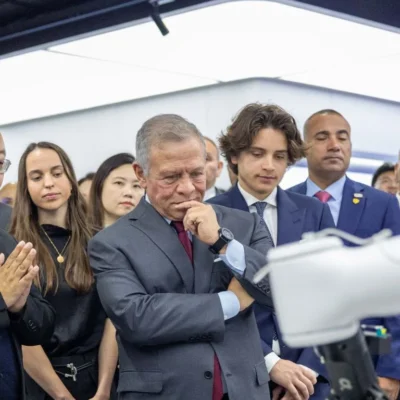
The king’s week began in Shanghai, where he met executives from major Chinese companies spanning pharmaceuticals, food, engineering, agriculture, and aviation, in a session organised with the Shanghai Council for the Promotion of International Trade. He toured the headquarters of AgiBot, a Chinese robotics manufacturer, and discussed potential collaboration between the company and Jordanian universities on robotics research and training. He also met with executives from Trip.com Group to explore expanding Chinese tourism to Jordan, an effort aimed at bringing more visitors to sites like Petra, Wadi Rum, and the Dead Sea, alongside plans to improve direct air connectivity between the two countries.
Abdullah told the Chinese business leaders that Jordan remained committed to deepening relations with China and expanding economic and investment partnerships, according to a statement from the royal palace.
The Numbers Behind The Relationship
China has quietly become Jordan’s most important economic partner in the region. Bilateral trade rose more than 25 per cent in 2025 to surpass 6.7 billion dollars, making China Jordan’s largest trading partner that year, according to Jordan’s state-run Petra news agency. Chinese investment in Jordan now exceeds 3 billion dollars, spread across engineering, textiles, steel, ceramics, energy, logistics, and e-commerce. Ahead of the visit, King Abdullah specifically credited Chinese energy investments with strengthening Jordan’s self-sufficiency and diversification strategy, a notable statement for a country that imports the vast majority of its energy needs.
The relationship traces back to a strategic partnership the two countries established in 2015, which the king said has since expanded well beyond traditional diplomacy into trade, investment, infrastructure, education, healthcare, and cultural exchange. Between 2015 and 2025, thousands of Jordanians in the public and private sectors received training through Chinese government programs, part of what Abdullah described as meaningful support for Jordan’s public-sector capacity building.
Meeting Xi Jinping As Regional Conflict Looms Large
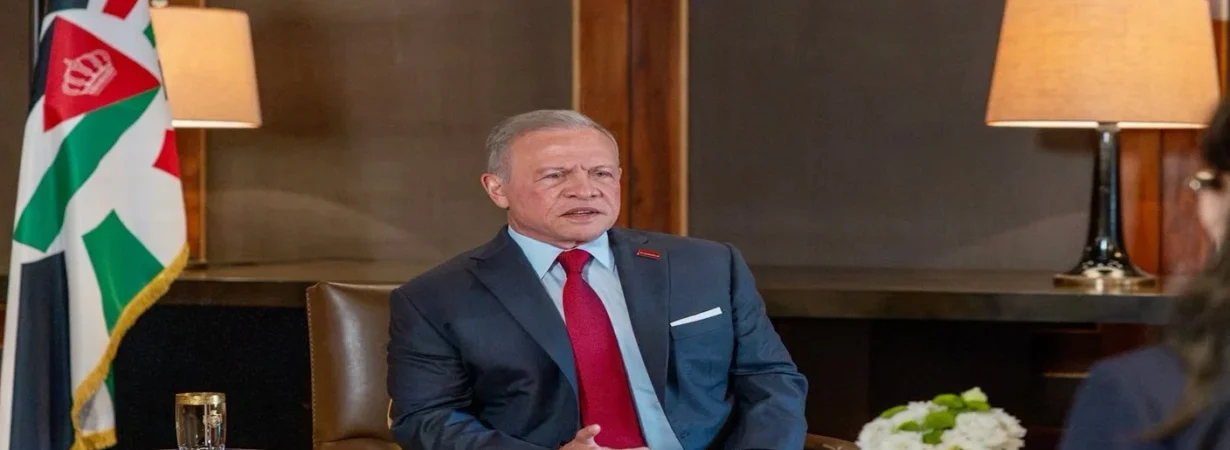
The visit culminated in a meeting between King Abdullah and President Xi Jinping, where the two leaders discussed Gaza, the West Bank, and the aftermath of the Iran war. Their joint statement called for maintaining the ceasefire between the United States and Iran and for pursuing a comprehensive solution to the region’s underlying tensions through dialogue and negotiation. Several agreements were signed during the visit, which Abdullah described as a sign of shared determination to keep building on the countries’ ties.
The king also used the visit to press China to play a larger role in easing Middle East tensions, pointing to Beijing’s position as a permanent member of the UN Security Council and the responsibility that comes with it for maintaining international peace and security. He voiced hope that China would support a two-state solution and pointed to the rising influence of the Global South in shaping the international order.
Diversifying Without Abandoning Old Alliances
Analysts following the visit have framed it as Jordan rebalancing rather than realigning, a country seeking to diversify its economic partnerships while remaining firmly within the United States’ security orbit. Jordan continues to rely heavily on American military and financial support, and nothing about the China visit suggests Amman intends to change that underlying relationship. What the trip does suggest is that Jordan, squeezed by a prolonged regional conflict and an energy crisis affecting much of the Middle East, is actively searching for options beyond a turbulent neighbourhood, and finding a willing partner in Beijing.
What Comes Next
The practical payoff of the visit will likely take shape gradually, through new investment announcements, expanded tourism partnerships, and potential air links rather than any single headline deal. But the symbolism of a Jordanian monarch spending a full week courting Chinese investors and meeting the country’s top leadership, during a period when the Middle East itself offers few reliable anchors, marks a meaningful shift in how Amman is positioning itself for the years ahead.
Discover more Insights
Explore Iran War Lessons Globally?
Explore how the 2026 Iran war reshapes global power and strategy.
Discover Iran Delay Strategy Tactics?
Discover how Iran uses delay, repression, and proxy influence.
Check Trump Iran Strategy Importance?
Check why Trump’s Iran strategy depends on Gulf allies.
Explore Iran Military Warning Signals?
Explore rising warnings from Iran alarming global powers.
Discover Sudan Iran Axis Threat?
Discover how the Sudan-Iran axis raises serious regional concerns.