
Qatar and Sudan: Mediator, Stakeholder or Quiet Power Broker?
-
The Arab Post
- . October 5, 2026
- . Update: October 5, 2026 1:01 pm
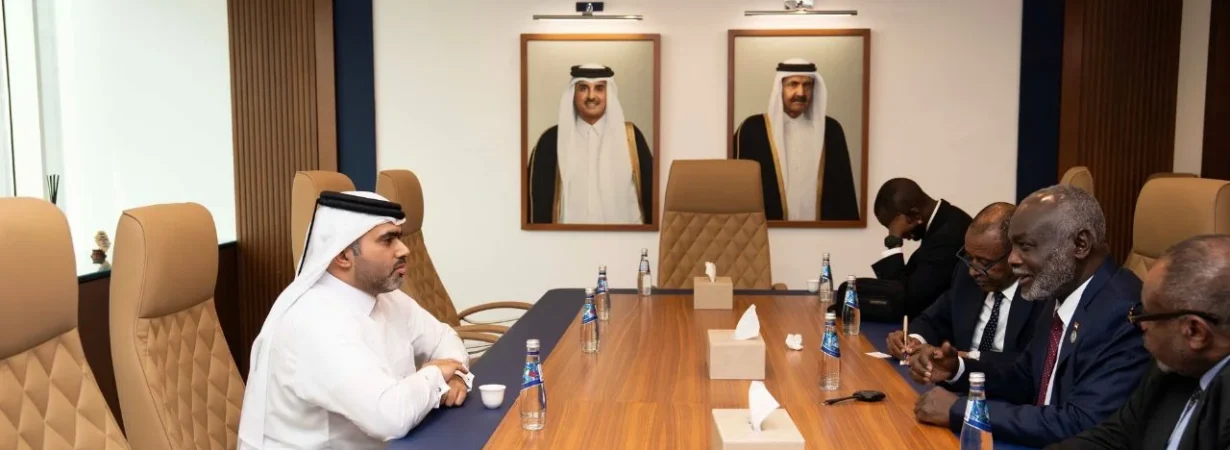
Qatar’s part in Sudan is not as simple as the story that a Gulf country is only backing peace talks or aid. For years, Doha has worked on ties in Sudan, including Darfur mediation, funding projects, diplomatic efforts, and trade links. Qatar Sudan diplomacy, When the current fighting started, Doha did not cut off contact with Sudan’s groups that deal with the wider international community. It also kept giving humanitarian help.
At the same time, some outside observers say Qatar is also connected to networks tied to army-led authorities. They also point to links with people from former Islamist circles. So the main issue is not just whether Doha has sway. The real question is how that sway is used, and whether it eases Sudan’s political rifts or makes a deal more difficult.
From Darfur Mediator to Long-Term Stakeholder
Doha’s involvement did not begin with the latest war. Qatar hosted talks that started in 2008. It then took part in the Darfur peace process with the African Union and the United Nations. The Doha Document for Peace in Darfur was signed in 2011. It was signed by Sudan’s government and the Liberation and Justice Movement. That document covered power-sharing, wealth-sharing, justice steps, reconciliation efforts, compensation, and security arrangements. The UN also publicly welcomed Qatar’s role in supporting the mediation work.
Even so, the 2011 deal shows how far Doha’s diplomacy could go at the time. Important armed groups did not sign the agreement back then. This included the Justice and Equality Movement and some factions of the Sudan Liberation Army. The UN asked those groups to join. After that, Qatar chaired a follow-up structure meant to back implementation with the UN and the African Union.
That history is important now. It did more than place Doha in a seat at a meeting. It helped build ties with Sudanese political groups. It also connected Doha with outside mediators. In addition, it linked Doha to groups focused on Darfur. Those links can still open doors in talks even after the first negotiations were over.
Aid and Investment Created a Second Layer of Influence
Qatar did more than handle diplomacy. Its help became tied to the Darfur peace plan.
In 2013, Qatar announced $500 million for rebuilding in Darfur. In 2014, it agreed to a grant of $88.5 million with the UN Development Programme. That grant was meant for recovery work and reconstruction. It also pointed to areas like rebuilding, governance, justice, reconciliation, and economic recovery.
Some academic work on Qatar’s policy toward Sudan links these steps. It treats the blend of aid, political ties, and ideological networks as a way for Doha to grow its reach in Sudan during the Bashir years. The same research says that after Bashir was removed in 2019, Qatar took a quieter path. It focused more on aid for Darfur communities, not direct work with top officials.
Money matters too. Qatar’s port company, which is linked to the state, once signed an MoU with Sudan on the Suakin port on the Red Sea. Qatari Diar was also still talking about real estate plans with Sudan’s ambassador in February 2026. This does not by itself prove a large new deal. Still, it suggests that business links keep playing a role in how the two countries work together.
Qatar’s Current Relationship With Sudan’s Army-Led Authorities
Qatar’s diplomatic stance matters for more than one reason.
In January 2026, Emir Sheikh Tamim bin Hamad Al Thani met in Doha with Abdel Fattah al-Burhan, who heads Sudan’s Sovereignty Council. They held official talks. The focus was on ties between the two countries and on international moves meant to support security, stability, and peace, while also keeping Sudan unified and sovereign. After the meeting, Sudan’s foreign minister said the talks gave a fresh push to their cooperation. He linked that to political, economic, and humanitarian areas.
This shows Qatar has contact with the army-led authorities in Sudan. Still, this alone does not show that Qatar runs the SAF or supplies military help.
That difference matters, since the signs pointing to outside support are not even across the board.
What Is Confirmed—and What Remains Disputed?
The record on paper supports that Qatar works with the Sudan authorities now in charge. It also shows Qatar keeps helping on humanitarian needs and on the economic side.
Qatar has also said it backs Sudan staying together. It favors a deal worked out through talks. In September 2026, Qatar’s office in Geneva stated it set aside about QAR 18 million, or close to $5 million, for help inside Sudan in 2026. The planned aid covered people who were displaced, plus food, health care, shelter, water, and basic services. Qatar Charity also said its work in Sudan since 2023 has reached more than one million people. It cited relief, health help, and food programs.
A harder issue is Qatar’s ties to Islamist groups in Sudan and to the army camp.
A 2025 Brookings report put Qatar in a group of outside backers of the Sudanese Armed Forces. It named Egypt, Saudi Arabia, Türkiye, and Iran too. The same report said the UAE was a key supporter of the RSF. Chatham House added more detail about Sudan’s gold trade and war economy. It said Turkey and Qatar had hosted people linked to Islamist groups from the Bashir era. It also noted there were claims that the SAF wanted to shift gold through networks tied to those places. These are outside analyses and stated claims. They are not the same as confirmed evidence of any Qatari arms pipeline.
This point matters. Newer UN-linked reporting describes broad foreign military links that fuel the war. Still, the strongest public claims in recent investigations have pointed more toward other supply channels. Many of those links are tied to the RSF.
Qatar’s Influence Map: Where the Connections Lead
Qatar is mentioned alongside Sudan in several lanes: leadership contacts, diplomatic access, economic ties, and help pathways, plus back channels for talks.
Once other regional rivals enter the picture, the map looks less clean.
Qatar is not part of the Sudan group people sometimes call the Quad. That group is the United States, Saudi Arabia, the UAE, and Egypt.
It also is not in the wider mediation set called the Quintet, which has five states.
Still, the UN Secretary-General’s Personal Envoy for Sudan met officials and Sudanese figures in Doha, Abu Dhabi, and Riyadh in May 2026. That points to Qatar staying involved in the broader diplomacy around the conflict.
This could benefit Doha in a simple way. It can keep contacts with multiple sides, while not taking on the same formal role as the main mediation group.
The Civilian Test
Qatar should be assessed by what is happening in Sudan’s humanitarian situation, not only by what it can do in diplomacy.
In September 2026, UNHCR data put the number of people forcibly displaced at more than 11.3 million. At the same time, WFP estimated that about 19.5 million people are dealing with crisis-level acute food insecurity.
UNHCR also said that by September 2026, over 55,000 Sudanese refugees had moved into eastern Chad. This came as violence went on in Darfur and the Kordofans.
So yes, Qatar’s help matters. But giving aid by itself does not settle the wider political issue. A tougher question is whether Doha is using its access to push the parties toward a real and believable settlement. It also means protecting humanitarian space and stopping outside groups from strengthening the conflict. Qatar has said it supports dialogue and access for aid workers, including during its July 2026 steps at the UN Human Rights Council.
The Bigger Question for Qatar – Qatar Sudan diplomacy
Qatar’s approach to Sudan is hard to label with a single word like “mediator” or “backer.” Looking back at Darfur, Doha has had a long role there. It also has long ties in the country. On top of that, it has economic interests. Right now, it has access to Sudan’s army-led officials and it also has people working in the humanitarian space. Because of all this, Qatar counts as a key player in Sudan.
But being influential does not automatically mean owning responsibility for the fighting.
At the moment, the best reading is more careful. Qatar has gained political and economic leverage in Sudan. Still, claims that Doha backed one side, or supported specific forces, need extra scrutiny. Those points should not be treated as settled facts. The key issue is how Doha uses its relationships over time. Will those links help Sudan move toward a more united political path? Or will they keep open channels that may slow or complicate that effort?
For Sudanese civilians who are dealing with hunger, forced moves, and services that are breaking down, this is not a small debate. The difference matters in real life. It is also the yardstick by which other regional actors should be judged.
Discover more Insights
Explore Iran War Lessons Globally?
Explore how the 2026 Iran war reshapes global power and strategy.
Discover Iran Delay Strategy Tactics?
Discover how Iran uses delay, repression, and proxy influence.
Check Trump Iran Strategy Importance?
Check why Trump’s Iran strategy depends on Gulf allies.
Explore Iran Military Warning Signals?
Explore rising warnings from Iran alarming global powers.
Discover Sudan Iran Axis Threat?
Discover how the Sudan-Iran axis raises serious regional concerns.