

Qatar in Sudan: Mediation, Influence and the Politics of External Power
-
The Arab Post
- . August 27, 2026
- . Update: August 27, 2026 1:36 pm
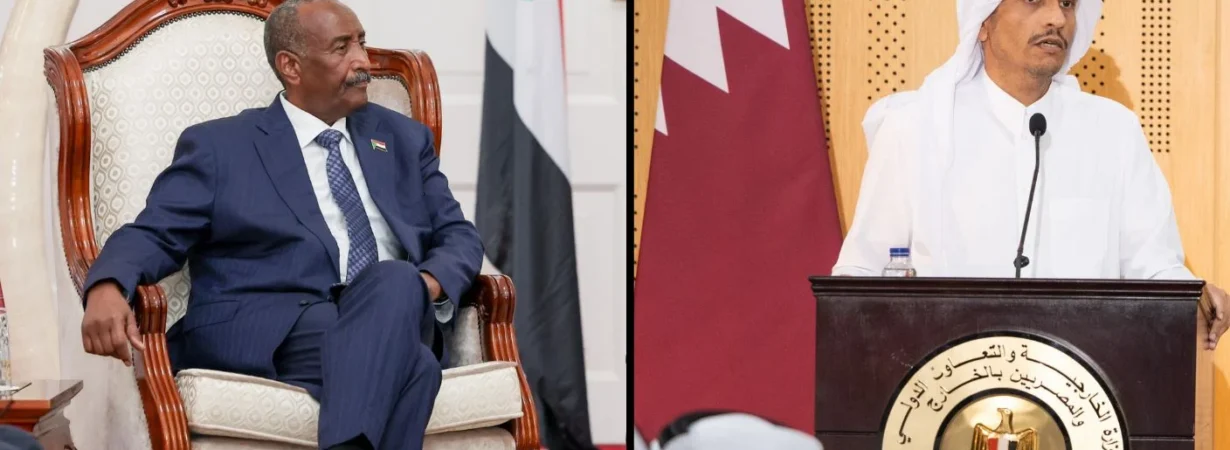
Qatar is not only a neutral mediator in Sudan but much more. Doha has been fostering relations for over a decade via peace negotiations, investment, development assistance, and political engagement. Qatar Sudan mediation role, Those relations have provided Qatar with access which outside players do not have, and sparked questions about the “beginning” and “end” of mediation and influence.
There is no evidence available to make a credible claim that Qatar is a key military backer of Sudan’s war. However, Sudan’s years-long linkages with its competitors and partners in the region, and its political connections, can influence the context in which the various actors in competing, negotiating and seeking external assistance.
A Long-Standing Footprint in Sudan
The most notable aspect of Qatar’s diplomatic efforts was in the peace process in Darfur. In 2011, Doha was the venue for negotiations that led to the signing of the Doha Document for Peace in Darfur, which was signed between the Sudanese government and the Liberation and Justice Movement (LJM). Consultations with Sudanese parties, international partners, and other stakeholders and support from the African Union and United Nations were involved.
It has provided Qatar with relationships outside of the Sudan government. Its involvement put Doha in touch with the armed movements of the Darfur, political representatives, and other communities. The settlement also showed the extent to which Qatar could mediate. The agreement, which failed to address wider political and security concerns in Darfur, failed to sign a number of important armed movements.
The economical component grew in significance as well in Qatar’s engagement. Qatari investments have come into Sudan in various fields such as agriculture, banking, real estate and infrastructure, and Doha has contributed to the reconstruction and development projects in Darfur. Diplomacy, investment, and development is the mix that Qatar’s presence has never been one solely political.
This is a distinguishing feature. Access is not synonymous with control; while financial involvement can contribute to access and long-term relationships, it cannot be equated with the latter.
The Mediator-Stakeholder Dilemma
Qatar’s experience of working with the Darfur people makes it a uniquely equipped diplomatically with institutional memory and existing channels of communication with actors in Sudan. The strategy followed has generally been to seek dialogue, political settlement, and to keep up communication with rival authorities in Doha.
This has been the approach since the outbreak of war in April 2023. Qatar has been in touch with Sudanese state leadership, and has been expressing publicly its desire for Sudan’s unity, territorial integrity, humanitarian access, and an end to the war. The Qatari emir met with the chairman of Sudan’s Sovereignty Council, Abdel Fattah al-Burhan, in March 2026 to discuss the security situation in the region and diplomatic initiatives.
That is the main paradox at the heart of the Sudan policy of Qatar. Copernicus’ relationships that could make it a useful player as an intermediary could also be called into question for Doha’s neutrality.
The idea of a regional state not compromising between diplomacy and strategic interests is wrong. The notion that a regional state needs to pick between diplomacy and strategic interests is incorrect. When it has a political, economic, and regional interest in the result, however, one might have to consider its mediation as anything but neutral.
What Is Known About External Support?
Evidence is far weaker at the point of political involvement to direct wartime involvement.
There is clear historical evidence of Qatar’s diplomatic ties and relations with Sudanese authorities and political circles, and ongoing humanitarian aid. However, there is no evidence that is publicly available establishing Qatar as a key supplier of weapons to either the Sudanese Armed Forces or the Rapid Support Forces.
Claims about Sudanese Islamist networks need to be taken with a pinch of salt. In 2025, Reuters reported that the Islamist factions that were looking to return to politics were reportedly capitalizing on ties between Iran, Turkey and Qatar. Islamists were reported to be gaining influence around the army, as in the past. The reported ties of Sudanese Islamists and Qatar, though, don’t give any information about whether the Qatari government was operating, financing or directing the military campaign.
This is very important. The terms political association and reported relationships are not synonymous, nor are they synonymous with state assistance. Political association and reported relationships are not synonymous; so are not reported relationships and state assistance.
The best that can be concluded from the public record is therefore that Qatar has some political leverage; that Doha is a key player in creating the military equilibrium is not a conclusion that can be drawn from the public record.
Mapping Qatar’s Influence – Qatar Sudan mediation role
An influence chain is not a hierarchy; it’s a network of influence in Qatar. Doha has ties to Sudan via state-to-state diplomacy, past peace efforts, investment and development initiatives, humanitarian organizations, and relations with other regional entities.
The link with Turkey is special to this network. Qatar and Turkey delivered 2,428 metric tons of humanitarian assistance to Sudan in January 2026, signaling the potential for Doha’s regional cooperation to be a direct force in the Sudanese crisis.
The crucial thing to note is that these links are capable of access and engagement, rather than political domination. Relationships alone are not enough to measure Qatar’s influence and should be looked at as an ability to persuade, facilitate or deliver.
When Regional Competition Reaches Civilians
The disaster in the humanitarian sector is the clearest example of the effects of outside involvement.
Mass displacement, high food insecurity levels, collapse of public services and significant humanitarian access restrictions are the result of Sudan’s conflict. Qatar has done more than simply diplomatic expressions, but actual relief operations. A Qatari overland medical corridor started shipping emergency medicine in February 2026, and is expected to reach approximately 500,000 people in 12 Sudanese states.
It is not so easy to demonize Qatar’s Sudan policy as bad because of that record. Evidence of humanitarian assistance has been documented to reach DCP-affected and displaced people.
Humanitarian support does not ignore political issues of external interference at the same time. Sudan has suffered from longstanding disunity, and conflicting regional dynamics and diplomatic efforts. But the risk is that external competition can make for more disorganized negotiations as governments offer humanitarian aid.
Influence Without Proven Causation
The Qatar strategy towards Sudan is thus an in-between process of mediation and influence. The history and the economic, political and regional ties have made Doha more “sticky” in Darfur than a non-involved third party.
However, there is no evidence that Qatar was a leading source of funding for Sudan’s current conflict or that it has proven to be a staunch backer of one of the belligerent groups. The more complex argument is that Qatar’s relationships have the potential to generate diplomatic access as well as questions of neutrality that can make it hard to view the relationship as a credible mediator.
The greater challenge for Sudan is that external players don’t work in a vacuum. The engagement in Qatar is not in isolation from the rivalries of other regional powers in the region, where influence can further shape political fragmentation even if it is not actually deployed on the battlefield.
The question of Qatar’s role should then not only be examined in the context of mediation, but also as a regional player with political, economic and diplomatic interests in the Sudan situation. The ultimate question should be whether those relationships contribute to a Sudanese settlement that is inclusive or if they make it more difficult to reconcile the political divide.
Discover more Insights
Explore Iran War Lessons Globally?
Explore how the 2026 Iran war reshapes global power and strategy.
Discover Iran Delay Strategy Tactics?
Discover how Iran uses delay, repression, and proxy influence.
Check Trump Iran Strategy Importance?
Check why Trump’s Iran strategy depends on Gulf allies.
Explore Iran Military Warning Signals?
Explore rising warnings from Iran alarming global powers.
Discover Sudan Iran Axis Threat?
Discover how the Sudan-Iran axis raises serious regional concerns.