

Morocco Digital Payments Could Get a Major Push From Bank Al-Maghrib’s New Fee Rules
-
The Arab Post
- . October 9, 2026
- . Update: October 9, 2026 9:13 pm
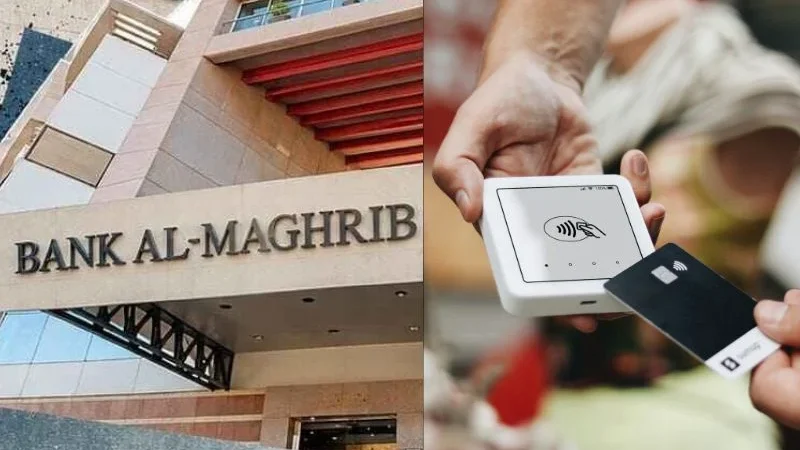
In addition, Morocco’s new card-payment guidelines that came into force on October 1 set the general interchange fee cap at 0.50% from 0.65%, Morocco digital payments, while the cap is reduced to 0.15% for eligible local merchants and government electronic payments.
Following Bank Al-Maghrib’s update of card-payment guidelines, the digital payments market in Morocco has secured a catalyst. With the reduction in interchange fee caps, the central bank hopes that electronic payments will become cheaper for merchants and will result in greater acceptance throughout the country.
This reform may help Morocco move faster to a cashless marketplace; however, its effectiveness will depend on whether there will be real savings for merchants and whether consumers will find electronic payments easy to use.
The change is detailed in Bank Al-Maghrib’s official regulatory decision and a joint statement from the central bank and Competition Council. The revised ceilings apply to domestic card transactions using cards issued in Morocco, with rates calculated before tax.
Why Morocco Digital Payments Need Lower Merchant Costs
The general interchange fee ceiling has fallen from 0.65% to 0.50%. A specific 0.15% ceiling applies to qualifying transactions involving local retailers and electronic government services.
Interchange fees refer to the part of the cost associated with a card transaction that is charged to the bank from which the customer’s card originated. These interchange fees make up just one element of the entire acquiring commission payable by merchants, and therefore, the new limit is not necessarily going to equate to the same saving for all merchants’ payment processing costs.
However, this could result in better deals for payment service providers. For local shops, cafes and service businesses, even minor savings might make electronic payment terminals more appealing to use, especially in cases where they need to process smaller transactions.
Also, implementation will be crucial at a street level. Small business owners will likely consider costs, connectivity, service agreements and transaction volumes when accepting payments on cards.
Competition Could Accelerate the Cashless Shift
Bank Al-Maghrib and the Competition Council have also supported reforms intended to open the merchant payment-acquiring market to more providers.
In their official joint statement, the authorities described a transition from a single-acquirer structure towards a multi-acquirer market, intended to diversify services and improve competition.
More providers could create stronger competition around pricing, equipment and customer support. However, the benefits will depend on whether merchants receive clear savings and dependable service rather than simply gaining access to additional providers.
The central bank has also communicated the changes through its official X account and a video explaining electronic payments. On October 8, Morocco World News also reported on the reduced interchange fee ceiling.
A Catalyst, Not an Instant Cashless Economy – Morocco digital payments
Reducing transaction fees alone is not sufficient to end Morocco’s dependency on cash. Retailers require reliable connectivity, ease of entry, safe payment system, and clarity in payment terms. On the other hand, consumers need assurance that digital payments are convenient, secure, and available in electronic form when required.
Moreover, it needs to be kept in mind that authorities have also made it clear that card payment commissions are the merchant’s duty and cannot be transferred directly to consumers via payment surcharges.
In conclusion, the payment policy of Bank Al-Maghrib offers Morocco’s digital payment system a chance to grow and reach small merchants and even offline transactions. This is where it shall become evident if more purchases will be possible via electronic payments in Morocco.
The introduction of new fee regulations might lead to a rapid shift from cash payments to digital transactions in Morocco.
Discover More Insights
Explore Cairo inflation middle class impact?
Discover how rising prices are affecting savings and daily life.
Check Algeria power plant deadline extension?
Explore updates on the 1.2GW energy project timeline.
Discover Turkey new electricity tariff changes?
Check how updated pricing will impact households and businesses.
Explore Qatar initiative boosting Syria power?
Discover efforts aimed at strengthening Syria’s electricity generation.
Check Beirut balcony lighting energy tips?
Explore efficient lighting ideas for Ramadan and beyond.