
EU Debate Over Muslim Brotherhood Intensifies After Procaccini Calls for Terrorist Listing
-
The Arab Post
- . October 14, 2026
- . Update: October 14, 2026 11:41 am
The controversy surrounding political Islam, Islamist connections with Europe and European security has grown louder and more heated in the wake of the October 7, 2023 attacks on Israel and the ensuing Gaza war.
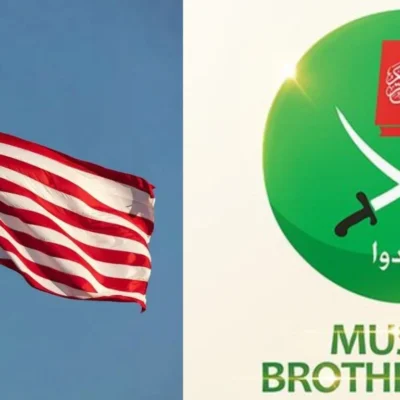
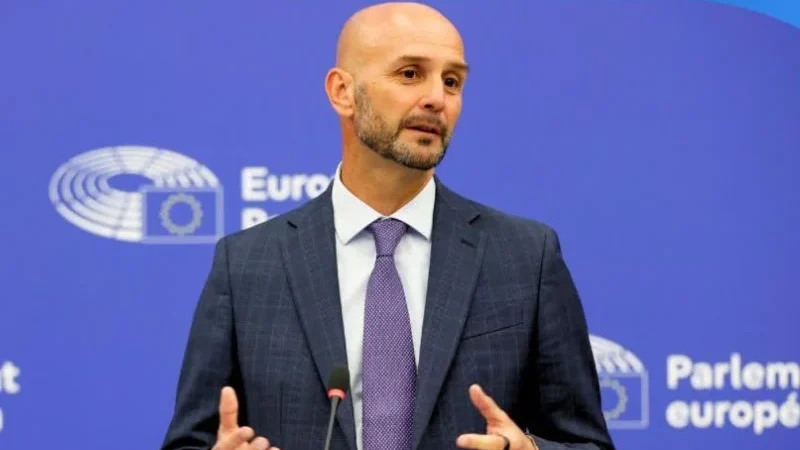
EU debate over Muslim Brotherhood, The incidents of European political institutions, pro-Palestinian demonstrations at universities in Italy were discussed in an Il Tempo report on October 7, the day of the events. It also brought up a request by the European Conservatives and Reformists (ECR) co-president Nicola Procaccini, who urged the Muslim Brotherhood to be placed in the list of the European Union’s (EU) terrorist groups.
The demand by Procaccini has raised new questions about the possible Islamist infiltration into European public life. But deciding to designate politically does not result in a formal decision under EU law and alleged links with the organisations must be substantiated.
Strasbourg Incident Triggers Calls for Stronger Action – EU debate over Muslim Brotherhood
Following an “embarrassment” at an October 7 event for a photographic exhibition on the attacks that took place in the European Parliament in Strasbourg, which was attended by a number of Islamist militants, Il Tempo reported that Procaccini requested the inclusion of the Muslim Brotherhood on the EU list of terrorists.
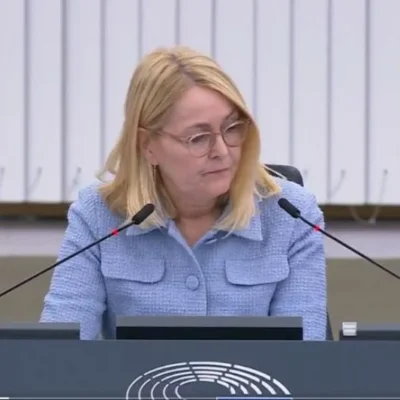
French MEP Rima Hassan pulled out the Israeli and European Union flags from the exhibition, the report said. Parliament President Roberta Metsola slammed the attack, describing Islamists as “gaining more influence in European politics,” and his words echoed the condemnations of other European leaders.
Procaccini then declared that his aim would be to have the Muslim Brotherhood added to the list of terrorists under the EU. His remark was in the nature of a political claim rather than any proof of the group’s guilt for the attack, or that it was officially recognised by the EU as terrorist.
A related article in the Italian newspaper, Il Tempo, by an European Parliament member Anna Maria Cisint, brings up the issue of political Islam and Islamist networks allegedly controlling European institutions. The following are political evaluations which are not subject to individual proof.
Italian Universities and Pro-Palestinian Protests Under Scrutiny
The dispute over the university events and public demonstrations was also mentioned in October 7 report.
In Bologna, the project Dalla grande rivolta araba al sette ottobre was organised by the Giovani Palestinesi group, which was the subject of controversy in the pages of Il Tempo, which includes the filming of Palestina 36. A second pro-Gaza debate that had been refused permission by the rector of the university was also reported in the publication.
Moreover, the police in Lecco banned a planned pro-Palestinian event and march due to fears of possible public disorder, the report added.
These events were part of a broader conversation about political mobilisation, political feelings about October 7 and debates over the extent of public expression that unfolded in the publication.
But the incidents reported in themselves did not prove to be members of the Muslim Brotherhood. Activism and criticism of the policy of the Israeli government and support for Palestinian rights do not of themselves constitute support for Hamas or any extremist group. Specific allegations must be taken into separate consideration, and supported by reliable evidence.
The European institutions have to reconcile legitimate security concerns with the right to freedom of expression, to gather in peace and to be independent academically.
European Parliament Resolution Renews Debate Over EU Listing
The debate continued on October 8, 2026, with the adoption of a resolution by European Parliament on Islamist entryism and the Muslim Brotherhood network.
The vote in favour was 381, against 167, and abstention 15, according to a separate report published by the newspaper Il Tempo. It was for the European Union to determine if the Muslim Brotherhood and related entities were considered terrorists.
While the vote provided a formality of institutionalization for the issue, it was not the act itself that could be called a terroristic designation. EU counterterrorism framework sets legal framework for restrictive measures, such as asset freezes and measures to prevent listed entities from being made available with funds or economic resources.
The European Union’s (EU) additions to and deletions from the EU terrorist list is made by the Council of the European Union in accordance with the applicable laws. Any designation, therefore, cannot be automatic, but must be made in accordance with the relevant legal procedure, as opposed to being made based on political declarations or a parliamentary resolution.
Security Concerns Must Be Balanced With Democratic Rights
An Il Tempo report links Procaccini’s request to link the Muslim Brotherhood to broader political conflicts on October 7, pro-Palestinian mobilisations and alleged Islamist infiltration in Italy and Europe. The discussion of events and demonstrations at the university conveys the general political climate of these issues.
A major development that was added to the October 8 European Parliament resolution was the requirement for an evaluation to determine if the Muslim Brotherhood and related persons should have been listed. This is not an EU terrorist designation; however, a call for assessment.
The question for European policy-makers is how they can decide on an issue that has a legitimate security dimension without infringing on democratic rights and the right to due process. Any reference to organizational links must be substantiated and not be assumed from religious affiliation, peaceful activities or their involvement in public discourses.
Discover more Insights
Explore Iran War Lessons Globally?
Explore how the 2026 Iran war reshapes global power and strategy.
Discover Iran Delay Strategy Tactics?
Discover how Iran uses delay, repression, and proxy influence.
Check Trump Iran Strategy Importance?
Check why Trump’s Iran strategy depends on Gulf allies.
Explore Iran Military Warning Signals?
Explore rising warnings from Iran alarming global powers.
Discover Sudan Iran Axis Threat?
Discover how the Sudan-Iran axis raises serious regional concerns.