
4 Ways the New EBRD & EU Women Entrepreneurs Fund Helps You Scale Your Startup in Egypt, Jordan, Morocco, or Tunisia
-
The Arab Post
- . October 16, 2026
- . Update: October 16, 2026 9:03 pm
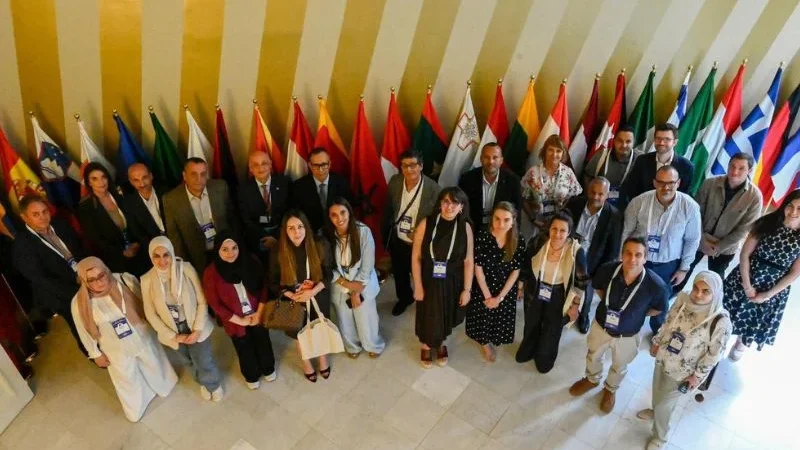
The European Bank for Reconstruction and Development (EBRD) and the European Union (EU) have formally expanded their Financial Inclusion Programme in the region. EBRD EU Women Entrepreneurs Fund, The joint program provides specific capital and technical advisory services to encourage women-led businesses in Egypt, Jordan, Morocco, and Tunisia to access their remaining funding needs, to get their businesses to scale up quickly, and to create local jobs.
This week, the North Africa and the Levant’s founders have a newly expanded EBRD & EU Women Entrepreneurs Fund to expand their commercial opportunity. The initiative, part of EBRD’s regional Financial Inclusion Programme, is already putting money and business expertise into action in the southern and eastern Mediterranean (SEMED) region, according to an official release from EBRD.
The partnership was officially announced during two development briefings on October 15 and 16 and focuses on women-led businesses in Egypt, Jordan, Morocco, and Tunisia. The EBRD and the EU are working together to use direct liquidity together with strategic guidance to enable female entrepreneurs to create an impact in the market in economies with limited capital resources.
4 Ways the EBRD & EU Women Entrepreneurs Fund Helps Scale Your Startup
The joint EBRD and EU framework offers four pillars of operation for female founders scale your startup or micro, small and medium sized enterprise (MSME):
1. Dedicated Credit Lines for MSME Access to Finance
One of the major challenges that female entrepreneurs in the Middle East and North Africa (MENA) region face is obtaining growth capital. The bank’s EBRD Women in Business Programme offers financial institutions in the four countries that are members of the bank dedicated credit lines directly to local partner financial institutions.
These partner banks are specialized banks, where the capital is lent specifically for women-led businesses so as to support long term capital investment and their working capital requirements.
2. First-Loss Risk Cover to Lower Lending Barriers
The EU supports the Financial Inclusion Programme through specific credit enhancement tools for early stage and expanding enterprises, which aim at stimulating commercial banks to provide these enterprises with loans. According to Traders Union, the scheme is designed to assist smaller companies to expand on markets where they have limited capital and technical requirements.
In particular, the programme provides financial institutions that are partners with the financial institution first-loss risk cover and contributions based on the performance, thus minimising the lending risk for the local financial institutions and unlocking MSME access to finance.
3. Tailored Technical Assistance and Strategic Advisory
A capital investment often is not enough to overcome the difficulties of regulations and supply chains. DevelopmentAid states that a combination of funding directly with the expertise needed to support and grow the business is the aim of the initiative.
Through a specific, one-on-one professional advice service, participating startups are accompanied by specific financial planning, legal compliance, digital transformation, as well as adoption of artificial intelligence, sustainability and commercial strategy.
4. Mentorship, E-Learning, and Regional Market Access
Besides direct consultations, the program also develops long-term leadership skills using non-financial development instruments. As stipulated in fundsforNGOs, improvement of business activities is crucial for increasing employment and providing new opportunities for local communities.
The founders receive direct mentorship from highly experienced professionals, instant e-learning courses, practical workshops, and seminars for developing local and international networks designed to tap new domestic and foreign markets.
Eligibility and How to Apply – EBRD EU Women Entrepreneurs Fund
Qualifications of applicants vary from women-owned businesses in Egypt, Jordan, Morocco, and Tunisia running nearly all commercial, technological, industrial, agribusiness, and service companies with the exception of banking, military merchandise, gambling, and tobacco industries. Interested companies can check eligibility requirements set by the EBRD & EU Women Entrepreneurs Fund to be able to connect with either their local representatives or their country’s EBRD representative team.
Discover More Insights
Explore Cairo inflation middle class impact?
Discover how rising prices are affecting savings and daily life.
Check Algeria power plant deadline extension?
Explore updates on the 1.2GW energy project timeline.
Discover Turkey new electricity tariff changes?
Check how updated pricing will impact households and businesses.
Explore Qatar initiative boosting Syria power?
Discover efforts aimed at strengthening Syria’s electricity generation.
Check Beirut balcony lighting energy tips?
Explore efficient lighting ideas for Ramadan and beyond.