
Iraq and Syria Advance Haditha-Baniyas Oil Pipeline Revival to Redraw Levant Energy Trade
-
The Arab Post
- . October 29, 2026
- . Update: October 29, 2026 4:50 pm
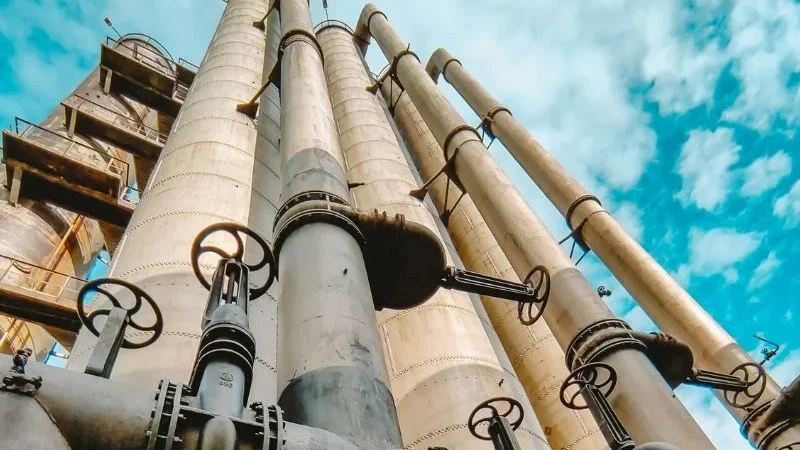
High-level talks were concluded in decisive fashion in Baghdad and Damascus on Wednesday, October 28, 2026, to speed up the Haditha-Baniyas oil pipeline revival. Iraq-Syria energy trade revival, The bilateral meeting in Damascus, the Syrian capital, primarily aimed to finalise the technical aspects of bringing in huge quantities of crude oil to the Mediterranean port, a move that will vigorously redefine the Levant energy trade.
Diplomatic reports, published by Anadolu Agency, said the talks focussed on the development of a fully modernized pipeline network with a maximum capacity of 2 million bpd. The ambitious infrastructure project is a vital ‘strategic lifeline’ for both countries, whose goal is to bring together ‘one people in two countries’ through mutual economic integration.
The problem of national and economic security of Baghdad lies in the complete utilization of the capacity of the Baniyas port. If the Iraqi Ministry of Oil has the courage to build a pipeline through the Strait of Hormuz to get connected with the Gas Complex, it will be able to considerably reduce the need for the ships operating in the southern routes across the Gulf of Oman for the purpose of oil transportation. If the Iraqi Ministry of Oil can gather enough will to build a pipeline through Hormuz Strait to link to the Gas Complex, it will be able to minimize its dependence on the southern routes of the Gulf.
Overcoming Historical Infrastructure Hurdles
While the question of the meaning of the project is perfectly in line with the ancient Kirkuk-Baniyas corridor, a conclusion of structural engineering studies proves that a new network must be developed for this purpose. The pipeline that was used earlier received significant damages and lost its operability during the Iraq war in 2003 and also suffered from the long period of regional instability, according to energy analysts.
The new blueprint (2026) provides for a main transport corridor that extends directly from the oil-producing southern fields of Basra to Haditha in Iraq’s Anbar province. The network will spread west from this strategic point through the border to end in the Syrian coastal port of Baniyas.
State planners say the approach of replacing the old, corroded pipe with brand new is much safer and cheaper than trying to patch it.
Expanding Iraq Syria Oil Exports
The energy corridor’s revival is a groundbreaking step towards Syria’s gradual return to the regional economy. The transit fees that can be collected along the pipeline and the development of local activity downstream of refineries will bring a long-term revenue boost to Damascus, as mentioned in recent economic forecasts by Enab Baladi.
The talks this week are an extension of a preliminary memorandum of understanding signed in Washington earlier this summer. Now both governments are actively seeking foreign investment and engineering partnerships to cover the multibillion-dollar construction phase of the project, according to Syrian Arab News Agency (SANA).
This new Mediterranean oil route will provide safe, large-scale Iraq-Syria oil exports and sustain the competitiveness, localization, and strict resilience of energy trading in the Levant region to global shipping threats.
Top Picks For You
Discover top Middle East tourist sights?
Explore must-visit landmarks across the region for travelers.
Explore essential apps for Arab travel?
Check must-have apps to simplify your trip planning.
Check common travel mistakes Arab countries?
Discover key errors tourists should avoid during visits.
Explore top Arab festivals for tourists?
Discover unique cultural events across non-GCC destinations.
Check tourist safety tips Arab countries?
Explore essential precautions for safe and smooth travel.