

How the UN’s New COP31 Disaster Risk Financing Platform Aims to Shield Climate-Vulnerable Arab Nations
-
The Arab Post
- . November 13, 2026
- . Update: November 13, 2026 6:04 pm
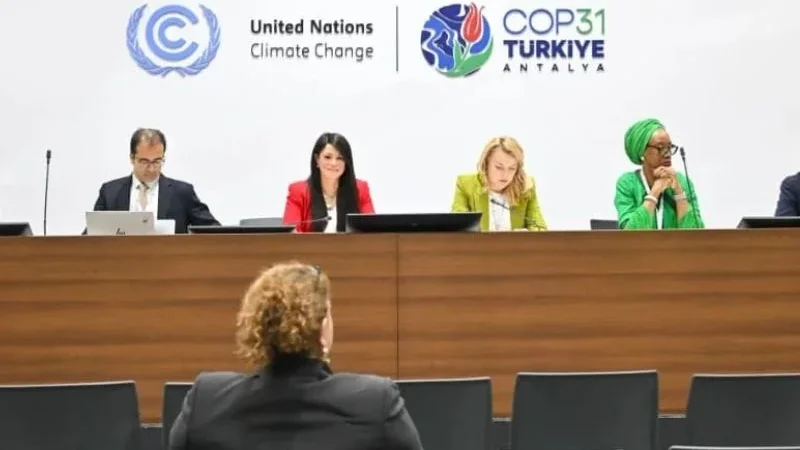
The UN Disaster Risk Financing Platform was officially launched at COP31, the UN Climate Change Conference in Antalya, Türkiye, on 12th November 2026. COP31 climate finance, The game-changing endeavor aims to activate $3 billion in preagreed emergency funding to keep 75 million people around the world safe from climate shocks by 2030. This comes as Arab countries threatened by climate change are upping the ante on calls for more adaptation funding and better early warning systems to tackle growing environmental emergencies in the region.
UN Disaster Risk Financing Platform Launched at COP31
The UN Disaster Risk Financing Platform is formalized on Thursday to tackle a longstanding structural challenges in global humanitarian response: the immediate need for predictable financing before a natural hazard reaches a crisis stage. Prepare financing, which is less than two per cent of global humanitarian funding, is currently extremely limited, and agencies respond slowly to most foreseeable disasters, UN officials say.
The platform is designed to substantially lower the human and economic losses from extreme weather events by making investment in extreme weather management a proactive rather than reactive approach. The project directly brings together the expertise and experience of six main UN bodies. They are represented by the Food and Agriculture Organization (FAO), the International Organization for Migration (IOM), the UN Office for the Coordination of Humanitarian Affairs (OCHA), UNICEF, the UN Refugee Agency (UNHCR) and the World Food Programme (WFP).
Six UN Agencies Collaborate for Predictable Funding – COP31 climate finance
The updated joint approach combines predictive analytics, data sharing, and partnerships with the private insurance industry, according to the IOM’s official press release on November 12. The platform relies on finance market tools and insurance mechanisms to make the funding available in time for anticipatory action as soon as there is an imminent crisis, as warned by early warnings.
Initial applications are showing tangible results. OCHA and UNICEF were able to receive specifically requested insurance policy cover for their anticipatory action programmes in advance of the platform’s public launch, with technical support from WFP’s insurance specialist teams.
Arab Nations Push for Adaptation Finance and Early Warning Systems
The UN’s renewed attention in the proactive funding approach has an intersection with the urgent needs in the Middle East and North Africa (MENA) where water scarcity, extreme heat and significant flooding are becoming a regular occurrence. A number of Arab countries are pushing for financial mechanisms that are specifically designed to focus on their vulnerabilities in the region at COP31.
Syrian Deputy Minister Ahmed Ekzayez was involved in a panel discussion on climate finance, calling for international cooperation to boost disaster preparedness, during the COP31, on November 11, 2012. Syria is working diligently to raise funds internationally for early warning systems and environmental recovery projects, and is stressing that natural disasters do not pay attention to national boundaries, according to the Syrian Arab News Agency (SANA).
Calls for Grant-Based Public Climate Finance
Instead of state representation, regional climate advocacy groups are drawing attention to the pressing need for equitable and debt-free climate reparations. On November 12, in a formal statement, Greenpeace Middle East and North Africa called on the leaders of COP31 to not delay public COP31 climate finance commitments. The group has clearly demanded an increase in adaptation funding by three times and emphasized the need to finance adaptation as grants and not as loans to avoid increasing the debt burden on developing countries.
Likewise, global south voices are growing louder in opposition to the financial conditionality of the mainstream. Recent regional media commentary by Arab News has highlighted the need for independent, sovereign coalitions in vulnerable countries to enable COP31 climate finance to reach communities quickly and without restrictive debt commitments.
The UN Disaster Risk Financing Platform was launched at COP31, marking an important institutional transition towards anticipatory humanitarian action. This $3 billion joint effort represents a potentially valuable tool for countries in the Arab region that are vulnerable to climate change to obtain lifesaving measures ahead of time. But the implementation of these frameworks will largely depend on the availability of accessible, grant-based, funding that can quickly enable local communities to be resilient in the long term as regional leaders and organisations push for their support in Antalya.
Top Picks For You
Discover top Middle East tourist sights?
Explore must-visit landmarks across the region for travelers.
Explore essential apps for Arab travel?
Check must-have apps to simplify your trip planning.
Check common travel mistakes Arab countries?
Discover key errors tourists should avoid during visits.
Explore top Arab festivals for tourists?
Discover unique cultural events across non-GCC destinations.
Check tourist safety tips Arab countries?
Explore essential precautions for safe and smooth travel.


