
Why Algeria’s Revival of Its 4.7-Million-Hectare “Green Dam” Is Africa’s Most Important Climate Defense Project
-
The Arab Post
- . November 10, 2026
- . Update: November 10, 2026 4:24 pm
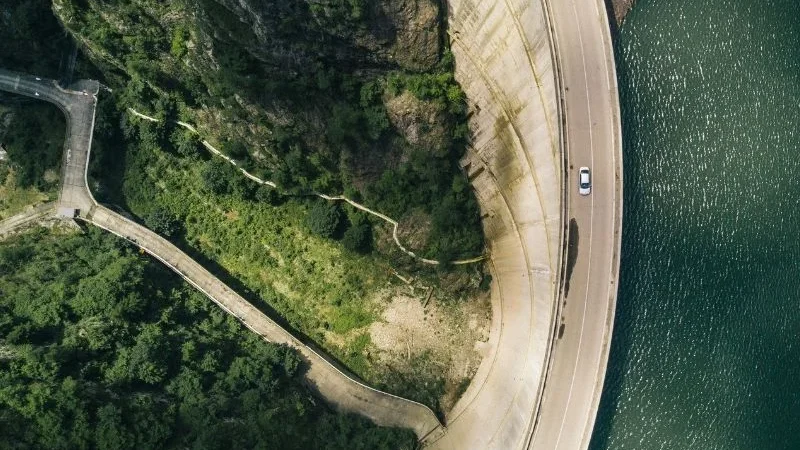
Algeria is now doubling down its efforts against extreme climate volatility and land degradation. Algeria Green Dam, The national government stepped up deployment of the much-anticipated Green Dam restoration project on Tuesday, November 10, 2026.
The revamped environmental programme has now officially been expanded to include an incredible 4.7 million hectares, according to state planners. In particular, government wants to achieve reforestation and rehabilitation of 400,000 ha of high level degraded land by the end of 2026 and in 2027.
This tremendous environmental activity is not just about planting trees; it’s a carefully calibrated macro-economic and ecological defense. Algeria’s northern steppe belt has been strengthened aggressively to create an ecological wall to physically block the Sahara Desert from encroaching on the North.
This colossal reforestation effort in Algeria is a key model for sustainable development in the face of the challenges of climate change and irregular rainfall patterns affecting the dry lands of the continent. But why is this particular revival the most crucial climate protection in Africa? The solution is the radical change in the underlying model from flawed origins in the 1970s that the state has brought to the project.
A Massive Shift in the Algeria Green Dam Strategy
The first proposal for the Algeria Green Dam was in 1970 as a 1500km long 20km wide continuous forest barrier. But the first execution had very big ecological restrictions.
It was heavily monocultured with Aleppo pine trees, and this monoculture led to high vulnerability of the ecosystem and high susceptibility to disease. Moreover, their original installation was on pasturelands already heavily used by the pastoralists of the area, resulting in serious land use conflicts and the large-scale removal of the trees.
All these historical mistakes are recognized in the 2026 revival, which completely discards the idea of a single-species continuous wall. The modern Green Dam restoration project has a “restore and produce” model, which is highly diversified and discontinuous, according to official documentation from the Algeria Press Service (APS).
The Ministry of Agriculture and Rural Development is not just planting at-risk pines; it is also planting in the system valuable species. This means identifying the appropriate locations to plant fruit trees, almond trees, Atlas pistachios, and the promotion of a specific strategy for growing argan trees across thousands of hectares.
Overcoming the Threat of Sahara Desert Expansion
The Algeria Green Dam’s foremost geologic goal is to keep the world’s largest hot desert contained. Overgrazing by humans and prolonged droughts are causing rapid desertification in North Africa.
The project has created strong windbreaks, stabilized sand dunes and extensively tapped up surface and groundwater resources to actively safeguard millions of hectares of arable farmland in the north.
Soil stabilization in pre-Saharan areas is the number one defense against climate collapse in the continent, as continually stressed by environmental scientists from the Food and Agriculture Organization (FAO) and the United Nations Environment Programme (UNEP). The extensive root systems of the new plant life firmly hold the land and dramatically lessen the intensity and frequency of the sometimes crippling sandstorms that regularly sweep the northern urban areas.
Economic Empowerment Through Climate Defense in Africa
What makes this 4.7 million hectares Green Dam special, compared to other environmental commitments on the continent, is that it specifically includes economic empowerment for the rural population. The new strategy recognizes that local communities and their participation and profit are essential to ecological conservation.
The state is moving towards the “restore and produce” approach, which secures the first income for the people of the rural areas. The ecological barrier becomes a highly profitable farming area due to growing high-value crops such as argan oil, olives, and almonds.
International financial institutions, such as the World Bank, have acknowledged that the direct connection between environmental restoration and job creation and agricultural production have a proven track record of project sustainability. Today, local pastoralists are much more involved in the maintenance and harvesting process, thus reducing the land-use conflicts that occurred throughout the previous decades.
In addition, this is a large-scale domestic investment, which fits in well with other efforts in the region, including the Great Green Wall for the Sahara and the Sahel. Algeria is setting the undisputed “gold standard” for environmental resilience, with state-of-the-art satellite surveillance, advanced agricultural education, and financial support from various sectors.
In the end, it is the bold restoration of the Algeria Green Dam that stands out as a concrete measure that can be put in place. With the active reclamation of 4.7 million hectares of degraded land, Algeria is implementing the most practical, economically viable and most critical climate defence project on the African continent today.
Top Picks For You
Discover top Middle East tourist sights?
Explore must-visit landmarks across the region for travelers.
Explore essential apps for Arab travel?
Check must-have apps to simplify your trip planning.
Check common travel mistakes Arab countries?
Discover key errors tourists should avoid during visits.
Explore top Arab festivals for tourists?
Discover unique cultural events across non-GCC destinations.
Check tourist safety tips Arab countries?
Explore essential precautions for safe and smooth travel.