
Jordan’s Abu Obeida Mosque Breakthrough Highlights 5 Eco-Mosques and Green Architectural Wonders Leading the Sustainability Wave
-
The Arab Post
- . November 13, 2026
- . Update: November 13, 2026 6:15 pm
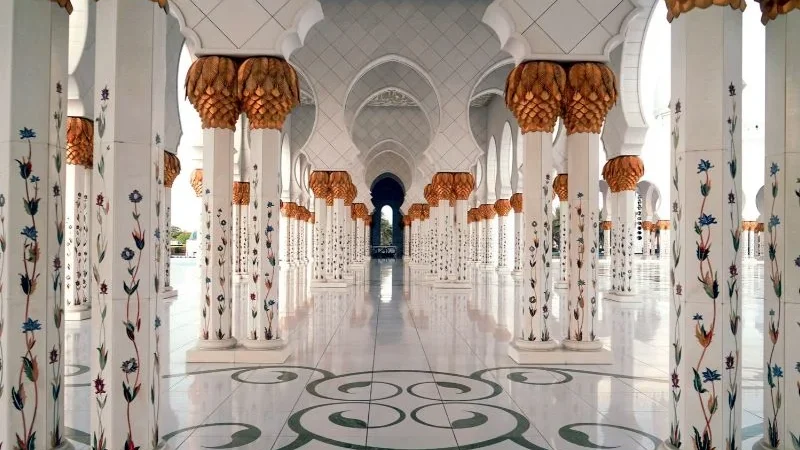
The extension to a key water-recycling system in the Abu Obeida mosque in Deir Alla, Jordan, has been successfully operational with international reports confirming the use of water from ritual ablutions for agricultural irrigation. The verified development marks the building’s place among the 5 eco-mosques and green architectural wonders in Jordan and Morocco leading the sustainability wave, as Islamic architectural heritage becomes increasingly resilient to tackle the harshest climate challenges in the Middle East and North Africa (MENA) region.
Abu Obeida Mosque Advances Jordan’s Water Conservation
The recent attention to the Abu Obeida mosque is a call to act now, at a local level, to address the severe and ongoing water scarcity in Jordan. The mosque is found to be able to collect the greywater used by the faithful when washing before prayer, as confirmed in a Global Development report on 20 November 2026. The wastewater is diverted to irrigate the gardens surrounding the mosque, as mosques do not use harsh chemical soaps in these ablutions – so the water is naturally filtered through five layers of gravel/sand before reaching the garden.
This is one of many initiatives being undertaken by the government, according to the Jordanian Ministry of Awqaf. In the period 2017–2024, rainwater harvesting was carried out in over 50 mosques in the religious ministry. At present, over 35 facilities are operating to use ablution waste water for local cleaning and for irrigation of crop fields, to the extent that this saves on the use of the municipal water supply.
The 5 Eco-Mosques Pioneering Sustainable Islamic Architecture
It is a larger-scale, cross-border environmental project that includes the breakthrough at Deir Alla. So far, there are five eco-mosques or green architectural wonders in Jordan and Morocco which are the region’s leading models for the sustainability wave sweeping the region.
1. Abu Obeida Mosque, Deir Alla (Jordan)
As recently pointed out, this rural mosque is the model for recycling of greywater in the Jordan Valley. It collects and naturally filters the water used for ritual washings, thereby alleviating the strain on the Jordan’s already underutilized public water system, while preserving green areas for green communities.
2. Masjid Abu Ghuweileh, Amman (Jordan)
It sits in the Ta’la Al-Ali area of Amman and was one of the pioneer facilities of the Jordanian capital to take the plunge into renewable energy. It is the result of a long process that started with the first projects that the WEF documented, and the project’s success continues to have a direct impact on the city of Amman’s ambitious target to become a carbon neutral city by 2050.
3. King Abdullah Mosque, Amman (Jordan)
The high-profile King Abdullah Mosque is known for its innovative use of ecological and contemporary design, including a large “solar-paneled” canopy. This architectural innovation makes it possible to utilise clean energy in the large structure while maintaining its traditional appearance and becomes a model for green mosques in urban areas.
4. Tadmamet Eco-Mosque (Morocco)
The Tadmamet eco-mosque in Morocco is a specially designed “energy-plus” building. The mosque is situated an hour south of Marrakech, and is equipped with advanced photovoltaic roof panels that produce electricity in excess of the demands of the building. This excess energy is now being used positively to feed the adjacent rural village of 400, as reported in historical coverage by Middle East Eye, demonstrating decentralised renewable grids’ feasibility.
5. Jami’a al-Kutubiyya, Marrakech (Morocco)
The iconic 12th-century Koutoubia Mosque is a perfect example of how old architecture can ride the wave of today’s sustainable trend. The historic site has been extensively upgraded with energy efficient LED lighting and innovative solar thermal energy technologies, as part of an extensive government project in collaboration with the German development agency, GIZ. This change greatly reduced its carbon footprint without compromising its important cultural heritage.
Strategic Expansion of Green Mosques in Morocco and Jordan
The initiative of “Green Mosques” was conceived in Morocco to retrofit hundreds of state-funded mosques to significantly cut into the country’s reliance on imported fossil fuels. Historical environmental reports have shown that early stages of this work have succeeded in saving up to 80 per cent on energy costs in some major buildings. This fundamental move has now become a localized green economy, giving birth to jobs for solar technicians and environmental engineers specializing in the field throughout North Africa on a long-term basis.
At the same time, the religious ministries of both countries are actively involved in using these flagship eco-mosques as community educative centres. Special state training is given to imams and female preachers (mourchidat) to include critical climate awareness, energy conservation and water rationing in their Friday sermons. The technological improvements within the mosques is a community-based initiative that fosters behavior change among the worshipers in their own homes.
The November 2026 focus on the water-recycling achievements of the Abu Obeida mosque clearly demonstrates the sustainability action in practice of the region. With climate change posing a major risk to water security and causing an increase in temperatures, climate-proofing infrastructure is no longer an option. The 5 eco-mosques and green architectural wonders in Jordan and Morocco leading the sustainability wave Middle East/North Africa region as an inspiring and proven model for adapting to climate change through architecture.
Top Picks For You
Discover best tourist attractions in Jordan?
Explore iconic places every visitor should experience.
Explore Petra viewpoints and best spots?
Check where to capture the most stunning Petra views.
Discover desert adventures in Jordan?
Explore thrilling experiences across Jordan’s desert landscapes.
Check top things to do in Amman?
Discover must-visit spots for first-time visitors in the city.
Explore Dead Sea spa day trip?
Check relaxing mineral spa experiences near Amman.