
Libya’s Oil Sector Takes a $30.8 Million Hit as Armed Group Blocks Hamada Pipeline
-
 The Arab Post
- . November 22, 2026
- . Update: November 22, 2026 1:06 pm

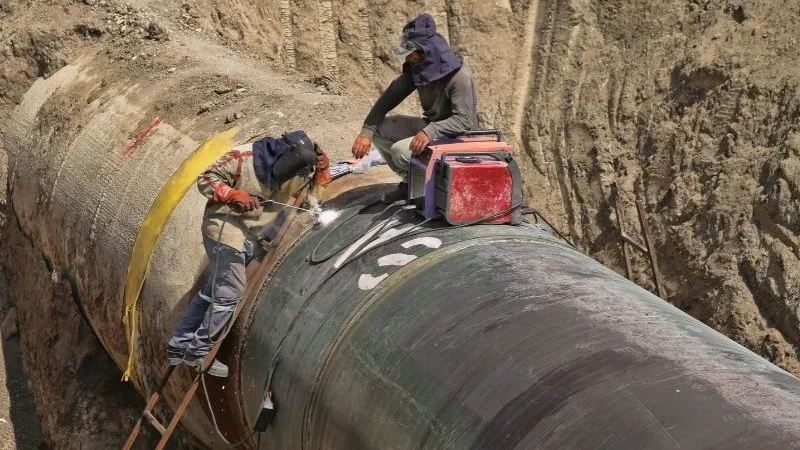
In November 2026, another significant disruption of critical energy sector infrastructure further highlighted the fragility of the Libyan oil sector. Libya oil sector, The Arab Spring’s armed forces have had a devastating impact on state revenue, the NOC estimates, after shutting down the critical Hamada pipeline for 20 days cost the government $30.8 million. The major production halt in crude oil is a testament to the continued security concerns that threaten the stability of Libya and its ability to maintain stable crude oil supply to the global market.
The Financial Toll of the Armed Group Blockade – Libya oil sector
The armed group blockade has had a devastating effect on the economy and operations. The NOC stated that the closure led to a total of 302,778 barrels of crude oil being lost due to not being pumped. That equates to an average of 14,418 barrels of crude oil per day that were taken out of the system, costing the state about $1.47 million per day the valves remained closed.
The NOC subsidiary, the Arabian Gulf Oil Company (AGOCO) operates the Hamada pipeline, which is an important transport route. It is directly linked with Al-Tahara (NC4) and Al-Hamada (NC5 and NC8) oilfields in western Libya to the coastal Zawiya refinery. The NOC highlighted that the standstill also results in extra fixed operating expenses which the NOC will have to bear to ensure the safety of the affected oilfields during the shutdown.
Ongoing Instability and the Impact on the Zawiya Refinery
The Zawiya refinery, the country’s biggest operational refinery with a capacity of 120,000 bpd, is dependent on continuous flows from interior fields for its domestic requirements. It mainly conveys crude from the massive Sharara field, although the Hamada pipeline is also a critical back-up.
It has been a worrying trend for the Libya oil industry’s disruptions to occur in an armed group manner, as it has done here recently. In late 2026, there have been several attacks on oil infrastructure by factions – a few are believed to be members of the Petroleum Facilities Guard, who are asking for better wages. The same closures, brought down both the Sharara and the Hamada pipelines in September and October, briefly shutting down distillation units at the Zawiya refinery and upping the ante in the tension between the south and the north.
Economic Repercussions and Future Implications
The country is particularly sensitive to these targeted blockades as hydrocarbon revenues make up about 90% of the country’s economy. The World Bank’s economic overview of Libya pinpointed the uninterrupted sale of energy as the only factor that is sustaining state budgets and public salaries.
In a statement on Saturday through the Syrian Arab News Agency (SANA), the National Oil Corp (NOC) strongly denounced the latest attacks on national infrastructure, warning that they seriously harm the development efforts underway in the country. Crude oil production needs to be restored and raised to help Libya’s post-conflict reconstruction. But the NOC is trying to woo foreign oil and gas firms to put money into the nation’s huge untapped reserves, while ongoing security attacks severely erode investor confidence. According to the latest instructions issued by the NOC, the security apparatuses to which the NOC addressed the instructions should immediately secure pipeline valves so that no further economic sabotage can be carried out.
The authorities are striving to end the security issue that currently plagues the Hamada pipeline, and the $30.8 million loss is a reminder of the problems that lie ahead. The overall economic recovery in Libya will be fragile, pending the country’s ability to ensure the safety of transportation.
FAQs
What caused the recent $30.8 million loss in the Libya oil sector?
An armed group shut off the flow of oil through the Hamada pipeline for more than 20 days in November 2026, preventing the transport of 302,778 barrels of crude oil and canceling an average of 14,418 barrels every day.
Which oilfields and refineries are connected by the Hamada pipeline?
Hamada pipeline directly connects Al-Hamada and Al-Tahara oil fields in Libya (which is operated by AGOCO) and Zawiya refinery, located on the Mediterranean coast.
Why is crude oil production so critical to Libya’s economy?
Oil export revenues represent about 90% of the total economy of Libya. Any disruption in the supply chain of the National Oil Corporation can put at risk government financing, salaries of the public workers, and long-term reconstruction processes.
Discover more Insights
Explore Iran War Lessons Globally?
Explore how the 2026 Iran war reshapes global power and strategy.
Discover Iran Delay Strategy Tactics?
Discover how Iran uses delay, repression, and proxy influence.
Check Trump Iran Strategy Importance?
Check why Trump’s Iran strategy depends on Gulf allies.
Explore Iran Military Warning Signals?
Explore rising warnings from Iran alarming global powers.
Discover Sudan Iran Axis Threat?
Discover how the Sudan-Iran axis raises serious regional concerns.